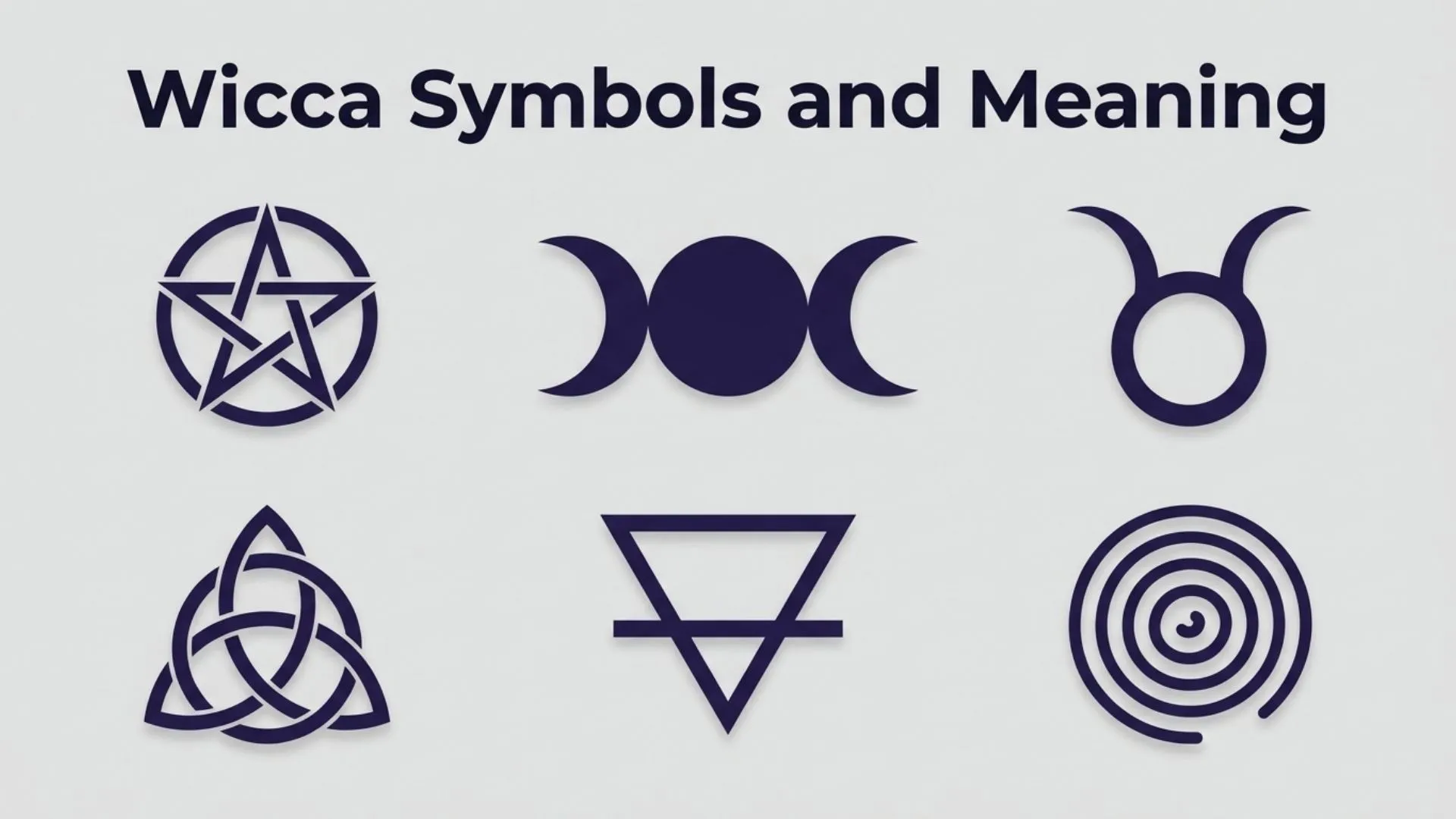
Wicca symbols are an essential part of modern Pagan spirituality, serving as powerful visual representations of beliefs, rituals, natural forces, and the divine. Whether engraved on jewelry, drawn within ritual circles, displayed on altars, or used in meditation, these sacred symbols help practitioners connect with nature, honor the God and Goddess, and express spiritual intentions.
While some Wicca symbols have ancient roots, others became widely recognized during the growth of modern Wicca in the mid-20th century. Each symbol carries unique meanings related to balance, protection, wisdom, the elements, cycles of life, and personal transformation. Understanding these symbols not only deepens appreciation for Wiccan traditions but also helps prevent common misconceptions surrounding Pagan beliefs.
This comprehensive guide explores the most important Wicca symbols and meanings, their origins, symbolism, uses, and significance in both traditional and modern practice.
Meaning and Overview of Wicca Symbols
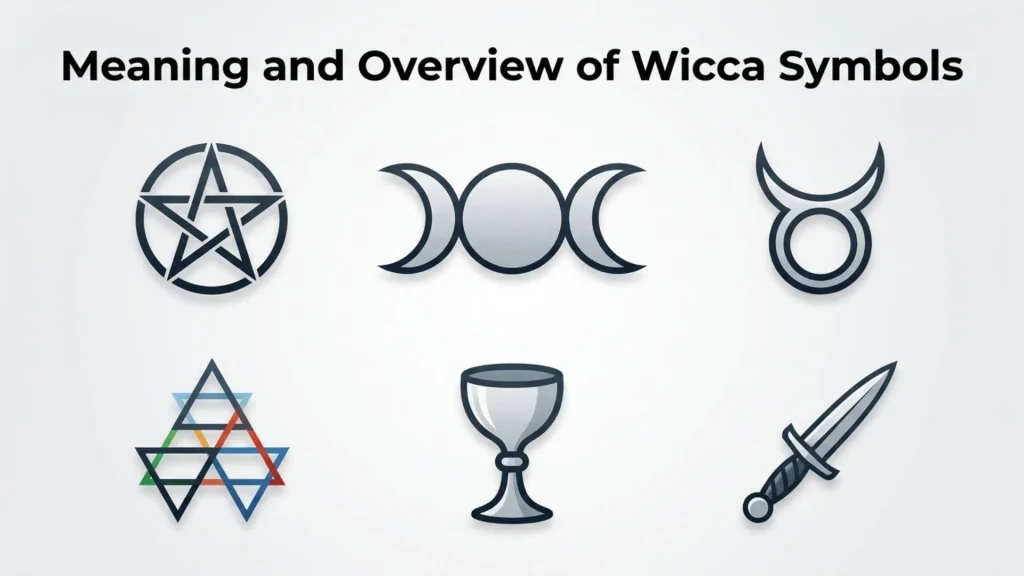
Wicca symbols are sacred signs, icons, and symbolic representations used to express spiritual concepts within the Wiccan religion. Rather than worshipping the symbols themselves, practitioners use them as reminders of divine energy, natural cycles, and magical intentions.
Many Wiccan symbols are inspired by nature, sacred geometry, astronomy, mythology, and ancient European traditions. They often represent universal themes such as:
- Balance
- Protection
- Harmony
- Wisdom
- Fertility
- Transformation
- The four classical elements
- The cycles of the Moon and seasons
- The interconnectedness of all living things
These visual representations appear in ritual tools, altar decorations, jewelry, books, artwork, and even digital designs as decorative symbols or text symbols.
History and Origin of Wicca Symbols
Modern Wicca was introduced publicly during the 1950s, largely through the work of Gerald Gardner. However, many symbols associated with Wicca are much older than the religion itself.
Several Wiccan symbols originated from:
- Ancient Celtic traditions
- Greek and Roman mythology
- Medieval ceremonial practices
- European folk magic
- Pre-Christian Pagan beliefs
- Sacred geometry
- Astrology and astronomy
Over time, Wiccan practitioners adapted these historical symbols into meaningful spiritual icons that reflect their beliefs while honoring nature and seasonal cycles.
Today, Wicca symbols continue evolving through artwork, literature, digital communication, and modern spiritual practices.
Major Wicca Symbols and Their Meanings
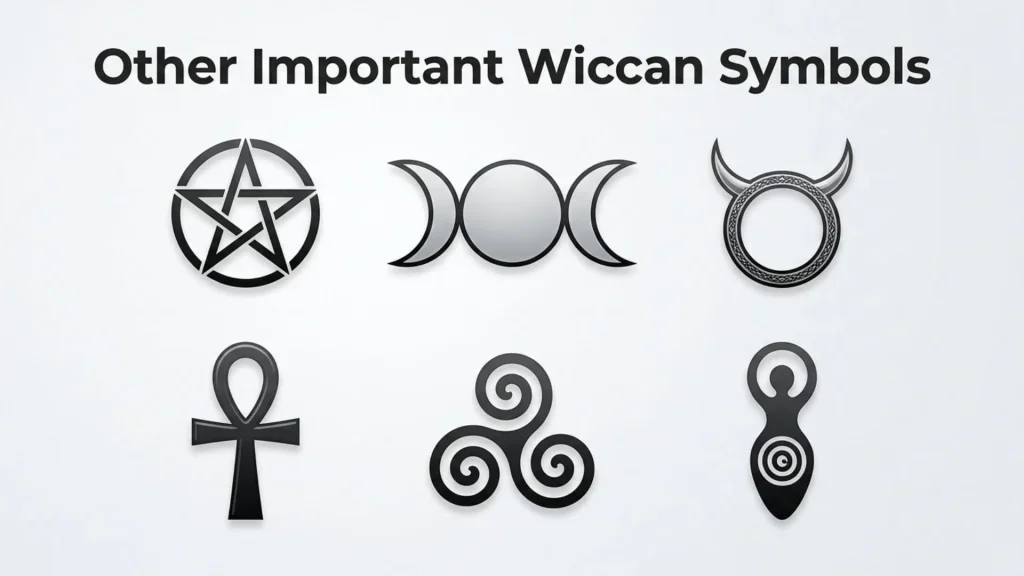
Pentacle
The Pentacle is the most recognized Wicca symbol.
It consists of a five-pointed star enclosed within a circle. Each point traditionally represents one of the five sacred elements:
- Earth
- Air
- Fire
- Water
- Spirit
The surrounding circle symbolizes unity, eternity, and the interconnected nature of existence.
In Wiccan rituals, the Pentacle represents protection, balance, spiritual harmony, and the sacred relationship between humanity and nature.
It is important to distinguish the Pentacle from popular misconceptions. Within Wicca, it is considered a positive spiritual symbol rather than a symbol of evil.
Triple Moon Symbol
The Triple Moon symbol depicts:
- Waxing Moon
- Full Moon
- Waning Moon
Together, these phases represent the Triple Goddess:
- Maiden
- Mother
- Crone
The symbol reflects life’s continuous cycles, feminine energy, intuition, wisdom, and personal growth.
Many practitioners wear the Triple Moon symbol as jewelry or display it on altars during lunar rituals.
Horned God Symbol
The Horned God represents masculine divine energy within Wicca.
Associated with nature, forests, wildlife, fertility, and seasonal change, the Horned God complements the Goddess rather than opposing her.
The symbol reminds practitioners of nature’s strength, renewal, and the balance between masculine and feminine energies.
Spiral
The spiral appears throughout ancient Pagan cultures.
Its symbolic significance includes:
- Personal growth
- Spiritual evolution
- Rebirth
- Inner wisdom
- Expansion of consciousness
Unlike a straight path, the spiral illustrates that spiritual journeys unfold gradually through continuous learning and experience.
Tree of Life
The Tree of Life symbolizes the connection between:
- Earth
- Sky
- Spirit
- Ancestors
- Future generations
Its roots represent grounding and stability, while its branches symbolize knowledge, spiritual growth, and higher awareness.
The Tree of Life also emphasizes humanity’s relationship with nature.
Triquetra
The Triquetra is a three-pointed interwoven knot commonly found in Celtic artwork.
Within Wicca, it may represent:
- Mind, body, and spirit
- Maiden, Mother, and Crone
- Birth, life, and death
- Land, sea, and sky
Its endless design symbolizes eternity and interconnectedness.
Sun Symbol
The Sun symbolizes:
- Vitality
- Energy
- Success
- Light
- Renewal
Many Wiccan celebrations follow the solar calendar, making the Sun an important communication symbol during Sabbats.
Moon Symbol
The Moon represents:
- Intuition
- Dreams
- Psychic awareness
- Feminine energy
- Emotional balance
Different Moon phases are often associated with specific magical intentions and seasonal rituals.
Symbols of the Four Elements
Earth
Earth represents:
- Stability
- Prosperity
- Fertility
- Physical health
- Grounding
Its traditional sign is an inverted triangle with a horizontal line.
Air
Air symbolizes:
- Knowledge
- Communication
- Inspiration
- Learning
- Wisdom
Its symbol is an upright triangle crossed by a horizontal line.
Fire
Fire represents:
- Courage
- Passion
- Creativity
- Transformation
- Personal power
The Fire symbol appears as an upright triangle.
Water
Water symbolizes:
- Healing
- Emotion
- Compassion
- Purification
- Intuition
Its sign is an inverted triangle.
These elemental symbols frequently appear on ritual tools, altars, candles, and ceremonial artwork.
Other Important Wiccan Symbols
Besom (Witch’s Broom)
The besom symbolizes purification rather than transportation.
Many practitioners use it to ritually cleanse sacred spaces before ceremonies.
Chalice
The Chalice represents:
- The Goddess
- Water
- Fertility
- Spiritual receptivity
It often serves as a ceremonial vessel during rituals.
Athame
An Athame is a ceremonial blade used symbolically to direct energy during rituals.
It is generally not intended as a weapon but as a ritual tool representing intention and focus.
Cauldron
The Cauldron symbolizes:
- Transformation
- Rebirth
- Creativity
- The womb of the Goddess
It remains one of the most recognizable ritual objects in Wicca.
Wheel of the Year
The Wheel of the Year illustrates the annual cycle of eight seasonal festivals known as Sabbats.
It reflects:
- Seasonal changes
- Agricultural rhythms
- Life cycles
- Spiritual renewal
Common Uses and Applications of Wicca Symbols
Wicca symbols appear in many aspects of spiritual practice.
Common uses include:
- Altar decorations
- Ritual circles
- Jewelry
- Meditation
- Spellwork
- Home décor
- Books
- Sacred artwork
- Candle carving
- Crystal grids
- Educational materials
- Digital illustrations
- Decorative symbols in journals
Some modern practitioners also use Unicode symbols, typography symbols, or digital characters when creating online content, although many sacred designs do not have official Unicode equivalents.
Symbolism and Spiritual Significance
Every Wicca symbol communicates a deeper spiritual message.
Their symbolic significance often centers on:
- Harmony with nature
- Respect for life
- Personal responsibility
- Balance between masculine and feminine energies
- Spiritual growth
- Natural cycles
- Seasonal change
- Divine connection
- Inner wisdom
Rather than representing fixed doctrines, many symbols encourage reflection and personal interpretation within the framework of Wiccan beliefs.
How to Use Wicca Symbols Respectfully
Learn Their Traditional Meaning
Before displaying a Wicca symbol, understand its historical symbolism and role within the religion.
Use Symbols With Intention
Practitioners often select symbols that reflect specific spiritual goals, such as protection, healing, or personal growth.
Respect Sacred Contexts
Avoid using sacred symbols solely as fashion trends without understanding their cultural meaning.
Choose Authentic Designs
When purchasing jewelry, artwork, or ritual items, ensure the visual representation accurately reflects the traditional symbol.
Interesting Facts About Wicca Symbols
- The Pentacle is one of the oldest geometric symbols in human history.
- Many Wicca symbols predate modern Wicca by hundreds or even thousands of years.
- The Triple Moon symbol became especially popular during the late 20th century.
- Sacred geometry plays a major role in several Wiccan designs.
- The Wheel of the Year includes eight seasonal festivals celebrated across many Wiccan traditions.
- Elemental symbols are widely used in meditation and altar layouts.
- Many Wicca symbols also appear in Celtic and broader Pagan artwork.
Common Mistakes and Misconceptions
Confusing Wicca With Satanism
One of the most common misconceptions is that Wicca is connected to Satanism. Wicca is a modern Pagan religion focused on nature, personal responsibility, and reverence for the divine in various forms. It does not include the worship of Satan, a figure from Christian theology.
Misunderstanding the Pentacle
The Pentacle is often incorrectly portrayed as a negative sign in popular media. Within Wicca, it is a sacred symbol of protection, balance, and the five elements.
Assuming Every Pagan Uses the Same Symbols
Paganism includes many traditions, and not every Pagan path uses identical symbols or assigns the same meanings to them.
Treating Symbols as Magical by Themselves
In Wiccan practice, symbols are meaningful spiritual tools. Their significance comes from intention, tradition, and personal practice rather than possessing automatic supernatural power.
Ignoring Historical Origins
Many Wicca symbols existed long before the modern religion and have diverse historical and cultural backgrounds.
Frequently Asked Questions
What is the most important Wicca symbol?
The Pentacle is widely considered the most recognized Wicca symbol because it represents the five elements, protection, balance, and spiritual unity.
What does the Triple Moon symbol mean?
The Triple Moon symbolizes the Maiden, Mother, and Crone aspects of the Goddess, along with the waxing, full, and waning phases of the Moon.
Is the Pentacle different from a pentagram?
Yes. A pentagram is a five-pointed star, while a Pentacle is typically a pentagram enclosed within a circle, giving it additional symbolic meaning in Wicca.
Are Wicca symbols ancient?
Some are ancient and originate from pre-Christian cultures, while others became widely used during the development of modern Wicca in the 20th century.
Can anyone wear Wicca symbols?
People may choose to wear Wicca symbols, but doing so respectfully and with an understanding of their traditional meaning is recommended.
Are there Unicode symbols for Wicca?
Some related characters and astronomical symbols are available in Unicode, but many sacred Wiccan symbols do not have official Unicode or text symbol equivalents.
Do all Wiccans interpret symbols the same way?
No. Symbol meanings may vary slightly between traditions, covens, and individual practitioners, although many core interpretations are widely shared.
Conclusion
Wicca symbols are rich in history, spirituality, and cultural meaning. From the Pentacle and Triple Moon to the Tree of Life and elemental signs, each symbol offers insight into the values of balance, harmony, personal growth, and respect for nature that are central to Wiccan practice. Learning the meanings behind these sacred icons not only enhances understanding of Wicca but also encourages greater appreciation for one of the world’s most recognized modern Pagan traditions. Whether encountered in rituals, artwork, jewelry, or educational resources, these symbols continue to inspire spiritual reflection and meaningful connection with the natural world.

Daniel Carter is a writer and researcher focused on symbols, their meanings, origins, and practical uses. He enjoys turning complex symbolic concepts into simple, easy-to-understand explanations for everyday readers. Through his work, Daniel explores cultural, technical, historical, and commonly used symbols, helping readers understand what they mean and where they are used.
His work includes The Complete Guide to Symbols, Understanding Symbols and Their Meanings, and A Visual Guide to Common Symbols.