
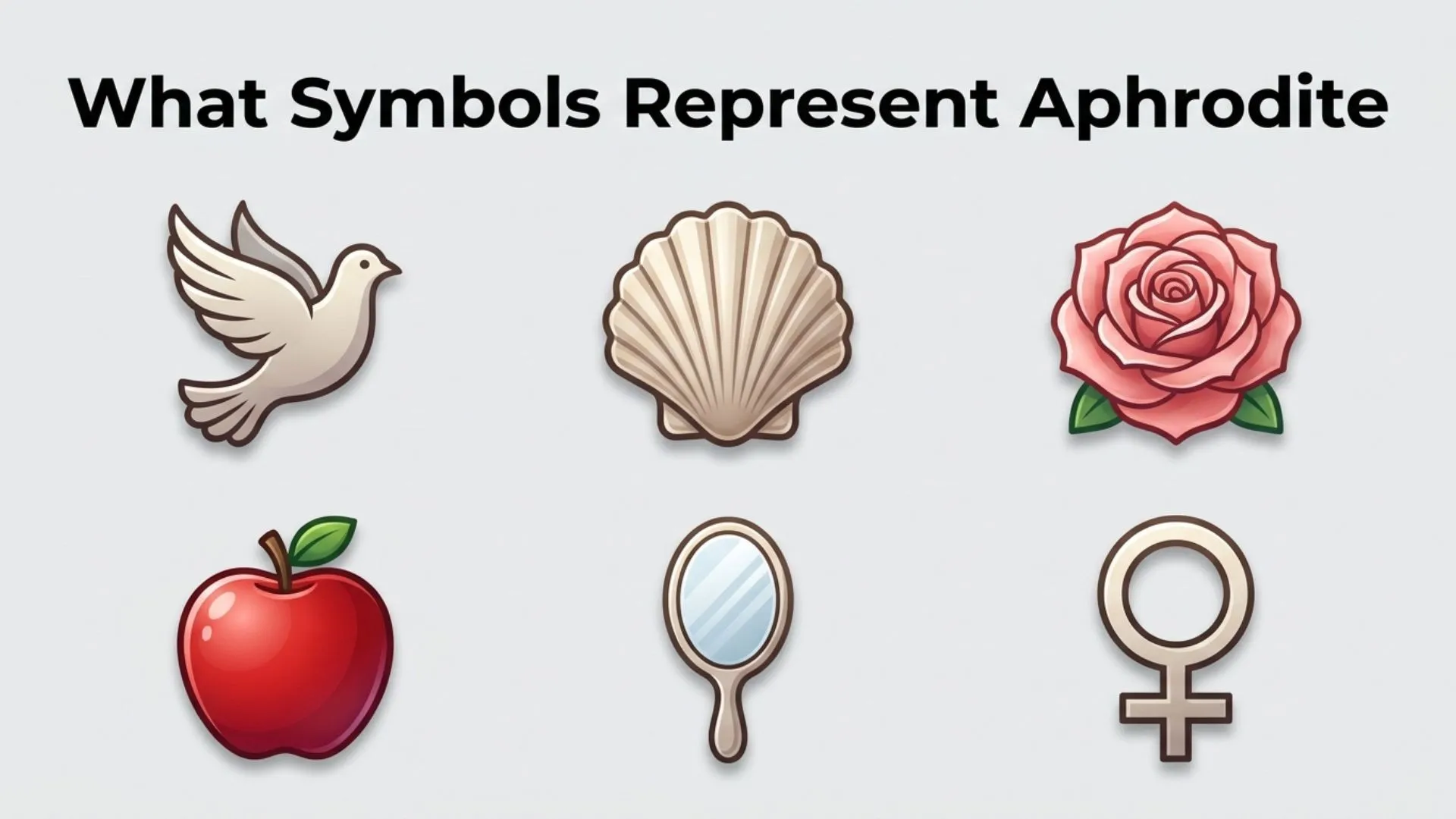
Aphrodite, the ancient Greek goddess of love, beauty, pleasure, and fertility, remains one of the most recognizable figures in mythology. Her influence extends far beyond ancient Greece, inspiring literature, art, fashion, jewelry, and modern symbolism. When people ask what symbols represent Aphrodite, they are often searching for the deeper meanings behind the objects, animals, plants, and visual representations associated with this beloved goddess.
Every symbol connected to Aphrodite carries a story. Some represent romantic love, while others symbolize beauty, passion, harmony, prosperity, or the creative power of life itself. Understanding these symbols provides valuable insight into ancient Greek culture and how symbolism has evolved into modern times.
In this guide, you’ll discover the most important Aphrodite symbols, their historical origins, symbolic significance, cultural meaning, and how they’re still used today.
What Symbols Represent Aphrodite (Meaning and Overview)
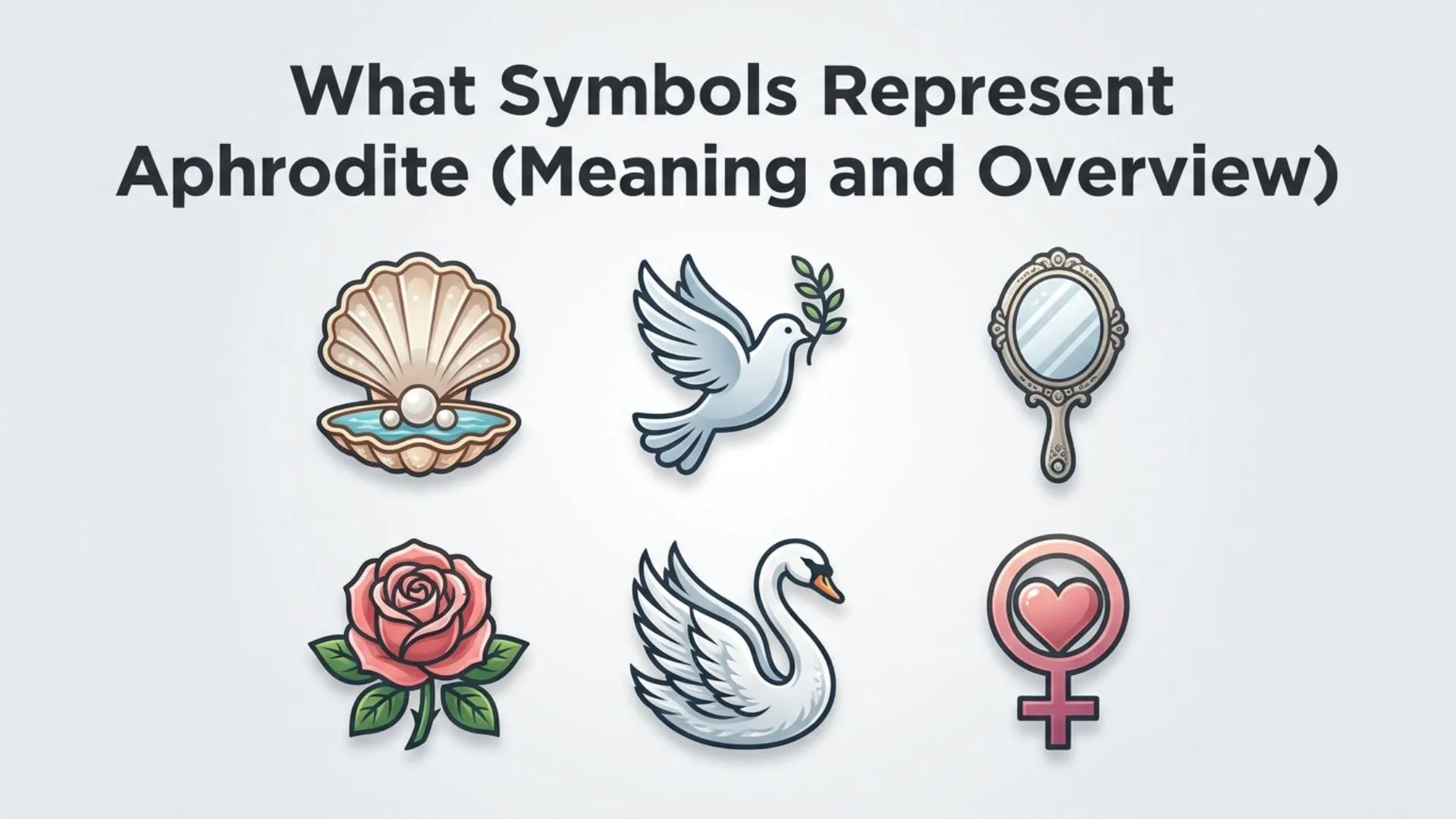
The symbols of Aphrodite are visual representations of qualities traditionally connected to the goddess. Rather than serving as simple decorative symbols, these icons communicated ideas about affection, attraction, fertility, femininity, grace, and emotional connection.
Ancient Greeks used symbolic representation in temples, sculptures, pottery, jewelry, and religious ceremonies. Many of these symbols became powerful communication symbols that identified Aphrodite without needing words.
Some of her most famous symbols include:
- The dove
- The rose
- The seashell
- Swans
- Myrtle
- Apples
- Mirrors
- Pearls
- Sparrows
- Dolphins
Each sign reflects a different aspect of her personality and divine role.
History and Origin of Aphrodite’s Symbols
According to Greek mythology, Aphrodite was born from sea foam after the Titan Uranus was overthrown. She emerged from the ocean fully grown, making the sea one of her strongest symbolic associations.
Ancient poets such as Hesiod described her arrival upon a shell carried by ocean waves. This legendary birth inspired artists for thousands of years, most famously in paintings depicting Aphrodite standing inside a giant seashell.
As worship of Aphrodite spread across Greece and neighboring civilizations, additional symbolic characters became associated with her. Many were adopted from earlier Near Eastern goddesses of love such as Ishtar and Astarte.
By the Classical period, temples dedicated to Aphrodite featured recurring decorative symbols including flowers, birds, fruit, and sacred plants. These visual representations helped worshippers instantly recognize shrines devoted to the goddess.
Major Symbols That Represent Aphrodite
The Dove
The dove is perhaps Aphrodite’s most famous symbol.
Ancient Greeks believed doves embodied gentleness, peace, loyalty, and romantic devotion. Stories describe Aphrodite traveling in a chariot pulled by white doves, reinforcing their connection to divine love.
Today, doves remain universal icons of:
- Romance
- Marriage
- Harmony
- Peace
- Faithfulness
- Emotional purity
Because of this enduring symbolism, doves frequently appear in wedding decorations and love-themed artwork.
The Rose
Few flowers symbolize love more strongly than the rose.
Greek mythology links red roses directly to Aphrodite. According to legend, roses first bloomed from the earth where her tears and the blood of her beloved Adonis fell together.
The rose symbolizes:
- Passion
- Beauty
- Romance
- Desire
- Emotional depth
Pink roses often represent admiration, while white roses symbolize innocence and purity. Red roses remain the strongest symbolic representation of passionate love.
The Seashell
The seashell is inseparable from Aphrodite’s mythical birth.
Since she emerged from the sea, shells became sacred visual symbols representing:
- Birth
- Feminine energy
- Beauty
- Creation
- Transformation
Large scallop shells are especially associated with Aphrodite in classical art. Even today, shell imagery appears in paintings, sculptures, and decorative symbolism inspired by Greek mythology.
Swans
Swans represent elegance, grace, and lifelong partnership.
Because swans often mate for life, ancient Greeks viewed them as symbols of faithful love and enduring relationships.
Their graceful appearance also matched Aphrodite’s reputation as the goddess of unmatched beauty.
Myrtle
The myrtle plant was sacred to Aphrodite.
Its fragrant leaves and delicate white flowers made it an important part of ancient marriage ceremonies.
Myrtle symbolizes:
- Fertility
- Eternal love
- Good fortune
- Marriage
- Prosperity
Brides in ancient Greece frequently wore myrtle wreaths during weddings.
Apples
Unlike the biblical tradition, apples in Greek mythology often represented beauty and desire.
The famous “Golden Apple of Discord” eventually led to the Judgment of Paris, where Aphrodite promised Paris the love of Helen in exchange for choosing her as the fairest goddess.
As a result, apples became symbolic representations of:
- Choice
- Attraction
- Desire
- Beauty
- Romance
Mirror
A mirror symbolizes both physical beauty and self-awareness.
Since Aphrodite embodied ideal beauty, mirrors naturally became one of her recognizable icons.
Beyond appearance, mirrors can also represent:
- Reflection
- Confidence
- Identity
- Inner beauty
- Personal growth
Modern interpretations often balance outward beauty with emotional self-acceptance.
Pearls
Pearls connect Aphrodite to the sea.
Formed naturally inside oysters, pearls symbolize:
- Purity
- Luxury
- Femininity
- Wisdom
- Hidden beauty
Pearls continue to be popular jewelry choices because of their timeless elegance.
Sparrows
Although less famous than doves, sparrows were also sacred birds of Aphrodite.
Ancient literature often portrayed sparrows pulling the goddess’s chariot.
They symbolize:
- Passion
- Fertility
- Everyday affection
- Joy
- Companionship
Dolphins
Because Aphrodite was born from the sea, dolphins frequently accompany her in ancient artwork.
Dolphins symbolize:
- Protection
- Happiness
- Safe journeys
- Friendship
- Ocean life
They reinforce Aphrodite’s strong relationship with water and creation.
Other Lesser-Known Symbols of Aphrodite
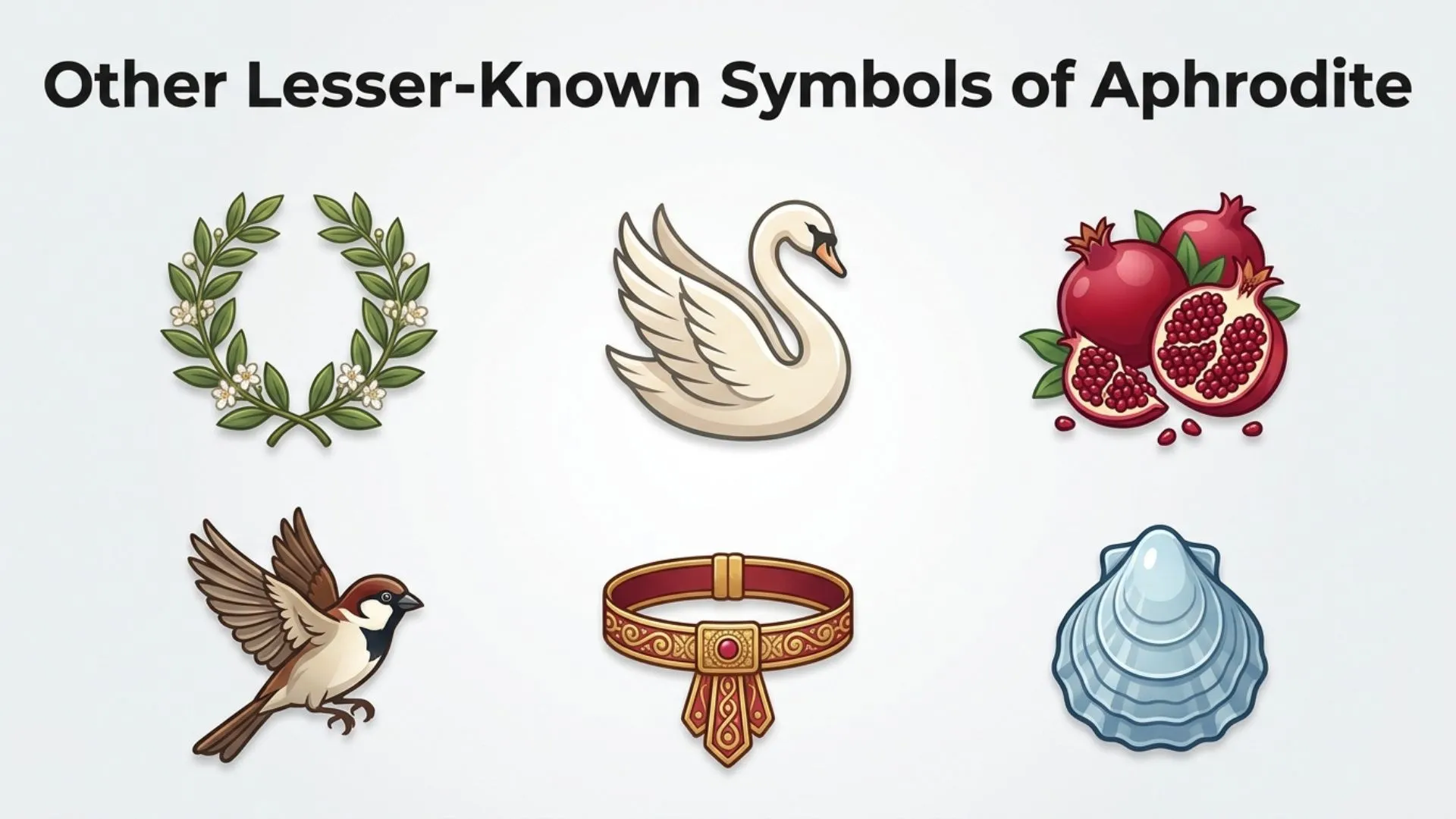
Several additional symbols appear in mythology and ancient artwork.
Gold
Gold represented divine perfection and immortal beauty.
Many statues portrayed Aphrodite adorned with golden jewelry and ornaments.
Cypress Tree
Although often associated with mourning in other traditions, the cypress also represented eternal life and sacred spaces connected to Aphrodite.
Anemone Flower
According to myth, anemones grew from the blood of Adonis after his death.
They symbolize:
- Fragility
- Lost love
- Renewal
- Hope
Girdle of Aphrodite
One magical object associated with the goddess was her enchanted girdle.
Legends claimed anyone wearing it became irresistibly attractive.
It symbolized:
- Charisma
- Attraction
- Divine favor
- Desire
Common Uses and Applications of Aphrodite Symbols
Although rooted in mythology, Aphrodite’s symbols remain widely used today.
Jewelry
Necklaces featuring doves, shells, roses, or pearls often symbolize love and feminine beauty.
Tattoos
Many people choose Aphrodite-inspired tattoos featuring:
- Roses
- Seashells
- Doves
- Swans
- Greek sculptures
- Myrtle leaves
These designs can represent self-love, romance, resilience, or femininity.
Home Decoration
Decorative symbols inspired by Aphrodite appear in:
- Wall art
- Sculptures
- Garden ornaments
- Floral arrangements
- Ocean-themed décor
Weddings
Many traditional wedding elements unknowingly echo Aphrodite’s symbolism, including:
- White doves
- Rose bouquets
- Myrtle accents
- Pearls
- Swan imagery
Fashion
Luxury fashion frequently incorporates Aphrodite-inspired visual representation through flowing fabrics, shell accessories, pearl jewelry, and floral motifs.
Symbolism and Significance
The enduring popularity of Aphrodite’s symbols comes from their timeless meanings.
Each symbol reflects a universal human experience.
| Symbol | Traditional Meaning |
| Dove | Peace, devotion, love |
| Rose | Romance, beauty, passion |
| Shell | Birth, femininity, creation |
| Swan | Grace, loyalty, elegance |
| Myrtle | Marriage, fertility |
| Apple | Desire, beauty, temptation |
| Mirror | Reflection, confidence |
| Pearl | Purity, wisdom, elegance |
| Dolphin | Protection, joy |
| Sparrow | Affection, companionship |
Collectively, these symbols communicate emotional, spiritual, and cultural values that remain relevant today.
How to Use Aphrodite Symbols Today
Modern interpretations focus more on personal inspiration than religious worship.
Some popular ways people incorporate Aphrodite symbolism include:
Personal Jewelry
Wear pearl necklaces, shell pendants, or dove charms as symbolic reminders of beauty, love, or confidence.
Artistic Expression
Artists often include roses, mirrors, or seashells in paintings and digital illustrations inspired by Greek mythology.
Meditation and Self-Care
Some people use Aphrodite symbols during mindfulness practices focused on:
- Self-love
- Emotional healing
- Gratitude
- Compassion
- Personal growth
Interior Design
Shells, floral artwork, and ocean-inspired decorative symbols can create peaceful living spaces while celebrating classical mythology.
Interesting Facts
- Aphrodite’s Roman counterpart is Venus.
- The dove has symbolized love for over 2,500 years.
- Sandro Botticelli’s famous painting The Birth of Venus popularized the seashell as Aphrodite’s defining visual icon.
- Myrtle crowns were commonly worn by brides in ancient Greece.
- Ancient coins occasionally featured Aphrodite alongside doves or dolphins.
- The planet Venus is named after Aphrodite’s Roman equivalent.
- Roses connected with Aphrodite later became universal symbols of Valentine’s Day.
- Pearls have represented feminine elegance across numerous cultures for centuries.
Common Mistakes or Misconceptions
Every Love Symbol Belongs to Aphrodite
Not all romantic symbols originate from Aphrodite. Hearts, Cupid’s arrows, and modern Valentine’s imagery developed through multiple historical traditions.
Aphrodite Represents Only Physical Beauty
Beauty was only one aspect of her identity. She also represented emotional connection, fertility, creativity, harmony, and life’s generative power.
The Seashell Is Her Only Symbol
While iconic, the shell is just one of many meaningful symbols associated with the goddess.
All Birds Represent Aphrodite
Only certain birds, particularly doves, swans, and sparrows, have strong historical associations with Aphrodite.
Aphrodite Symbols Have One Fixed Meaning
Many symbols carry multiple meanings depending on historical period, artistic context, and cultural interpretation.
Frequently Asked Questions
What is Aphrodite’s main symbol?
The dove is generally considered Aphrodite’s primary symbol because it represents love, devotion, peace, and romantic harmony.
Why is the seashell associated with Aphrodite?
The seashell symbolizes Aphrodite’s mythical birth from sea foam, making it one of her most recognizable visual representations.
What flower represents Aphrodite?
The rose is the flower most closely associated with Aphrodite, symbolizing beauty, romance, desire, and passionate love.
What animal is sacred to Aphrodite?
Several animals are sacred to Aphrodite, including doves, swans, sparrows, and dolphins.
What tree belongs to Aphrodite?
The myrtle tree is traditionally sacred to Aphrodite and represents marriage, fertility, and everlasting love.
Are Aphrodite symbols still used today?
Yes. Aphrodite’s symbols appear in jewelry, fashion, tattoos, fine art, literature, wedding traditions, and decorative design around the world.
What does the mirror symbolize for Aphrodite?
The mirror represents beauty, reflection, confidence, identity, and self-awareness rather than simple vanity.
Conclusion
Understanding what symbols represent Aphrodite reveals much more than a collection of beautiful objects. Each symbol tells part of a larger story about love, beauty, harmony, creation, and human connection. From the peaceful dove and passionate rose to the graceful swan and timeless seashell, these symbols have survived for thousands of years because their meanings remain deeply relevant.
Whether you’re exploring Greek mythology, choosing symbolic artwork, designing meaningful jewelry, or simply learning about historical symbolism, Aphrodite’s sacred icons continue to inspire people across cultures. Their rich history, symbolic significance, and modern usage remind us that love, beauty, and compassion have always been powerful forces in human civilization.

Daniel Carter is a writer and researcher focused on symbols, their meanings, origins, and practical uses. He enjoys turning complex symbolic concepts into simple, easy-to-understand explanations for everyday readers. Through his work, Daniel explores cultural, technical, historical, and commonly used symbols, helping readers understand what they mean and where they are used.
His work includes The Complete Guide to Symbols, Understanding Symbols and Their Meanings, and A Visual Guide to Common Symbols.