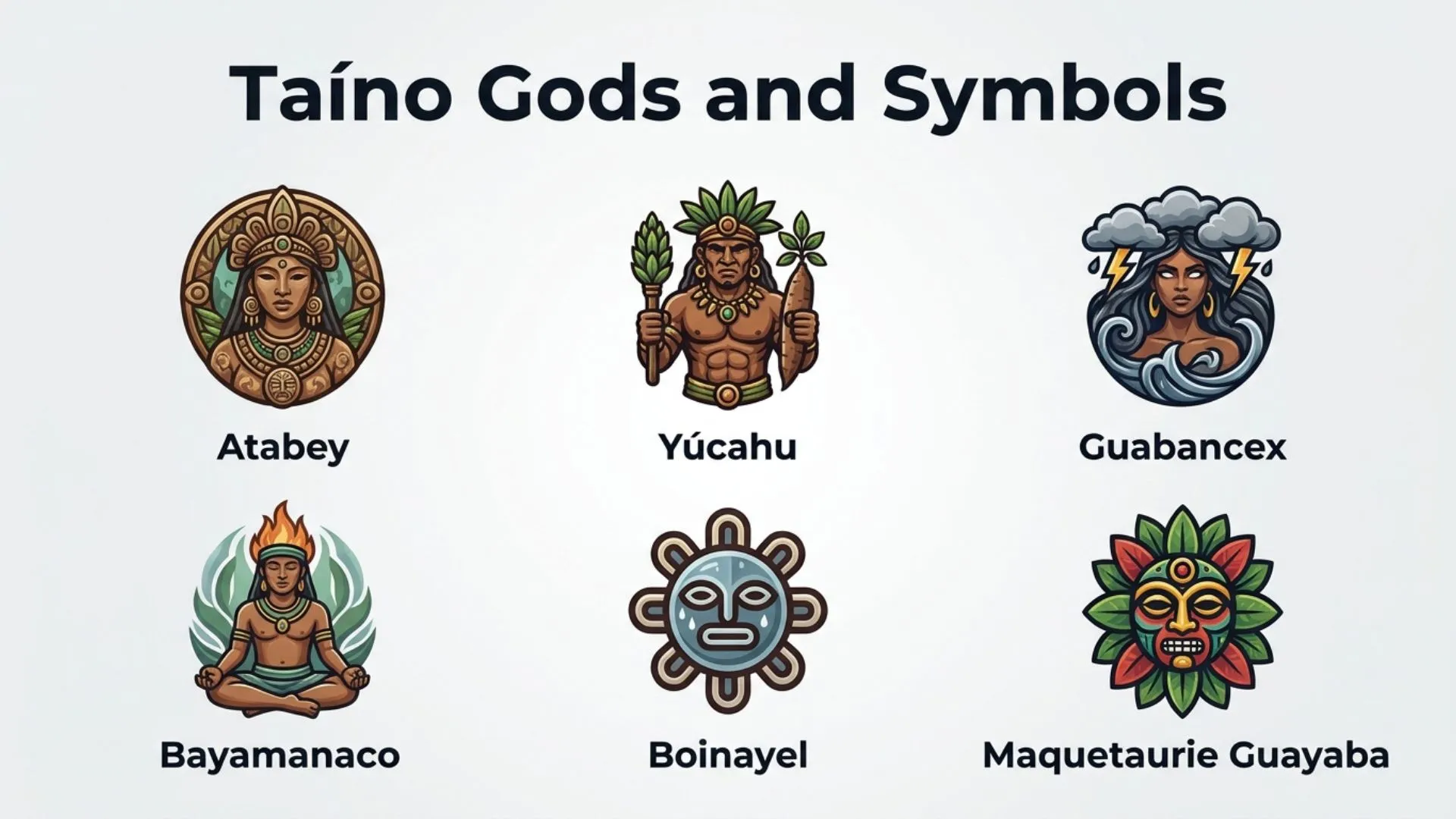
The Taíno people were the Indigenous inhabitants of much of the Caribbean before European contact, living across islands such as Hispaniola, Puerto Rico, Jamaica, Cuba, and the Bahamas. Their rich spiritual traditions centered on nature, ancestral worship, and powerful deities known as zemís or cemís. Alongside these sacred beings, the Taíno developed meaningful symbols that represented protection, fertility, the sun, the moon, life, death, and the natural world.
Today, interest in Taíno gods and symbols continues to grow as people seek to understand Caribbean Indigenous history, mythology, and cultural heritage. While some symbols are preserved through archaeological discoveries, petroglyphs, ceremonial objects, and oral traditions, others have been adapted into modern artwork, jewelry, tattoos, and educational materials.
This comprehensive guide explores the meaning of Taíno gods and symbols, their origins, historical context, spiritual significance, major deities, symbolic representations, and their continued relevance in modern culture.
Taíno Gods and Symbols (Meaning and Overview)
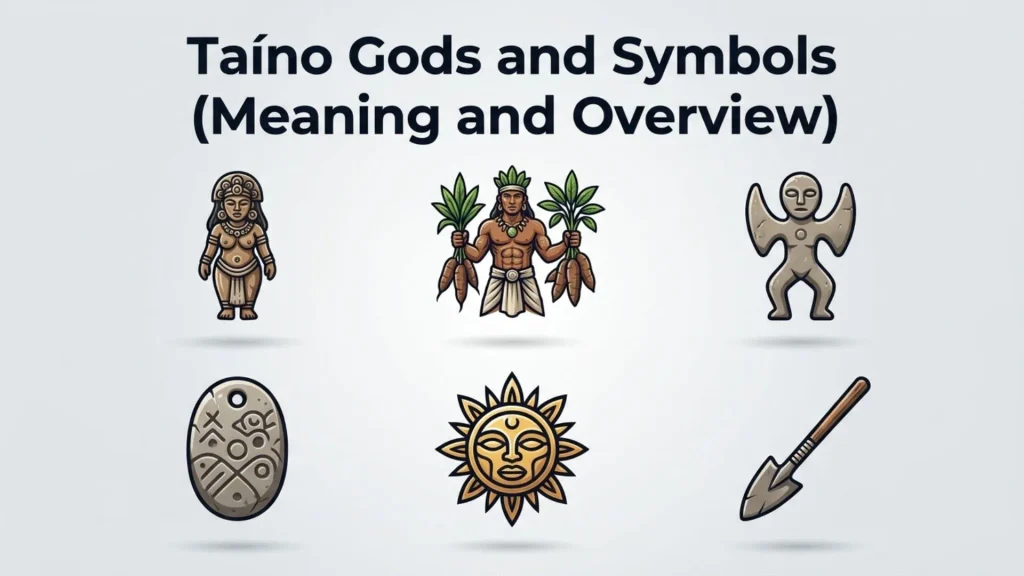
Taíno gods and symbols formed the foundation of the Taíno spiritual worldview. Rather than separating religion from everyday life, the Taíno believed that divine beings influenced weather, agriculture, health, fertility, the sea, and community life.
Many sacred symbols appeared on carved stones, wooden idols, pottery, caves, ceremonial plazas, and personal ornaments. These visual representations were not merely decorative they reflected spiritual beliefs, ancestral connections, and respect for nature.
Unlike alphabetic characters or Unicode symbols used in digital communication today, Taíno symbols were sacred cultural signs whose meanings were deeply connected to ceremonies and oral traditions.
Understanding these symbols offers valuable insight into one of the Caribbean’s oldest civilizations.
Taíno Gods and Symbols (History and Origin)
The Taíno Civilization
The Taíno belonged to the Arawakan-speaking peoples who migrated through South America into the Caribbean centuries before European arrival.
By the late 15th century, they had established organized communities with advanced farming techniques, trade networks, and complex religious traditions.
Spiritual Beliefs
Taíno spirituality emphasized harmony between humans, nature, and supernatural beings.
Rather than worshipping a single deity, they honored multiple gods associated with different aspects of life.
Their religious leaders, called behíques, acted as healers, spiritual advisors, and ceremonial leaders.
The Importance of Zemís
One of the most distinctive features of Taíno religion was the worship of zemís (also spelled cemís). A zemí could represent a god, an ancestor, or a powerful spirit.
Zemís were often carved from:
- Stone
- Wood
- Bone
- Shell
- Cotton
- Clay
These sacred objects were believed to house spiritual power and were treated with great respect.
Types, Variations, or Categories
Taíno symbols can be grouped into several categories based on their purpose and meaning.
Religious Symbols
These represented gods, spirits, and sacred ceremonies.
Examples include:
- Zemí carvings
- Three-pointed stones
- Sacred masks
- Ritual carvings
Nature Symbols
Many symbols represented natural forces such as:
- The sun
- Moon
- Rain
- Rivers
- Mountains
- Trees
- Sea
Nature was viewed as alive with spiritual energy.
Animal Symbols
Animals held important symbolic significance.
Common sacred animals included:
- Frogs
- Turtles
- Birds
- Bats
- Snakes
Each represented different spiritual qualities or natural powers.
Major Taíno Gods
Yúcahu
Yúcahu (also known as Yúcahu Bagua Maórocoti) was one of the most important Taíno deities.
He was associated with:
- Agriculture
- Cassava cultivation
- Peace
- Prosperity
- Life
Because cassava was the Taíno’s primary food source, Yúcahu played a central role in everyday survival.
He was generally regarded as a benevolent deity.
Atabey
Atabey was one of the most revered female deities.
She represented:
- Freshwater
- Fertility
- Motherhood
- Childbirth
- Rivers
- The Moon
Many historians describe Atabey as the supreme mother goddess within Taíno belief.
Her nurturing qualities made her especially important for family and community life.
Guabancex
Guabancex governed destructive natural forces.
She was connected with:
- Hurricanes
- Storms
- Strong winds
- Chaos
Living in hurricane-prone islands, the Taíno viewed Guabancex with both fear and respect.
Boinayel
Boinayel was associated with rainfall.
Rain ensured successful crops, making him an essential agricultural deity.
Márohu
Márohu represented clear skies and good weather.
Together, Boinayel and Márohu reflected the balance between rain and sunshine needed for healthy harvests.
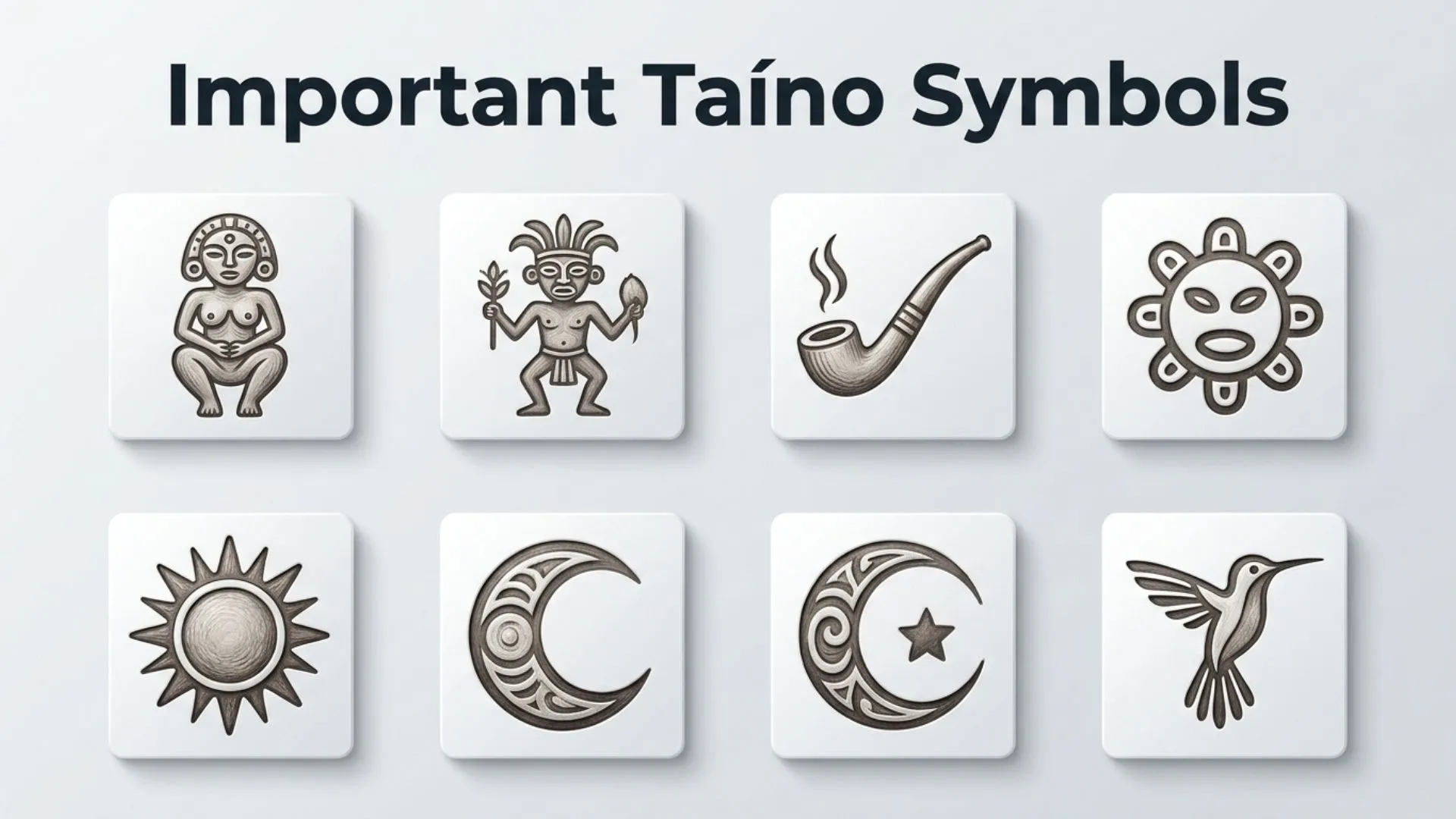
Important Taíno Symbols
The Coquí Frog
Although especially associated with Puerto Rico today, the frog held symbolic importance in Taíno culture.
It represented:
- Rain
- Fertility
- Renewal
- Life
- Seasonal change
Its frequent appearance in petroglyphs highlights its cultural importance.
The Sun Symbol
Solar imagery symbolized:
- Life
- Energy
- Growth
- Time
- Divine power
Many Taíno carvings include circular faces with radiating features representing the sun.
The Moon Symbol
The moon represented:
- Femininity
- Cycles
- Fertility
- Water
- Night
Moon imagery often connected with Atabey.
Three-Pointed Zemí
One of the most recognizable Taíno artifacts is the three-pointed stone.
Scholars believe it symbolized:
- Sacred mountains
- Fertility
- Agricultural abundance
- Spiritual protection
These ceremonial objects were often placed in fields to encourage successful harvests.
Spiral Motifs
Spirals commonly symbolized:
- Cycles of life
- Spiritual journeys
- Nature
- Continuity
- Cosmic balance
These designs appear in many Caribbean petroglyphs.
Petroglyphs and Rock Art
The Taíno created impressive rock carvings throughout the Caribbean.
Common images include:
- Human faces
- Animal figures
- Spirals
- Geometric patterns
- Sacred beings
Many petroglyphs are found near rivers, caves, and ceremonial sites, suggesting their importance in religious practices.
Although researchers continue studying these carvings, some meanings remain uncertain due to the loss of much traditional oral history after European colonization.
Common Uses and Applications
Today, Taíno gods and symbols appear in many cultural contexts.
Educational Resources
Schools and museums use Taíno symbols to teach Caribbean Indigenous history.
Jewelry
Artists incorporate traditional motifs into necklaces, pendants, bracelets, and earrings.
Tattoos
Many people choose Taíno-inspired tattoos to celebrate Caribbean ancestry or appreciation for Indigenous art.
When selecting such designs, it is important to understand their historical and cultural meanings rather than treating them as purely decorative.
Cultural Festivals
Traditional symbols are displayed during Indigenous heritage events celebrating Taíno culture.
Academic Research
Archaeologists and historians continue studying Taíno iconography to better understand pre-Columbian Caribbean civilizations.
Symbolism, Significance, or Importance
Taíno symbols carried profound symbolic significance.
They represented:
- Harmony with nature
- Spiritual protection
- Fertility
- Community
- Ancestral wisdom
- Seasonal cycles
- Divine guidance
- Respect for the environment
Unlike modern logos, these visual representations were deeply connected to religious beliefs and ceremonial life.
Many symbols reflected the understanding that humans, animals, plants, rivers, and celestial bodies were spiritually interconnected.
How to Use Taíno Symbols Respectfully
Modern interest in Taíno symbolism continues to grow, but respectful use is essential.
Learn Their History
Research the cultural background before displaying or wearing Taíno-inspired designs.
Avoid Misrepresentation
Not every Caribbean geometric design is authentically Taíno.
Use reliable historical sources when identifying symbols.
Support Indigenous Artists
When purchasing artwork or jewelry, consider creators who honor authentic Taíno traditions.
Appreciate Their Cultural Importance
Recognize that many symbols represent sacred beliefs rather than simple decorative patterns.
Interesting Facts
- The Taíno cultivated cassava, one of the Caribbean’s most important traditional crops.
- Many Caribbean place names originated from the Taíno language.
- Archaeologists continue discovering previously unknown Taíno ceremonial sites.
- The word “hurricane” derives from the Taíno storm deity Huracán, closely associated with Guabancex in historical traditions.
- The Taíno influenced many aspects of Caribbean culture that remain visible today.
- Thousands of petroglyphs survive across the Caribbean.
- Zemís were often believed to communicate with spiritual leaders.
- Some Taíno symbols have become modern icons of Caribbean Indigenous identity.
Common Mistakes or Misconceptions
Assuming Every Spiral Is Taíno
Spiral designs appear in many ancient cultures. Context is necessary before identifying a symbol as Taíno.
Treating All Zemís as Gods
While many zemís represented deities, others symbolized ancestors or spiritual beings.
Believing Taíno Culture Disappeared Completely
Although colonialism had devastating effects, many people today preserve and celebrate Taíno heritage and traditions.
Confusing Taíno Symbols with Aztec or Maya Symbols
These civilizations developed independently and used different religious systems and artistic traditions.
Using Sacred Symbols Without Understanding Their Meaning
Learning historical symbolism promotes respectful appreciation rather than cultural misunderstanding.
Frequently Asked Questions
Who were the Taíno?
The Taíno were Indigenous peoples who inhabited much of the Caribbean, including Puerto Rico, Hispaniola, Cuba, Jamaica, and the Bahamas before European colonization.
What are zemís?
Zemís are sacred objects or spiritual representations associated with Taíno gods, ancestors, or powerful supernatural beings.
Who was the main Taíno god?
Yúcahu was one of the principal Taíno deities, associated with agriculture, cassava, peace, and prosperity.
Who was Atabey?
Atabey was the mother goddess connected with freshwater, fertility, childbirth, rivers, and the moon.
What do Taíno symbols represent?
They commonly symbolize nature, fertility, spiritual protection, ancestors, balance, agriculture, and harmony between humans and the natural world.
Are Taíno symbols still used today?
Yes. They appear in museums, educational materials, artwork, jewelry, tattoos, and cultural heritage projects throughout the Caribbean.
Why are Taíno gods and symbols historically important?
They preserve the spiritual beliefs, artistic traditions, and cultural identity of one of the Caribbean’s earliest civilizations while helping modern audiences understand Indigenous history.
Conclusion
Taíno gods and symbols offer a fascinating window into the spiritual world of the Caribbean’s Indigenous peoples. From the life-giving deity Yúcahu and the nurturing goddess Atabey to the sacred zemís, petroglyphs, spirals, and three-pointed stones, each symbol reflects a worldview centered on harmony with nature, ancestral wisdom, and the interconnectedness of all living things.
Today, these symbols continue to inspire educators, historians, artists, and people reconnecting with their Caribbean heritage. By learning their meanings and respecting their cultural significance, we help preserve the enduring legacy of the Taíno people and their remarkable contributions to the history and identity of the Caribbean.

Ryan Mitchell is an independent writer with a strong interest in symbols, visual communication, and the meanings behind different signs and icons. His writing focuses on providing clear, accurate, and useful information that helps readers quickly understand unfamiliar symbols. Ethan covers a wide range of topics, from everyday and cultural symbols to technical and professional symbol systems.
His books include The World of Symbols, Symbols Explained Simply, and The Essential Symbol Reference Guide.