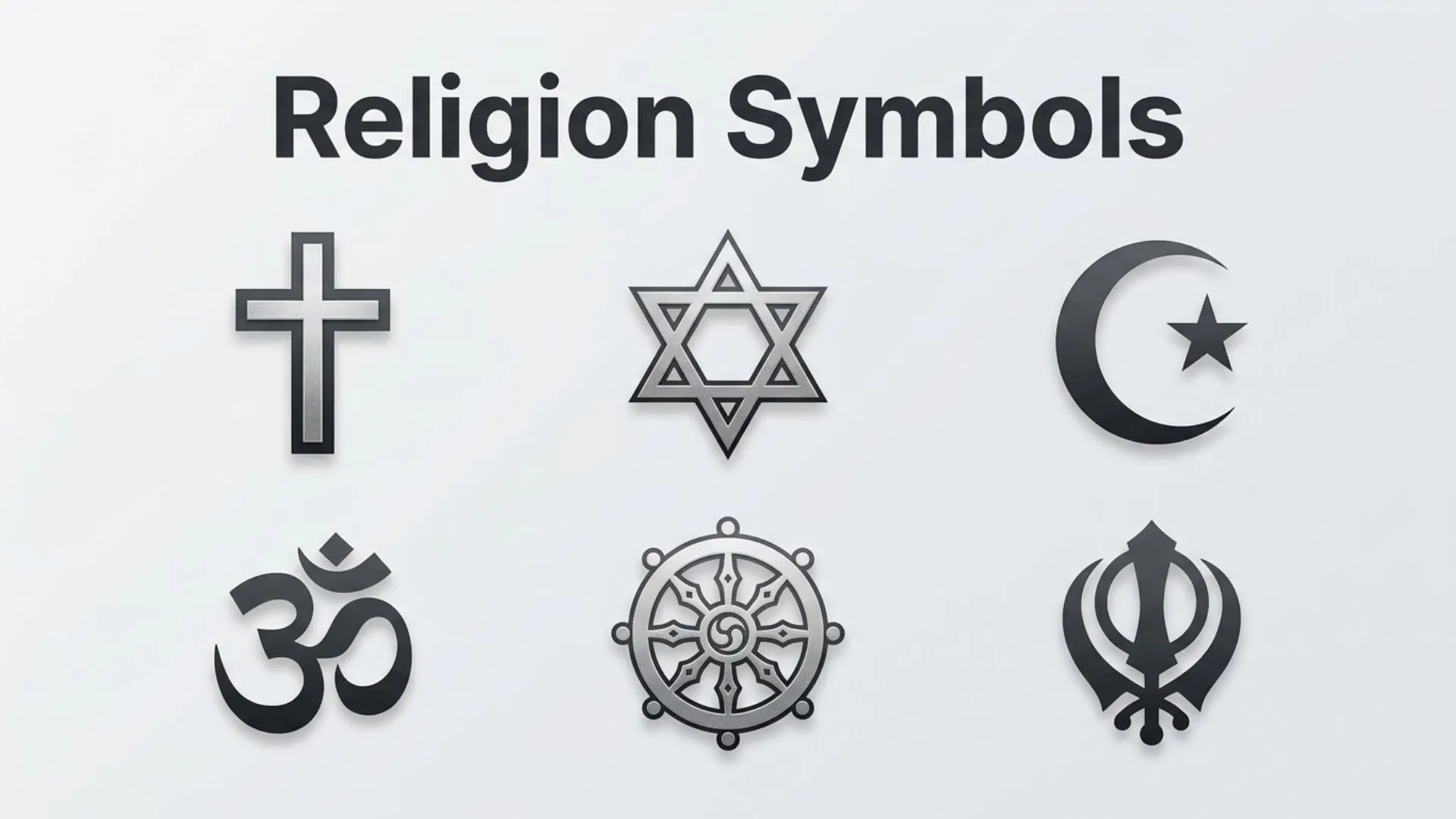
Religion symbols have played a vital role in human civilization for thousands of years. Long before written language became widespread, people used sacred signs, icons, and symbolic representations to express faith, communicate spiritual beliefs, and preserve religious traditions. Today, these symbols continue to appear in places of worship, artwork, jewelry, literature, architecture, and digital communication, serving as powerful reminders of religious identity and cultural heritage.
Every religious symbol carries a deeper meaning beyond its visual appearance. Some represent divine protection, while others symbolize peace, eternal life, wisdom, or the connection between humanity and the sacred. Understanding these symbols helps us appreciate different faiths, promotes cultural awareness, and reduces misunderstandings about religious traditions.
This comprehensive guide explores the meaning, history, major categories, symbolism, and modern use of religion symbols from around the world.
Meaning and Overview of Religion Symbols
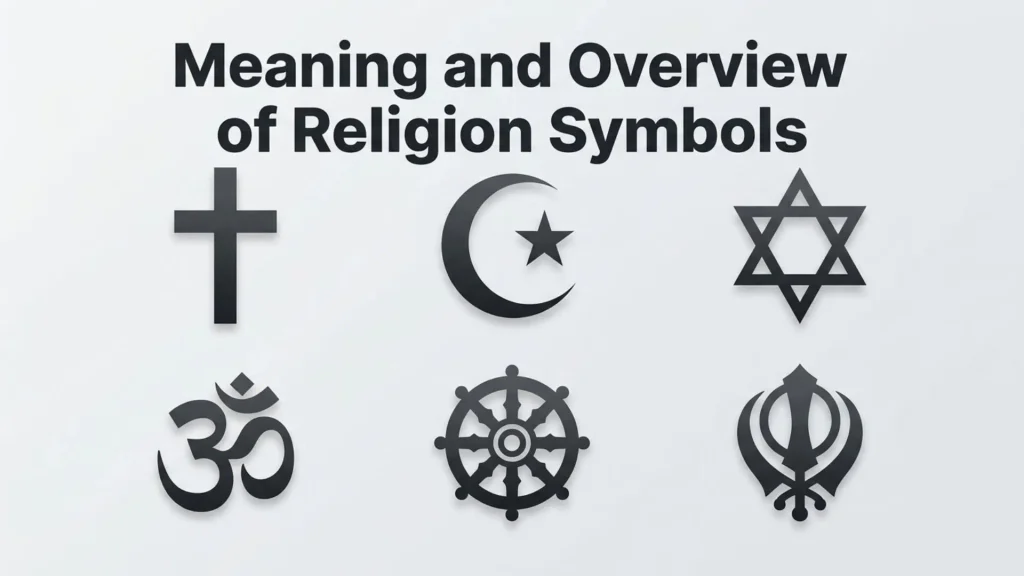
Religion symbols are visual representations that express the beliefs, values, teachings, and traditions of a particular faith. They may appear as icons, signs, characters, sacred designs, or artistic motifs used during worship or religious ceremonies.
Unlike ordinary decorative symbols, religious symbols often carry centuries of historical symbolism and spiritual importance. Many believers view these sacred signs as reminders of divine presence, moral values, or religious teachings.
Religion symbols serve several purposes:
- Represent a specific faith or denomination
- Express spiritual beliefs visually
- Unite followers of a religion
- Preserve religious traditions across generations
- Inspire prayer, meditation, and reflection
- Communicate complex theological ideas through simple visual representation
Although many religions use different symbols, they all share the common purpose of strengthening faith and spiritual identity.
History and Origin of Religion Symbols
The history of religion symbols dates back to prehistoric civilizations. Ancient communities carved sacred images into stone, painted them inside caves, and engraved them on pottery long before written alphabets developed.
As civilizations evolved, religious traditions adopted unique symbolic representations to distinguish their beliefs. Temples, churches, mosques, monasteries, and shrines often displayed sacred icons that helped followers recognize important teachings.
Many famous religion symbols originated centuries—or even thousands of years—ago. Some have remained almost unchanged, while others evolved into modern visual forms used in books, digital typography, websites, and Unicode symbol collections.
Religious symbolism also spread through trade, migration, exploration, and cultural exchange, allowing symbols to become recognized worldwide.
Major Types of Religion Symbols
Christian Symbols
The Cross is perhaps the most recognized religion symbol worldwide. It represents the crucifixion and resurrection of Jesus Christ and symbolizes salvation, hope, forgiveness, and eternal life.
Other important Christian symbols include:
- Fish (Ichthys)
- Dove
- Alpha and Omega
- Lamb
- Crown of Thorns
- Chi-Rho
- Holy Trinity symbols
Each icon communicates different aspects of Christian belief and scripture.
Islamic Symbols
Islam traditionally emphasizes faith in one God rather than symbolic imagery, but several visual symbols have become culturally associated with Islam.
Common Islamic symbols include:
- Crescent Moon
- Star and Crescent
- Prayer Beads (Misbaha)
- Kaaba imagery
- Arabic calligraphy featuring the name of Allah
These symbols often represent guidance, unity, worship, and devotion rather than objects of worship themselves.
Hindu Symbols
Hinduism contains one of the richest collections of sacred symbols in the world.
Popular Hindu symbols include:
- Om (Aum)
- Lotus
- Swastika (traditional Hindu meaning)
- Trishul (Trident)
- Tilak
- Shiva Lingam
- Kalash
Each symbol reflects important spiritual concepts such as creation, purity, knowledge, prosperity, and divine energy.
Buddhist Symbols
Buddhism uses symbols to illustrate the teachings of Buddha and the path toward enlightenment.
Well-known Buddhist symbols include:
- Dharma Wheel
- Lotus Flower
- Endless Knot
- Bodhi Tree
- Buddha Footprints
- Stupa
- Prayer Wheel
These sacred signs emphasize wisdom, compassion, mindfulness, and spiritual awakening.
Jewish Symbols
Judaism has several historic symbols representing the Jewish faith and identity.
Major examples include:
- Star of David
- Menorah
- Chai Symbol
- Torah Scroll
- Mezuzah
These symbols reflect God’s covenant, wisdom, faith, and Jewish heritage.
Sikh Symbols
Sikhism uses distinctive symbols that represent equality, courage, and devotion.
Important Sikh symbols include:
- Khanda
- Ik Onkar
- Five Ks
- Nishan Sahib
These visual representations remind followers of Sikh principles and moral responsibilities.
Indigenous and Traditional Religious Symbols
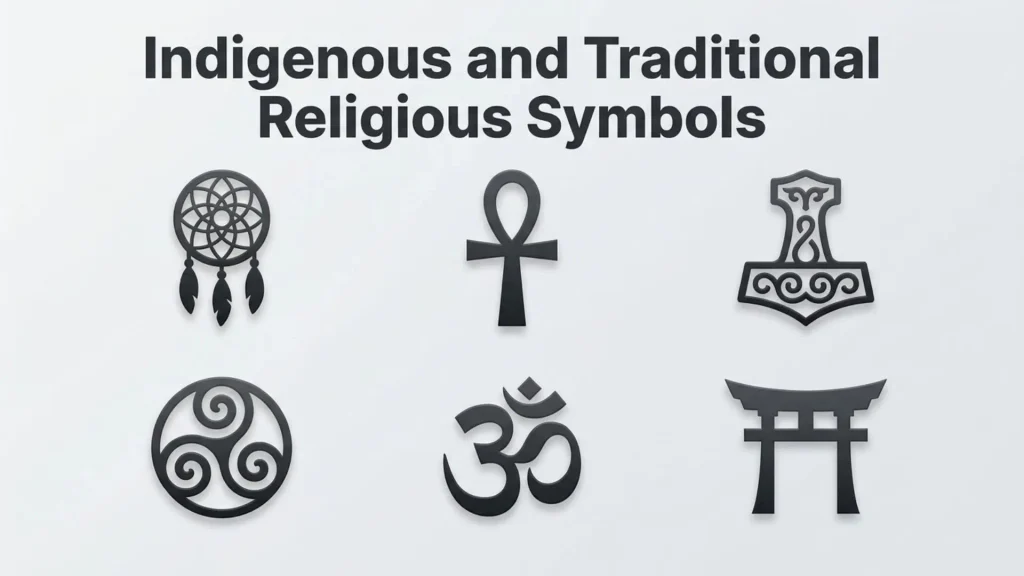
Many indigenous cultures developed sacred symbols that continue to hold religious and cultural significance today.
Examples include:
- Medicine Wheel
- Sun Symbol
- Feather
- Tree of Life
- Sacred Circle
- Thunderbird
- Totem symbols
These symbols often represent harmony with nature, ancestors, healing, and spiritual balance.
Ancient Religion Symbols
Some religion symbols originated in ancient civilizations and continue influencing modern spirituality.
Examples include:
- Ankh (Ancient Egypt)
- Eye of Horus
- Caduceus
- Solar Disc
- Winged Sun
- Ouroboros
Although some of these symbols have gained modern interpretations, their historical symbolism remains deeply connected to ancient religious beliefs.
Shared Themes Across Religion Symbols
Although religions differ in doctrine, many symbols express similar universal ideas.
Peace
Doves, lotus flowers, olive branches, and circles commonly symbolize peace, harmony, and reconciliation.
Eternal Life
Crosses, the Ankh, lotus flowers, and circular designs often represent life beyond death or spiritual continuity.
Wisdom
Sacred books, lamps, trees, and wheels frequently symbolize knowledge and enlightenment.
Divine Protection
Many cultures use protective signs believed to guard individuals against evil or misfortune.
Unity
Circles, interconnected patterns, and sacred geometric designs often represent the unity between humanity, nature, and the divine.
Common Uses and Applications of Religion Symbols
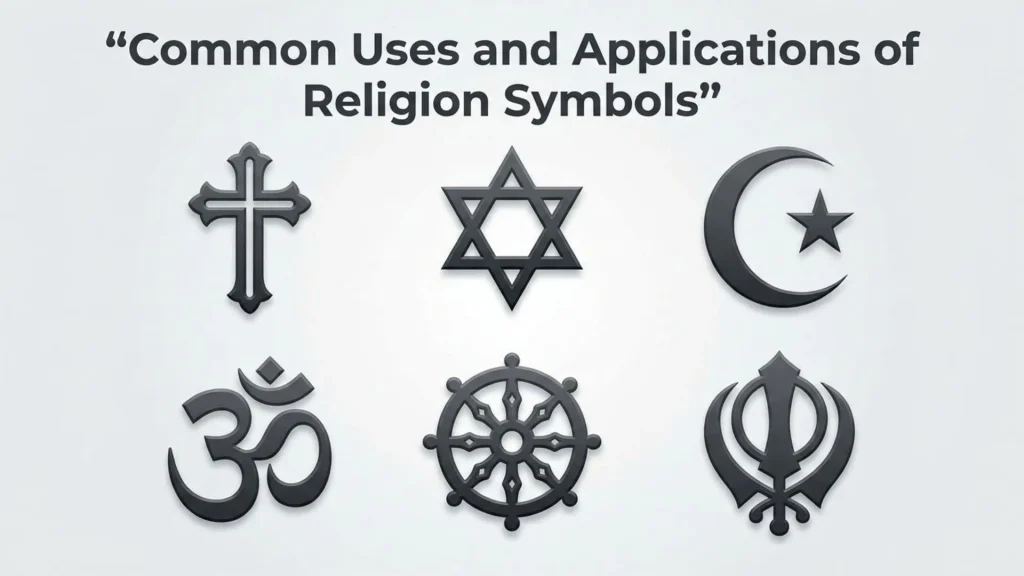
Religion symbols appear in many aspects of daily life beyond religious ceremonies.
Common applications include:
- Places of worship
- Religious books
- Educational materials
- Jewelry
- Architecture
- Memorials
- National monuments
- Flags
- Charity organizations
- Digital communication
- Unicode symbols
- Decorative artwork
- Cultural festivals
- Religious clothing
- Tattoos (with cultural sensitivity)
In today’s digital world, many religious icons exist as text symbols, digital characters, and typography symbols available across operating systems and websites.
Symbolism and Cultural Significance
Religion symbols often communicate complex spiritual ideas without words.
Their symbolic significance includes:
- Faith
- Hope
- Compassion
- Sacrifice
- Wisdom
- Forgiveness
- Unity
- Purity
- Justice
- Love
- Protection
- Spiritual growth
Because symbols carry emotional and cultural meaning, they help preserve traditions across generations.
For believers, these sacred icons often strengthen personal devotion while reminding communities of their shared values and beliefs.
How to Respectfully Use Religion Symbols
Religion symbols deserve thoughtful and respectful use.
Learn Their Meaning
Before displaying or wearing a religious symbol, understand its traditional meaning and cultural context.
Avoid Misuse
Using sacred signs purely as fashion accessories may unintentionally offend followers of that religion.
Respect Different Interpretations
Many symbols have multiple meanings depending on the denomination, region, or historical period.
Consider Cultural Context
Some symbols have changed meaning over time. For example, the swastika has ancient religious significance in Hinduism, Buddhism, and Jainism, but its association with Nazi Germany has dramatically altered public perception in many parts of the world.
Use Accurate Designs
When creating educational content, artwork, or typography, use authentic visual representations instead of distorted versions.
Interesting Facts About Religion Symbols
- Some religion symbols are more than 4,000 years old.
- The Om symbol is considered one of the oldest sacred sounds in Hindu philosophy.
- The Cross existed as a geometric shape before becoming Christianity’s primary symbol.
- The Dharma Wheel usually contains eight spokes representing the Noble Eightfold Path.
- The Menorah traditionally has seven branches, while Hanukkah menorahs have nine.
- Unicode includes several religious signs and special characters for digital communication.
- Many ancient symbols appear in both religious and cultural artwork.
- Sacred geometry influences numerous religion symbols around the world.
Common Mistakes and Misconceptions
Assuming Every Symbol Means the Same Thing
A symbol may have different meanings across religions and cultures.
Confusing Cultural and Religious Symbols
Some symbols are primarily cultural rather than religious, even though they appear in religious settings.
Misinterpreting Ancient Symbols
Historical symbolism often differs from modern interpretations.
Ignoring Historical Context
Understanding when and where a symbol originated helps explain its true significance.
Believing Symbols Are Worshipped
Most religions do not worship the symbols themselves. Instead, the symbols serve as reminders of spiritual beliefs and sacred teachings.
Frequently Asked Questions
What are religion symbols?
Religion symbols are sacred visual representations used to express beliefs, traditions, spiritual teachings, and religious identity.
Why are religion symbols important?
They communicate complex spiritual ideas, preserve traditions, strengthen community identity, and help believers express their faith.
What is the oldest known religion symbol?
Several ancient symbols, including the Ankh, solar symbols, and prehistoric sacred carvings, date back thousands of years and are among the oldest known religious representations.
Are religion symbols universal?
No. While many symbols express similar concepts like peace or hope, each religion has unique symbols with distinct meanings and historical backgrounds.
Can one symbol have multiple meanings?
Yes. Many religion symbols have different interpretations depending on religious traditions, cultures, regions, and historical periods.
Are religion symbols available as Unicode symbols?
Several religious symbols are included in Unicode, allowing them to be displayed consistently across digital devices and platforms.
Is it respectful to wear religion symbols?
It depends on the symbol and the context. Learning its traditional meaning and respecting the beliefs associated with it is essential before wearing or displaying it.
Conclusion
Religion symbols are far more than simple icons or decorative designs. They are powerful visual representations of faith, history, culture, and spirituality that have shaped civilizations for thousands of years. Whether carved into ancient temples, displayed in modern places of worship, printed in sacred texts, or used as digital characters, these symbols continue to connect people with their beliefs and traditions.
Understanding the meaning, origin, and symbolic significance of religion symbols encourages greater respect for different faiths while promoting cultural awareness and religious literacy. By learning the stories behind these sacred signs, we gain a deeper appreciation for the diverse spiritual heritage shared across the world.

Ryan Mitchell is an independent writer with a strong interest in symbols, visual communication, and the meanings behind different signs and icons. His writing focuses on providing clear, accurate, and useful information that helps readers quickly understand unfamiliar symbols. Ethan covers a wide range of topics, from everyday and cultural symbols to technical and professional symbol systems.
His books include The World of Symbols, Symbols Explained Simply, and The Essential Symbol Reference Guide.