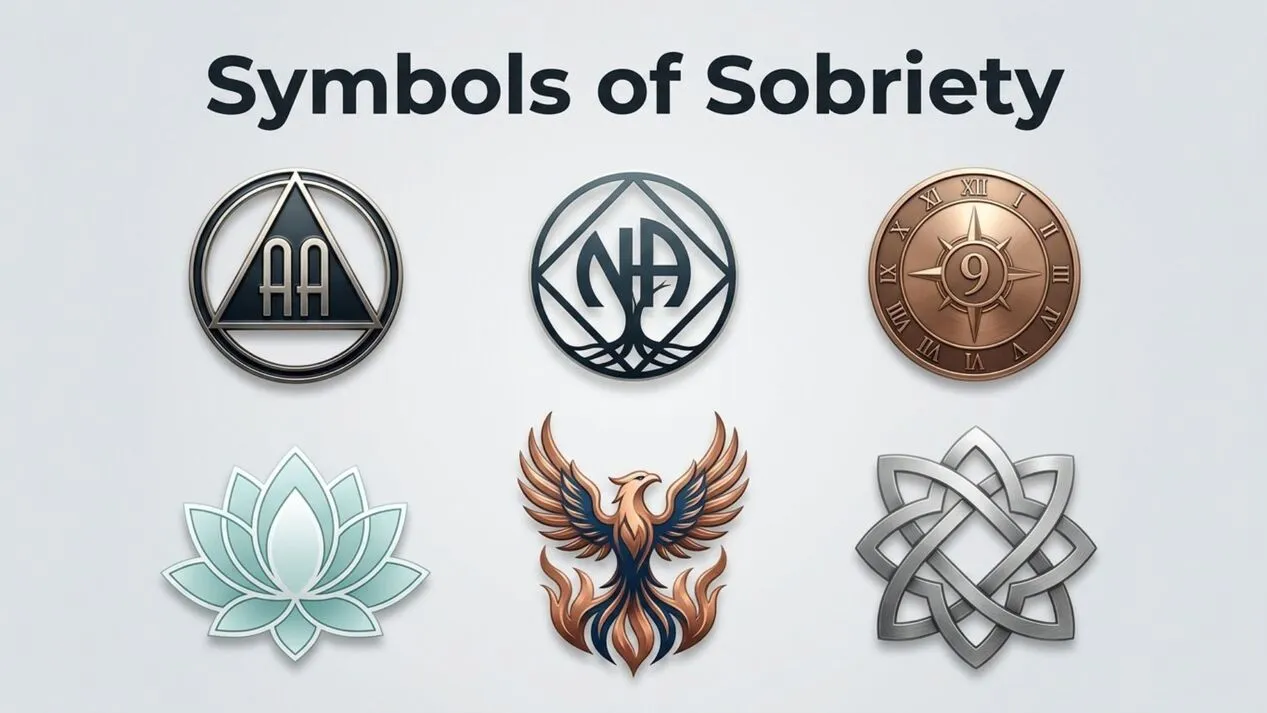
Symbols of sobriety hold deep personal meaning for millions of people recovering from alcohol and substance use disorders. They represent hope, resilience, personal growth, and the commitment to living a healthier life.
While recovery is a unique journey for every individual, symbolic representations provide visible reminders of progress, strength, and the decision to remain sober one day at a time.
From recovery medallions and the Sobriety Triangle to butterflies, phoenixes, and semicolon tattoos, sobriety symbols are used by individuals, support groups, and recovery communities around the world. Some have official origins within recovery organizations, while others have become popular personal icons that represent transformation and perseverance.
This comprehensive guide explores the most recognized symbols of sobriety, their meanings, history, symbolism, and modern uses.
Meaning and Overview of Symbols of Sobriety
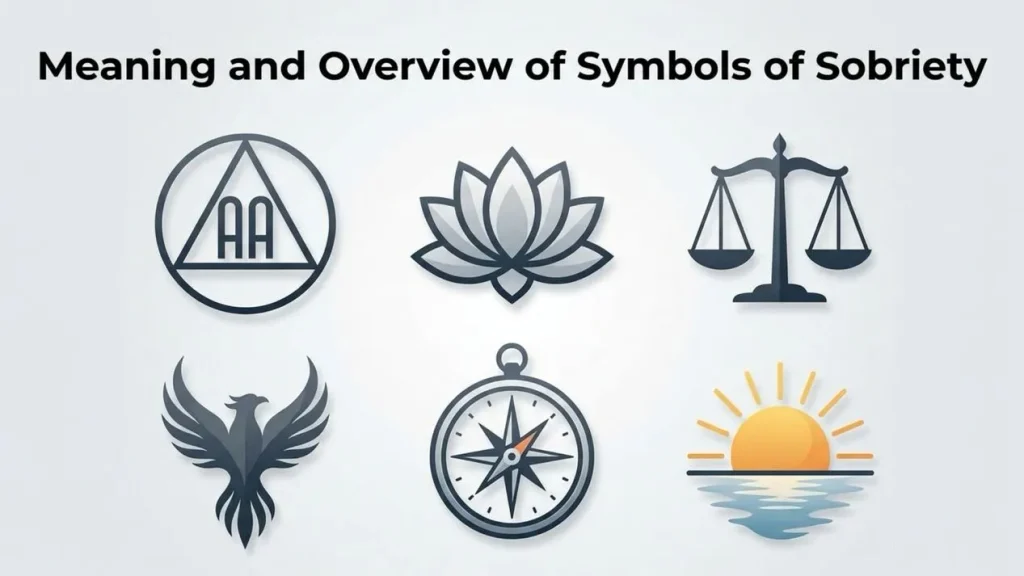
Symbols of sobriety are visual representations that celebrate recovery from addiction and encourage continued personal growth. Unlike ordinary decorative symbols, these icons often carry emotional significance because they represent milestones, healing, courage, and hope.
For many people, a sobriety symbol serves as a daily reminder of:
- Commitment to recovery
- Personal resilience
- New beginnings
- Self-discipline
- Inner strength
- Freedom from addiction
- Community support
- Continued healing
These symbols may appear as jewelry, tattoos, medallions, keychains, artwork, clothing, or digital graphics.
History and Origin of Sobriety Symbols
Modern sobriety symbols are closely connected to the growth of organized recovery programs during the 20th century. As recovery communities expanded, symbolic traditions developed to recognize personal achievements and encourage long-term sobriety.
Many recovery organizations introduced coins, medallions, and symbolic designs to celebrate sobriety milestones such as 24 hours, 30 days, one year, or multiple years of continuous recovery.
Alongside these official emblems, many people adopted broader cultural symbols—including butterflies, phoenixes, and semicolons—to express their personal recovery stories. While these symbols may not be unique to sobriety, they have become meaningful within many recovery communities because they represent transformation, resilience, and hope.
Today, symbols of sobriety continue to evolve through art, jewelry, tattoos, social media, and support groups.
Types of Symbols of Sobriety
The Sobriety Triangle
One of the most widely recognized recovery symbols is the Sobriety Triangle enclosed within a circle.
The triangle traditionally represents three important principles:
- Unity
- Recovery
- Service
The surrounding circle symbolizes wholeness, continuity, and the support of the recovery community.
This symbol has become closely associated with twelve-step recovery traditions and is commonly displayed on medallions, literature, and jewelry.
Sobriety Chips and Medallions
Sobriety chips, also called recovery coins or medallions, commemorate milestones in recovery.
Different chips often represent achievements such as:
- 24 hours
- 30 days
- 60 days
- 90 days
- Six months
- One year
- Multiple years of sobriety
Although designs vary, they frequently include inspirational phrases, symbolic imagery, or the Sobriety Triangle.
For many individuals, these medallions become treasured reminders of progress and perseverance.
The Butterfly
The butterfly symbolizes transformation.
Just as a caterpillar develops into a butterfly, recovery often involves profound personal change.
The butterfly commonly represents:
- Growth
- Healing
- Freedom
- New beginnings
- Positive change
Because of its uplifting symbolism, it has become a popular recovery tattoo and decorative symbol.
The Phoenix
The phoenix is a mythical bird associated with renewal.
According to legend, it rises from its own ashes stronger than before.
Within sobriety communities, the phoenix symbolizes:
- Recovery after hardship
- Resilience
- Rebirth
- Hope
- Personal strength
Many individuals choose the phoenix as a visual representation of overcoming addiction.
The Semicolon
The semicolon has become an internationally recognized symbol of hope and mental health awareness.
In recovery communities, it often represents the decision to continue one’s life despite difficult chapters.
Rather than signifying an ending, the semicolon reminds people that their story continues.
Lotus Flower
The lotus flower grows through muddy water before blooming.
Its symbolic significance includes:
- Personal growth
- Healing
- Inner peace
- Spiritual development
- Strength through adversity
For many people in recovery, the lotus reflects the possibility of flourishing despite life’s challenges.
Tree of Life
The Tree of Life represents:
- Stability
- Growth
- Wisdom
- Strong foundations
- Interconnectedness
It reminds individuals that lasting recovery develops gradually through healthy habits and supportive relationships.
Other Meaningful Recovery Symbols
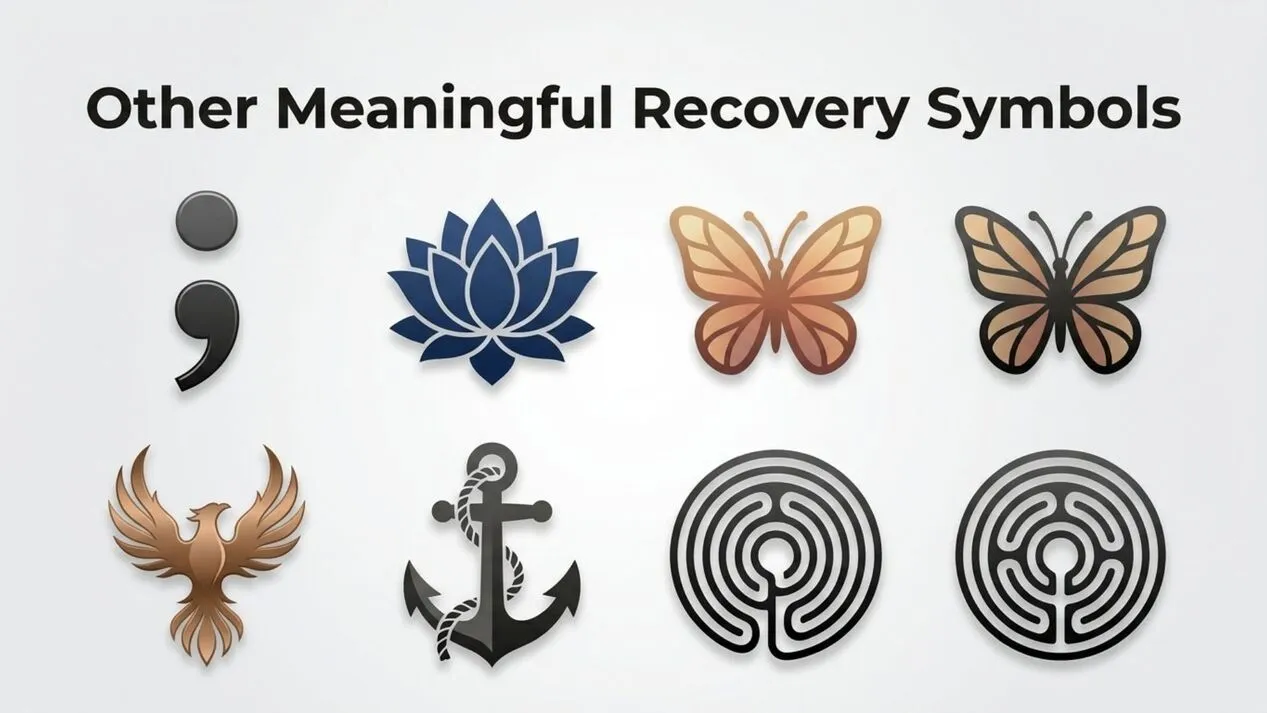
Many people adopt symbols that reflect their own recovery experiences.
Popular examples include:
Anchor
The anchor symbolizes stability, hope, and remaining grounded during life’s challenges.
Sunrise
A sunrise represents fresh starts, optimism, and new opportunities.
Mountain
Mountains symbolize perseverance, determination, and overcoming obstacles.
Infinity Symbol
The infinity symbol represents lifelong commitment, continuous growth, and the ongoing journey of recovery.
Feather
A feather often symbolizes freedom, healing, and moving forward with a lighter emotional burden.
These symbols may not be exclusive to recovery, but many individuals find personal meaning in them.
Common Uses and Applications
Symbols of sobriety appear in many aspects of recovery.
Common applications include:
- Recovery medallions
- Anniversary celebrations
- Jewelry
- Tattoos
- Keychains
- Bracelets
- Pendants
- Support group materials
- Inspirational artwork
- Journals
- Challenge coins
- Digital illustrations
- Social media graphics
- Recovery events
Some symbols also appear as digital icons or decorative designs in recovery communities, although they are generally used for personal expression rather than as standardized communication symbols.
Symbolism and Importance
The symbolic significance of sobriety symbols extends far beyond their appearance.
For many people, they represent:
- Hope
- Courage
- Accountability
- Personal achievement
- Healing
- Determination
- Community
- Gratitude
- Renewal
- Self-respect
These visual representations can offer encouragement during difficult moments and remind individuals how far they have come in their recovery journey.
Many people also find that sharing recovery symbols creates opportunities for meaningful conversations and mutual support.
How to Use Sobriety Symbols
Choose a Symbol That Reflects Your Journey
Recovery is deeply personal. Some individuals connect with official recovery emblems, while others prefer symbols that hold unique personal meaning.
Celebrate Milestones
Many people use sobriety medallions or jewelry to mark important recovery anniversaries and achievements.
Wear Symbols Respectfully
Recovery symbols often represent significant life experiences. Wearing them thoughtfully helps honor their meaning.
Remember the Symbol Is Personal
A symbol can inspire and motivate, but lasting recovery is supported by healthy habits, supportive relationships, and appropriate treatment or recovery resources.
Interesting Facts
- Sobriety chips are commonly awarded to recognize recovery milestones in many support communities.
- The triangle enclosed within a circle is one of the most recognizable recovery symbols.
- Butterflies and phoenixes are popular tattoo choices because they symbolize transformation.
- Many recovery symbols have meanings beyond addiction recovery and are used in broader cultural contexts.
- Recovery jewelry has become increasingly popular as a discreet reminder of personal goals.
- Different recovery communities may use different symbols while sharing similar values of hope and perseverance.
Common Mistakes and Misconceptions
Believing There Is Only One Official Sobriety Symbol
While some recovery organizations use specific symbols, many people choose personal symbols that reflect their own experiences.
Assuming Every Recovery Community Uses the Same Traditions
Recovery programs and peer-support groups vary in their practices, traditions, and symbolic representations.
Confusing Cultural Symbols With Official Recovery Emblems
Symbols like the butterfly, phoenix, and lotus are widely recognized cultural icons that many people adopt for recovery because of their symbolic meanings.
Judging Someone’s Recovery by Their Symbol
A sobriety symbol is a personal expression, not a measure of someone’s commitment or progress.
Thinking Symbols Replace Recovery Work
Symbols can provide motivation and encouragement, but they are not substitutes for ongoing recovery efforts, healthy coping strategies, or support networks.
Frequently Asked Questions
What is the most recognized symbol of sobriety?
The triangle enclosed within a circle is one of the best-known recovery symbols and traditionally represents unity, recovery, and service.
What do sobriety chips represent?
Sobriety chips or medallions commemorate milestones in recovery, such as 24 hours, 30 days, one year, and additional years of continued sobriety.
Why is the butterfly associated with sobriety?
The butterfly symbolizes transformation, growth, healing, and the possibility of positive change after difficult experiences.
Is the semicolon a sobriety symbol?
The semicolon is primarily associated with mental health awareness and suicide prevention, but many people in recovery also use it to represent resilience, hope, and continuing their life story.
What does the phoenix symbolize in recovery?
The phoenix represents renewal, resilience, rebirth, and emerging stronger after overcoming hardship.
Can anyone wear a sobriety symbol?
Many sobriety symbols are personal expressions of recovery. Wearing one respectfully and understanding its meaning is generally encouraged, especially when it reflects your own journey or supports someone else’s.
Are sobriety symbols used outside recovery programs?
Yes. Many symbols, such as the lotus, anchor, butterfly, and infinity sign, have broader cultural meanings and are also embraced by individuals for personal inspiration and resilience.
Conclusion
Symbols of sobriety provide powerful reminders of hope, healing, and the strength it takes to build a healthier future. Whether it is a recovery medallion marking an important milestone, the Sobriety Triangle representing unity and service, or a butterfly symbolizing transformation, each icon reflects the courage and determination involved in the recovery journey. While no single symbol defines sobriety for everyone, these meaningful visual representations can inspire perseverance, celebrate progress, and reinforce a commitment to continued growth. Ultimately, the greatest symbol of sobriety is the ongoing choice to move forward, one day a

Ryan Mitchell is an independent writer with a strong interest in symbols, visual communication, and the meanings behind different signs and icons. His writing focuses on providing clear, accurate, and useful information that helps readers quickly understand unfamiliar symbols. Ethan covers a wide range of topics, from everyday and cultural symbols to technical and professional symbol systems.
His books include The World of Symbols, Symbols Explained Simply, and The Essential Symbol Reference Guide.