
Throughout history, people have used symbols of heaven to express hope, eternal life, divine presence, peace, and the promise of something greater than the earthly world.
These sacred symbols appear in Christianity, Judaism, Islam, Buddhism, Hinduism, and many Indigenous traditions, as well as in literature, art, architecture, and memorial designs. They provide a visual language for concepts that are often difficult to describe with words alone.
Whether carved into stone, painted in churches, featured in stained glass windows, or worn as jewelry, symbols of heaven serve as reminders of faith, comfort, and spiritual connection. They are much more than decorative designs they carry centuries of cultural meaning, historical symbolism, and religious tradition.
This comprehensive guide explores the most recognized symbols of heaven, their meanings, origins, variations, and modern uses. Whether you’re studying religious symbolism, creating meaningful artwork, or simply curious about these timeless icons, this article offers a complete and reader-friendly overview.
Symbols of Heaven (Meaning and Overview)
Symbols of heaven are visual representations associated with the heavenly realm, eternal life, divine glory, purity, salvation, and spiritual hope. While interpretations differ among cultures and religions, these symbols commonly express humanity’s belief in a higher existence beyond earthly life.
Unlike a Unicode symbol, text symbol, or typography symbol used for digital communication, heavenly symbols communicate spiritual ideas through sacred imagery. They often appear in religious art, ceremonies, architecture, literature, and personal expressions of faith.
Some symbols directly represent heaven itself, while others symbolize qualities connected with heaven, including:
- Eternal peace
- Divine light
- Resurrection
- Purity
- Angels
- God’s presence
- Everlasting life
- Spiritual victory
Their symbolic significance has remained meaningful for thousands of years because they communicate universal themes of hope, comfort, and transcendence.
History and Origin
The idea of heaven exists in many civilizations dating back to ancient history. As beliefs about the afterlife developed, cultures created symbolic representations to describe paradise, divine realms, and eternal existence.
In ancient Mesopotamia, Egypt, Greece, and Rome, heavenly imagery often included stars, celestial bodies, divine birds, and sacred light. Judaism later introduced rich imagery describing God’s heavenly throne, angels, and the Tree of Life.
Christianity expanded these themes using symbols connected to Christ’s resurrection, eternal salvation, and the New Jerusalem described in the Book of Revelation. Meanwhile, Islamic art developed elegant symbolic patterns representing paradise without depicting God directly.
Eastern traditions such as Buddhism and Hinduism incorporated lotus flowers, celestial wheels, sacred mountains, and divine light as visual signs of enlightenment and higher spiritual realms.
Across cultures, these symbols became enduring communication symbols that expressed beliefs about eternity, divine presence, and humanity’s relationship with the sacred.
Types, Variations, or Categories
Symbols of heaven can generally be divided into several categories.
Religious Symbols
These originate from established religious traditions.
Examples include:
- Cross
- Dove
- Halo
- Angel
- Tree of Life
Each carries specific theological meaning.
Celestial Symbols
These are inspired by the heavens above.
Examples include:
- Stars
- Sun
- Moon
- Clouds
- Rainbow
These visual representations often symbolize divine beauty and heavenly glory.
Nature-Based Symbols
Nature frequently serves as a symbolic bridge between earth and heaven.
Common examples include:
- Lily
- Olive branch
- White rose
- Palm branch
- Mountain
These signs represent peace, purity, victory, and eternal life.
Sacred Geometric Symbols
Some traditions use sacred geometry to express divine perfection.
Examples include:
- Circle
- Mandala
- Eight-pointed star
- Sacred patterns
These designs represent spiritual harmony and eternity.
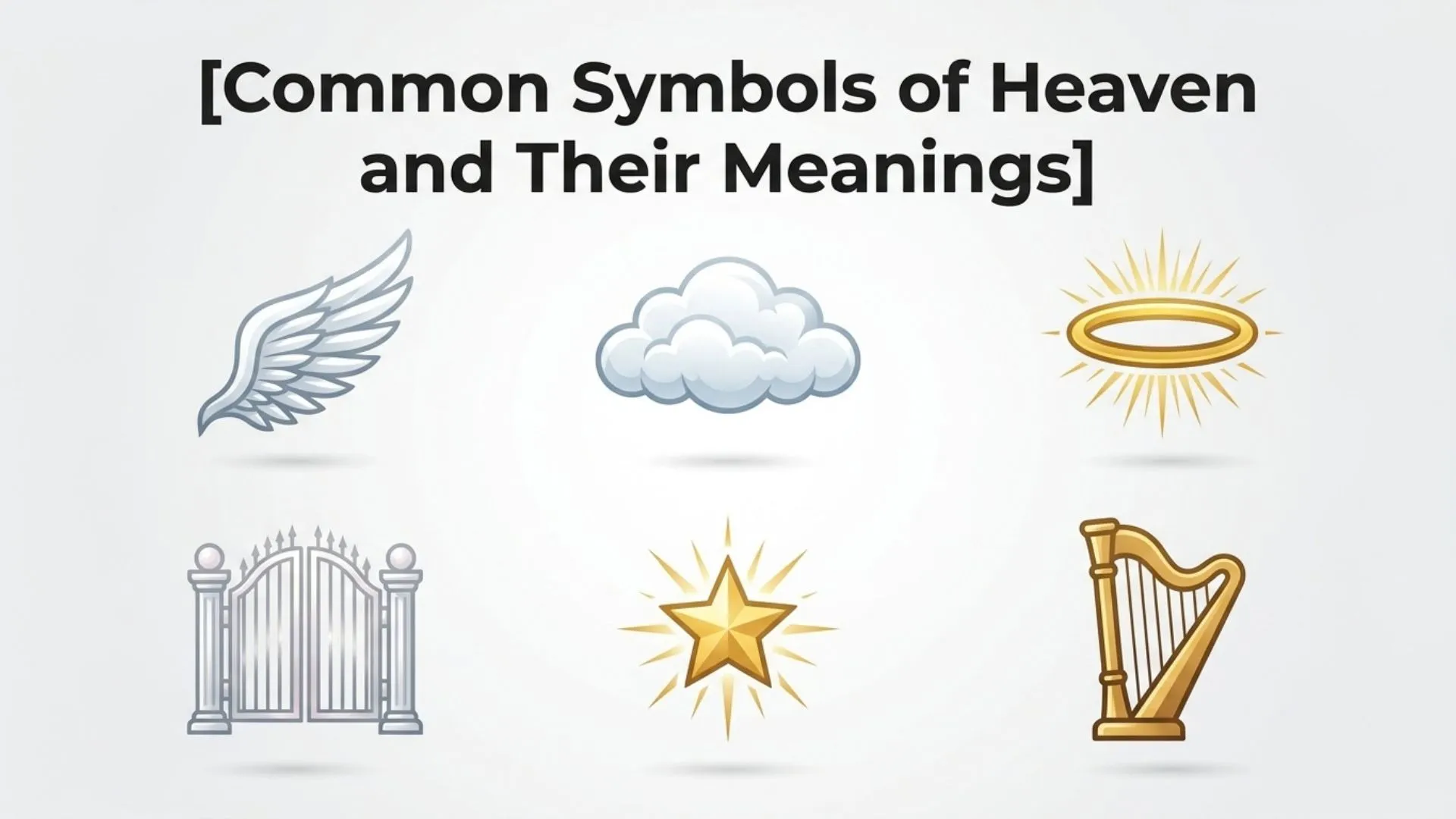
Common Symbols of Heaven and Their Meanings
Cross
The Cross is Christianity’s most recognized symbol of heaven.
It represents:
- Salvation
- Resurrection
- Eternal life
- Redemption
- God’s love
For Christians, the Cross symbolizes Christ’s victory over death and the promise of heaven.
Dove
The white dove symbolizes:
- Peace
- The Holy Spirit
- Purity
- Hope
- Divine guidance
The dove appears throughout Christian art and is often associated with heaven’s peace and God’s presence.
Angel
Angels are heavenly messengers in several religions.
Their symbolic meaning includes:
- Protection
- Guidance
- Divine communication
- Comfort
- Worship
Angels frequently appear in paintings, sculptures, and memorial art representing heaven.
Halo
The halo is a glowing circle surrounding a holy person’s head.
It symbolizes:
- Holiness
- Divine light
- Spiritual purity
- Heavenly glory
Halos have appeared in Christian art since the early centuries of the Church.
Rainbow
The rainbow represents:
- God’s promise
- Hope
- Renewal
- Peace
- Connection between heaven and earth
In the Bible, it symbolizes God’s covenant following the flood.
Tree of Life
The Tree of Life appears in multiple religions and cultures.
It represents:
- Eternal life
- Spiritual growth
- Wisdom
- Divine creation
- Paradise
It appears in both Genesis and Revelation as a symbol of God’s eternal kingdom.
White Lily
The white lily is associated with:
- Purity
- Resurrection
- Innocence
- Heavenly joy
It commonly appears during Easter celebrations and Christian funerals.
Crown
The heavenly crown symbolizes:
- Victory
- Faithfulness
- Eternal reward
- Spiritual triumph
Christian tradition often associates crowns with believers receiving eternal rewards in heaven.
Light
Light is one of the oldest symbols of heaven.
Its traditional meaning includes:
- God’s presence
- Truth
- Holiness
- Wisdom
- Eternal glory
Throughout religious history, divine light has represented heaven itself.
Gates of Heaven
Golden gates symbolize entrance into heaven.
Although artistic depictions vary, they commonly represent:
- Eternal welcome
- Salvation
- God’s kingdom
- Everlasting peace
The image is inspired by biblical descriptions of the New Jerusalem.
Common Uses and Applications
Symbols of heaven appear in many aspects of religious and cultural life.
Church Architecture
Churches often incorporate heavenly symbols through:
- Stained glass
- Altars
- Ceiling paintings
- Sculptures
- Carved stonework
These artistic elements help communicate biblical teachings visually.
Memorials
Many cemeteries and memorials feature heavenly symbols to express hope in eternal life and remembrance.
Jewelry
Crosses, doves, angels, and Tree of Life pendants remain popular expressions of personal faith.
Many people wear these symbols as reminders of spiritual hope and divine guidance.
Religious Literature
Heavenly symbols appear throughout:
- Bibles
- Prayer books
- Hymnals
- Devotional materials
They reinforce key spiritual themes through visual representation.
Home Décor
Many families display symbols of heaven in framed artwork, wall hangings, and decorative pieces as expressions of faith and encouragement.
Symbolism, Significance, and Importance
Symbols of heaven carry profound spiritual and emotional significance.
They remind believers of God’s promises.
They offer comfort during grief.
They inspire hope in difficult times.
They preserve centuries of religious tradition and artistic heritage.
These visual representations also communicate complex theological ideas in ways that transcend language barriers.
Whether viewed in ancient cathedrals or contemporary artwork, symbols of heaven continue to connect people with enduring beliefs about faith, eternity, and divine love.
How to Use Symbols of Heaven Respectfully
Because many heavenly symbols remain sacred, they should be used thoughtfully.
Learn Their Religious Background
Understanding a symbol’s origin deepens appreciation and prevents misunderstanding.
Respect Sacred Meanings
Recognize that these icons hold spiritual importance for millions of people.
Choose Symbols with Personal Meaning
Selecting symbols that genuinely reflect your beliefs creates a stronger personal connection.
Support Authentic Religious Art
Purchasing artwork from skilled artisans helps preserve traditional craftsmanship.
Avoid Misrepresentation
Do not combine sacred symbols randomly or assign meanings without historical or religious support.
Interesting Facts
- The halo first appeared in ancient art before becoming a common Christian symbol.
- The Tree of Life appears in numerous cultures across the world.
- White is traditionally associated with heaven because it symbolizes purity and holiness.
- Medieval cathedrals often placed heavenly symbols high above worshippers to represent the heavens.
- Angels appear in Judaism, Christianity, and Islam.
- The rainbow has represented hope for thousands of years in different cultures.
- Light is one of the oldest symbolic representations of divine presence.
- Many heavenly symbols continue to inspire modern architecture, paintings, jewelry, and literature.
Common Mistakes or Misconceptions
Assuming Every Religion Uses the Same Symbols
Different faith traditions use unique imagery to represent heaven and spiritual realities.
Treating Sacred Symbols as Simple Decorations
Many heavenly symbols carry deep theological and cultural meaning beyond their visual beauty.
Believing Every Symbol Has One Universal Meaning
Interpretations often vary depending on religious tradition, historical period, and cultural context.
Confusing Artistic Traditions with Scripture
Some familiar images, such as certain artistic depictions of heaven’s gates or angels, developed through centuries of religious art rather than explicit biblical descriptions.
Ignoring Historical Context
Understanding the origins of heavenly symbols helps prevent misconceptions and enriches appreciation.
Frequently Asked Questions
What are symbols of heaven?
Symbols of heaven are visual representations associated with eternal life, divine presence, peace, salvation, holiness, and the heavenly realm in various religious traditions.
Which symbol most commonly represents heaven?
For Christians, the Cross is the most widely recognized symbol because it represents Christ’s resurrection and the promise of eternal life.
Why are angels considered symbols of heaven?
Angels are viewed as heavenly messengers who serve God and communicate divine guidance, protection, and comfort.
What does the rainbow symbolize in relation to heaven?
The rainbow represents God’s covenant, hope, peace, and the connection between the divine and humanity.
Is the Tree of Life a symbol of heaven?
Yes. In many religious traditions, the Tree of Life symbolizes eternal life, paradise, wisdom, and God’s everlasting kingdom.
Are symbols of heaven Unicode symbols?
No. These are sacred religious and cultural visual representations rather than standardized Unicode characters or digital text symbols.
Can symbols of heaven be used in modern design?
Yes. They frequently appear in jewelry, artwork, church architecture, memorials, and home décor, provided they are used respectfully and with an understanding of their traditional meaning.
Conclusion
Symbols of heaven have inspired faith, hope, and comfort across cultures and centuries. Whether represented by the Cross, dove, angel, Tree of Life, rainbow, halo, or divine light, these sacred signs express humanity’s enduring belief in eternal life, divine presence, and spiritual peace. More than beautiful artistic motifs, they preserve religious teachings, cultural heritage, and timeless messages of hope.
Understanding the origins, symbolism, and historical significance of these heavenly icons allows us to appreciate their deeper meaning while respecting the traditions from which they come. As enduring visual representations of faith and eternity, symbols of heaven continue to encourage, inspire, and unite people around the world.

Daniel Carter is a writer and researcher focused on symbols, their meanings, origins, and practical uses. He enjoys turning complex symbolic concepts into simple, easy-to-understand explanations for everyday readers. Through his work, Daniel explores cultural, technical, historical, and commonly used symbols, helping readers understand what they mean and where they are used.
His work includes The Complete Guide to Symbols, Understanding Symbols and Their Meanings, and A Visual Guide to Common Symbols.