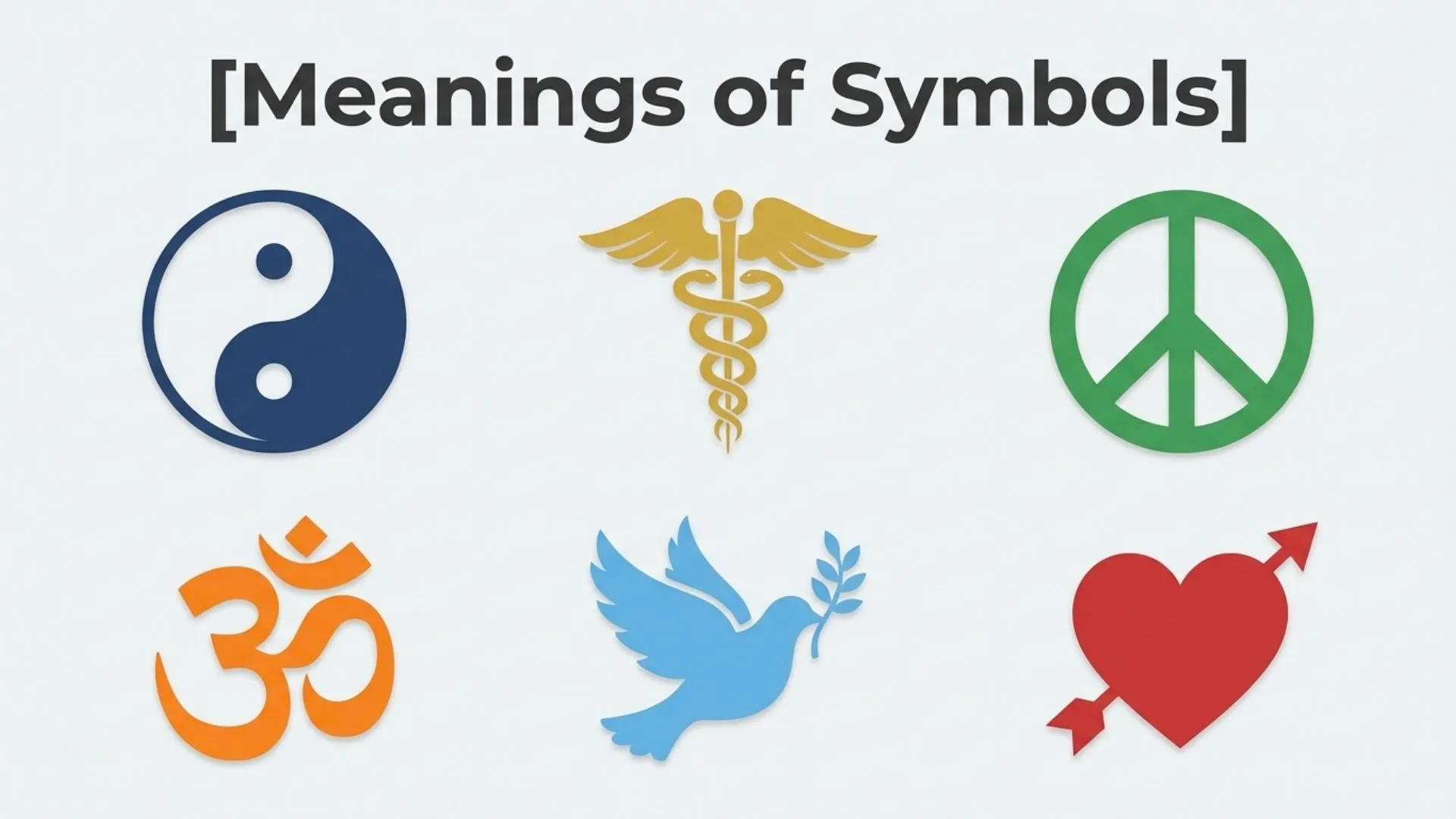
Symbols are a universal language that helps people communicate ideas, emotions, beliefs, and information without using many words. From ancient cave paintings to modern smartphone icons, symbols have shaped how humans express themselves across cultures and generations. Whether you see a heart symbol representing love, a peace sign promoting harmony, or a currency symbol indicating money, each visual representation carries a deeper meaning.
Today, symbols appear everywhere in road signs, technology, religion, mathematics, science, social media, branding, and everyday communication. Understanding the meanings of symbols can improve communication, prevent misunderstandings, and provide valuable insight into history and culture.
This comprehensive guide explores the meaning of symbols, their origins, major categories, cultural significance, practical uses, and common misconceptions. By the end, you’ll have a deeper appreciation for the symbolic representations that influence daily life.
Meanings of Symbols (Meaning and Overview)
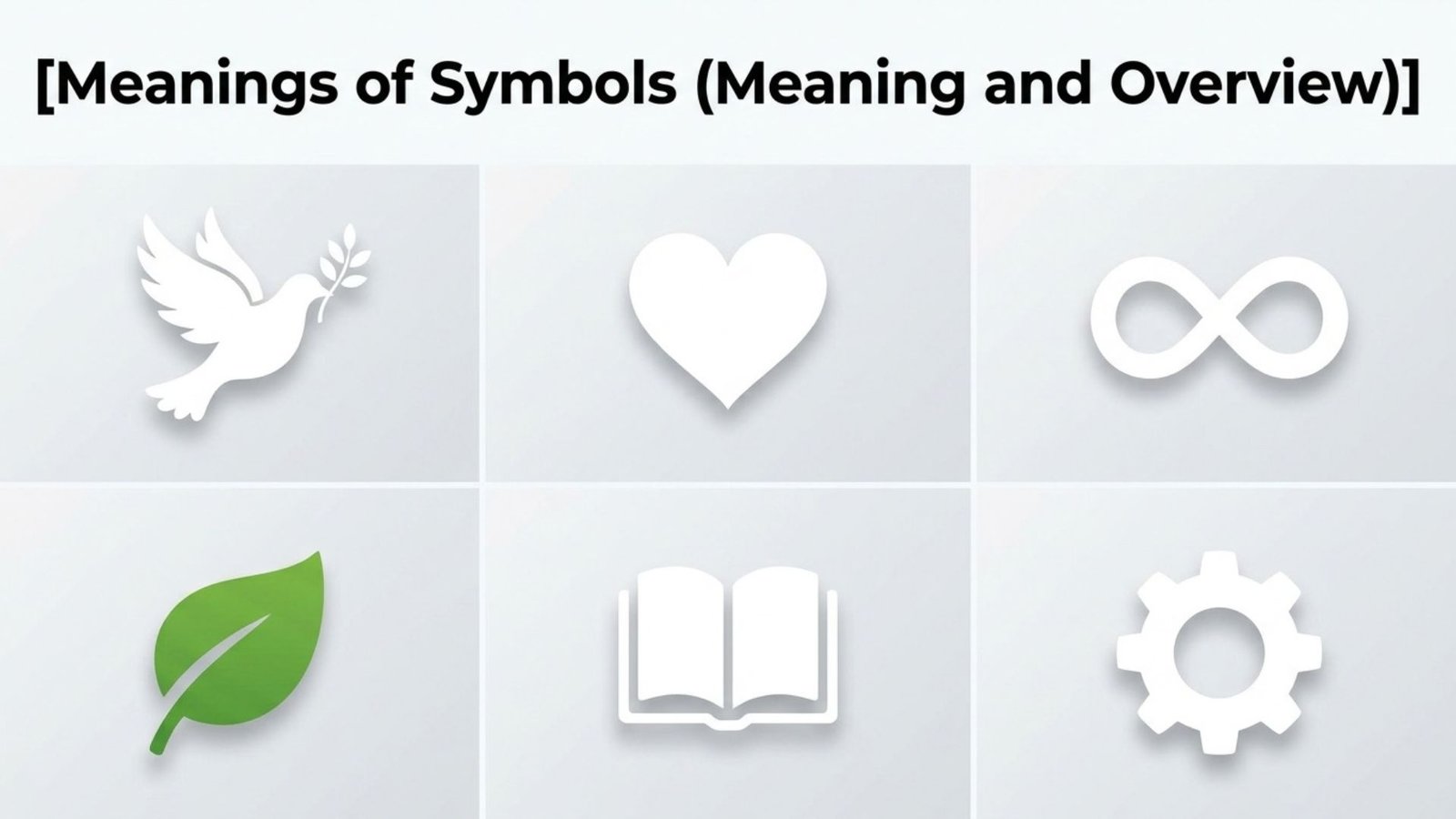
A symbol is a visual representation that stands for an idea, object, action, belief, or concept. Unlike ordinary pictures, symbols often carry meanings beyond their literal appearance.
For example:
- ❤️ Heart = Love and affection
- ☮ Peace sign = Harmony
- ⚠ Warning triangle = Caution
- ♻ Recycling symbol = Environmental responsibility
- ☯ Yin Yang = Balance
Symbols can be simple icons, text symbols, special characters, or complex artistic designs. Some are universally recognized, while others hold unique cultural or religious meanings.
A symbol’s meaning may evolve over time as societies change. What once represented one idea may later gain new interpretations based on modern usage.
History and Origin
Humans have used symbols for thousands of years. Long before written languages developed, people communicated through images carved into stone, painted on cave walls, or engraved on monuments.
Ancient Civilizations
Ancient Egyptians created hieroglyphics using symbolic characters that represented sounds, words, and ideas.
The Greeks and Romans incorporated symbolic imagery into mythology, architecture, and government. Their symbols often represented power, wisdom, victory, and justice.
Religious Development
Many religions adopted sacred symbols that continue to represent spiritual beliefs today.
Examples include:
- Cross (Christianity)
- Crescent Moon (Islam)
- Om (Hinduism)
- Dharma Wheel (Buddhism)
- Star of David (Judaism)
These symbols became visual reminders of faith, tradition, and identity.
Modern Digital Symbols
The digital age introduced thousands of Unicode symbols that enable global communication across computers and smartphones.
Emoji, navigation icons, interface buttons, and digital characters now function as universal communication symbols understood by billions of users worldwide.
Types, Variations, or Categories
Symbols exist in many forms depending on their purpose and context.
Cultural Symbols
These represent traditions, national identity, customs, or shared values.
Examples include:
- National flags
- Family crests
- Tribal emblems
- Cultural ornaments
- Traditional decorative symbols
Their symbolic significance often varies between regions.
Religious Symbols
Religious symbols communicate beliefs, sacred teachings, and spiritual identity.
Examples include:
- Cross
- Om
- Lotus
- Menorah
- Crescent Moon
Many of these symbols have remained meaningful for centuries.
Mathematical Symbols
Mathematics relies on symbols instead of lengthy written explanations.
Common examples include:
- −
- ×
- ÷
- =
- ∞
- π
- √
Without mathematical symbols, solving equations would become much more complicated.
Scientific Symbols
Scientists use symbols to simplify formulas and technical communication.
Examples include:
- H₂O
- Na
- Fe
- Ω
- °C
Scientific notation depends heavily on standardized symbolic representation.
Technology and Digital Symbols
Modern devices use icons to guide users quickly.
Examples include:
- Wi-Fi
- Bluetooth
- Battery
- Download
- Upload
- Search
- Home
- Settings
These visual representations eliminate language barriers in technology.
Typography Symbols
Typography includes special characters commonly used in writing and publishing.
Examples include:
- @
- &
- %
- ©
- ®
- ™
These typography symbols have become essential in modern communication.
Cultural Meanings of Symbols
One of the most fascinating aspects of symbols is that their meanings often change depending on culture.
Colors
White symbolizes purity in many Western countries but represents mourning in several Asian cultures.
Red may symbolize luck in China while representing danger or warning elsewhere.
Black often signifies elegance, authority, or mourning depending on context.
Understanding these cultural meanings helps avoid confusion in international communication.
Animals
Animals frequently carry symbolic meanings.
Examples include:
- Owl = Wisdom
- Lion = Courage
- Eagle = Freedom
- Dove = Peace
- Snake = Transformation or danger
- Butterfly = Change and growth
Different societies may interpret the same animal differently.
Natural Elements
Nature has inspired symbolic representation throughout history.
The sun commonly represents life and energy.
The moon often symbolizes mystery, femininity, and cycles.
Water represents purification, renewal, and life.
Fire can symbolize passion, destruction, transformation, or enlightenment.
Common Symbols and Their Meanings
Many symbols appear regularly in daily life.
Heart Symbol ❤️
The heart symbolizes love, compassion, romance, friendship, and emotional connection.
Today it is widely used in texting, social media, greeting cards, and branding.
Infinity Symbol ∞
The infinity symbol represents endless possibilities, eternity, limitless potential, and continuity.
It appears in mathematics, philosophy, jewelry, and motivational artwork.
Peace Symbol ☮
Originally designed for nuclear disarmament, the peace symbol later became an international icon promoting harmony, unity, and nonviolence.
Recycling Symbol ♻
The recycling symbol encourages environmental sustainability.
Its three arrows represent reducing, reusing, and recycling materials.
Check Mark ✔
A check mark usually means:
- Correct
- Approved
- Completed
- Verified
It has become one of the world’s most recognizable communication symbols.
Question Mark ?
This punctuation mark symbolizes uncertainty, inquiry, curiosity, or the need for additional information.
Exclamation Mark !
An exclamation mark expresses excitement, urgency, emphasis, or warning.
Symbols in Everyday Communication
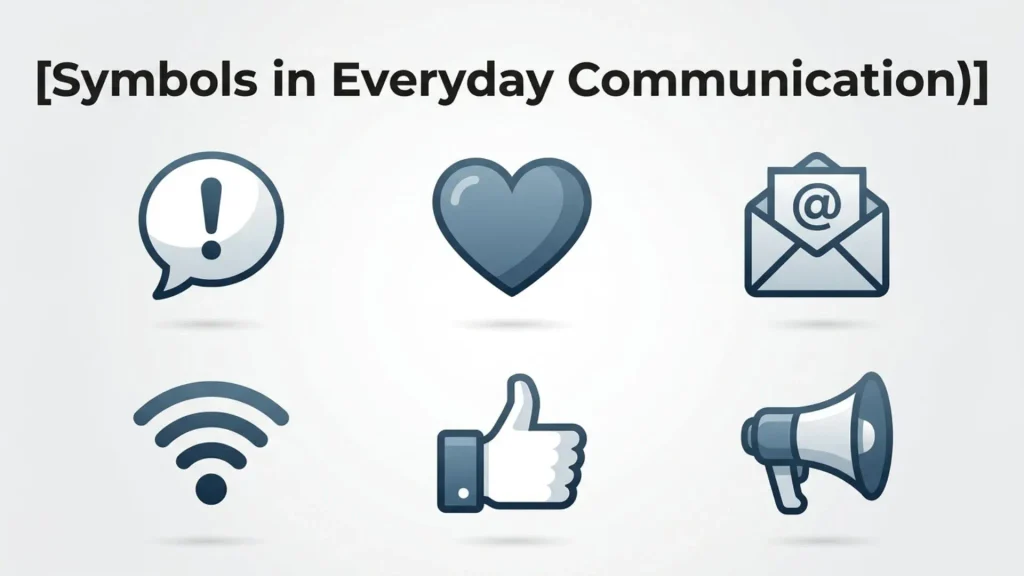
Modern communication relies heavily on symbols.
Emails use the @ symbol.
Hashtags organize social media discussions.
Emoji communicate emotions quickly.
Maps use icons instead of lengthy explanations.
Airports use internationally recognized pictograms to help travelers regardless of language.
Even businesses depend on symbolic representation through logos that instantly identify their brands.
Common Uses and Applications
Symbols serve practical purposes across many industries.
Education
Teachers use symbols to simplify learning in mathematics, chemistry, music, and language studies.
Technology
Software developers rely on interface icons to improve user experience.
Simple visual symbols reduce learning time and improve navigation.
Healthcare
Hospitals use universally recognized symbols for emergency exits, medical services, pharmacies, and accessibility.
Transportation
Traffic signs depend entirely on symbols for efficient communication.
Drivers can recognize warnings instantly without reading long text.
Business
Companies use logos as visual identities.
A memorable icon helps customers recognize products quickly.
Literature and Art
Authors and artists use symbolism to express deeper themes without directly stating them.
For example, a rose may symbolize love, while a broken chain represents freedom.
Symbolism, Significance, and Importance
Symbols influence how people think, remember, and communicate.
A simple image can express complex emotions that would otherwise require several sentences.
Historical symbolism preserves cultural heritage.
Religious symbols strengthen community identity.
Digital icons improve usability.
Communication symbols help overcome language barriers.
Symbols also enhance memory because people often remember images better than text alone.
Their ability to communicate instantly makes them one of humanity’s most effective communication tools.
How to Interpret Symbols Correctly
Understanding symbols requires considering several factors.
Consider Context
A symbol’s meaning changes depending on where it appears.
A red cross on a medical building has a different meaning than a decorative cross in jewelry.
Learn Cultural Differences
Avoid assuming every culture interprets symbols the same way.
Research local traditions before using unfamiliar symbols.
Understand Historical Background
Knowing a symbol’s origin often explains why it carries a particular meaning today.
Historical symbolism adds depth to interpretation.
Avoid Literal Thinking
Many symbols represent abstract ideas rather than physical objects.
For example, a dove does not simply represent a bird—it often symbolizes peace and hope.
Interesting Facts
- The oldest known symbolic drawings date back tens of thousands of years.
- Unicode includes thousands of symbols used across digital platforms.
- Emoji are considered modern symbolic communication.
- The ampersand (&) originated from the Latin word “et,” meaning “and.”
- Mathematical symbols dramatically reduced the complexity of written calculations.
- Many corporate logos contain hidden symbolic meanings.
- Ancient civilizations often believed symbols possessed spiritual power.
- Some symbols have opposite meanings in different cultures.
Common Mistakes or Misconceptions
Assuming Symbols Are Universal
Not every symbol has the same meaning worldwide.
Culture significantly influences interpretation.
Ignoring Context
The same icon may represent different ideas depending on the setting.
Always evaluate surrounding information.
Confusing Icons with Symbols
Every symbol can function as an icon, but not every icon carries symbolic significance.
Some icons simply represent physical objects without deeper meaning.
Misusing Religious Symbols
Sacred symbols deserve respectful use.
Using them purely as decoration may unintentionally offend others.
Overlooking Evolution
Symbol meanings change over time.
Modern usage sometimes differs greatly from historical interpretations.
Frequently Asked Questions
What is the meaning of a symbol?
A symbol is a visual representation that stands for an idea, object, emotion, belief, or concept beyond its literal appearance.
Why are symbols important?
Symbols simplify communication, preserve culture, improve understanding, and convey complex ideas quickly.
Are symbol meanings the same worldwide?
No. Many symbols have different cultural meanings depending on history, religion, and local traditions.
What is the difference between a symbol and an icon?
An icon usually represents a specific object or function, while a symbol often carries deeper or abstract meaning.
What are Unicode symbols?
Unicode symbols are standardized digital characters that display consistently across computers, websites, and mobile devices.
Why do companies use symbols in logos?
Symbols create memorable brand identities and communicate company values without relying on words.
How can I understand unfamiliar symbols?
Consider the context, research their historical background, and learn about the culture in which they are used.
Conclusion
Symbols have been an essential part of human communication for thousands of years. From ancient civilizations to today’s digital world, they help people express ideas, beliefs, emotions, and information quickly and effectively. Whether appearing as religious emblems, mathematical signs, typography symbols, communication icons, or decorative designs, symbols shape how we interpret the world around us.
Understanding the meanings of symbols allows us to communicate more clearly, appreciate cultural diversity, avoid misunderstandings, and recognize the deeper stories behind everyday visual representations. As technology continues to evolve, symbols will remain one of the most powerful and universal tools for connecting people across languages and cultures.

Daniel Carter is a writer and researcher focused on symbols, their meanings, origins, and practical uses. He enjoys turning complex symbolic concepts into simple, easy-to-understand explanations for everyday readers. Through his work, Daniel explores cultural, technical, historical, and commonly used symbols, helping readers understand what they mean and where they are used.
His work includes The Complete Guide to Symbols, Understanding Symbols and Their Meanings, and A Visual Guide to Common Symbols.