The Progressive Era was one of the most transformative periods in American history, spanning roughly from the 1890s to the 1920s. During this time, reformers worked to address the social, political, and economic problems created by rapid industrialization, urbanization, and corporate growth.
While speeches, laws, and grassroots activism defined the movement, symbols also played an essential role in communicating its goals.
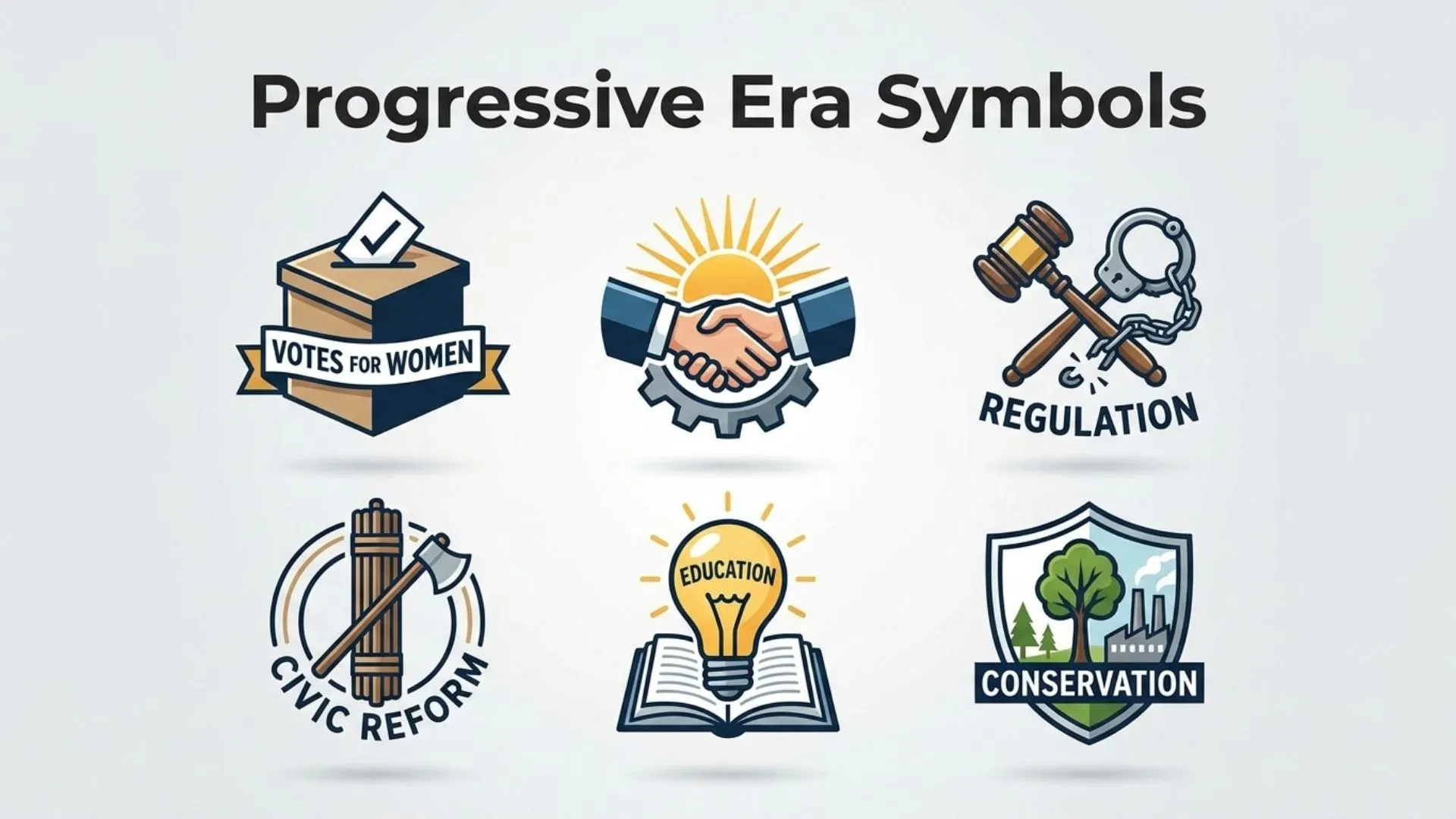
Progressive Era symbols represented justice, equality, democracy, labor rights, public health, conservation, and government accountability. These visual representations appeared in political cartoons, campaign posters, newspapers, protest banners, government seals, and reform organizations. They helped citizens quickly recognize the ideals of the movement and inspired public support for meaningful change.
This guide explores the most important Progressive Era symbols, their meanings, historical origins, symbolic significance, and lasting influence on American society.
Progressive Era Symbols (Meaning and Overview)
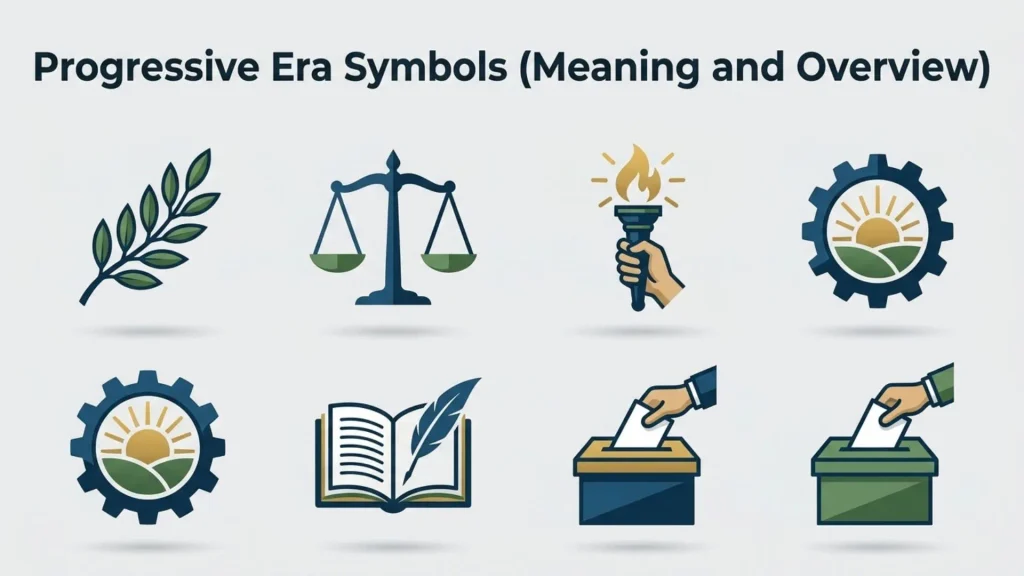
Progressive Era symbols are visual images, icons, signs, and symbolic representations associated with the reform movement that reshaped the United States during the late nineteenth and early twentieth centuries. Rather than serving as decorative symbols, they communicated powerful messages about social justice, honest government, economic fairness, and public responsibility.
Many of these symbols reflected the movement’s core objectives:
- Fighting political corruption
- Protecting workers
- Improving public health
- Conserving natural resources
- Expanding democracy
- Promoting women’s rights
- Regulating large corporations
Unlike modern digital characters or Unicode symbols used in electronic communication, Progressive Era symbols were historical visual representations designed to influence public opinion through newspapers, posters, artwork, and public demonstrations.
History and Origin
The Progressive Era emerged as America underwent dramatic industrial expansion. Massive factories, crowded cities, unsafe working conditions, political corruption, and powerful monopolies created widespread concern among reform-minded citizens.
Journalists known as “muckrakers” exposed corruption through investigative reporting, while reform organizations used symbolic imagery to educate voters and encourage political participation.
Political cartoons became especially influential. Newspapers frequently used familiar icons and historical symbolism to explain complex political issues in ways ordinary citizens could understand. Reform leaders also adopted symbols representing fairness, democracy, and civic responsibility to strengthen public support.
Many symbols from this era were rooted in older American traditions but gained new meanings as reformers connected them with progressive causes.
Types, Variations, or Categories
Progressive Era symbols generally fall into several categories based on the reforms they represented.
Political Reform Symbols
Political reform symbols emphasized honesty, transparency, and democratic participation.
Common examples included:
- Ballot box
- Voting ballot
- Torch of liberty
- American flag
- Eagle
- Lady Justice
These visual representations encouraged civic engagement and government accountability.
Labor Reform Symbols
Industrial workers often relied on symbolic imagery during strikes and labor campaigns.
Examples included:
- Hammer
- Factory smokestack
- Broken chain
- Raised fist
- Union banner
- Gear wheel
These symbols represented workers’ rights, fair wages, workplace safety, and collective action.
Social Reform Symbols
Organizations promoting education, child welfare, and public health adopted recognizable communication symbols.
Examples include:
- Open book
- School bell
- Lamp
- Cross
- Shield
- Helping hands
Each symbol reflected hope, opportunity, protection, or knowledge.
The Most Important Progressive Era Symbols
Several symbols became closely associated with Progressive reform efforts.
Lady Justice
Lady Justice remains one of the best-known symbols connected with Progressive Era legal reforms.
Holding balanced scales and often wearing a blindfold, she symbolizes:
- Equal justice
- Fair courts
- Impartial law
- Accountability
Progressives frequently referenced this icon while advocating judicial reform and anti-corruption measures.
The Torch
The torch represented enlightenment, education, truth, and progress.
Political reformers used it to symbolize informed citizenship and the pursuit of better government.
Today, the torch continues to symbolize liberty and opportunity.
Broken Chains
Broken chains symbolized freedom from oppression.
During the Progressive Era, they often represented liberation from:
- Political corruption
- Corporate monopolies
- Child labor
- Unsafe working conditions
- Social injustice
The image conveyed hope that reform could break harmful systems.
Ballot Box
The ballot box became a powerful symbol of democracy.
It represented:
- Voting rights
- Fair elections
- Citizen participation
- Political reform
As Progressive reforms expanded direct democracy through initiatives, referendums, and primary elections, the ballot box gained even greater symbolic significance.
Factory Smokestack
Although factories represented economic growth, smokestacks also symbolized industrialization’s challenges.
Depending on context, they represented:
- Manufacturing success
- Urban development
- Pollution
- Worker exploitation
- Need for labor reform
Political artists often used factory imagery to criticize unsafe industrial practices.
Tree and Forest
Conservation became a major Progressive goal under leaders such as President Theodore Roosevelt.
Trees symbolized:
- Environmental stewardship
- Sustainable resource management
- National parks
- Conservation efforts
These symbols highlighted the importance of protecting America’s natural resources.
Symbols of Women’s Suffrage
Women’s voting rights became one of the defining Progressive reforms.
Yellow Rose
The yellow rose became closely associated with the women’s suffrage movement in several states.
It represented:
- Hope
- Equality
- Political participation
Supporters frequently wore yellow flowers during rallies and public events.
Liberty Bell
Suffragists often adopted the Liberty Bell as a symbolic representation of freedom and equal rights.
Although originally associated with American independence, it gained new meaning as women demanded voting rights.
White Clothing
Many suffragists wore white dresses during marches.
White symbolized:
- Integrity
- Peace
- Moral purpose
Historic photographs from suffrage parades show this powerful visual representation.
Symbols Used in Political Cartoons
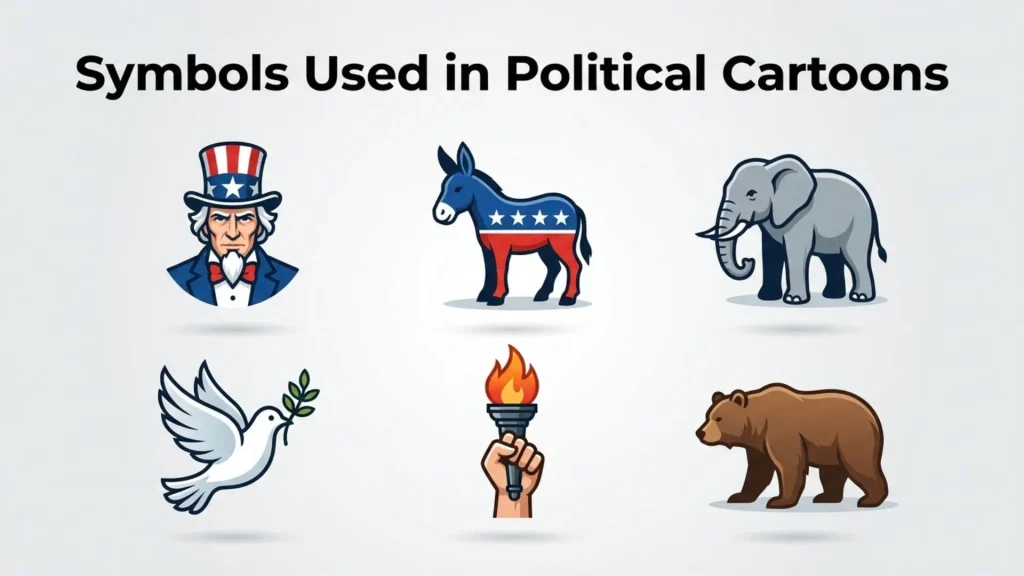
Political cartoons played a major role during the Progressive Era.
Artists relied on familiar symbolic representation to communicate complex issues quickly.
Common examples included:
Octopus
Large monopolies were often depicted as giant octopuses with tentacles reaching into government, business, and public life.
The octopus symbolized excessive corporate power and lack of competition.
Trusts as Giants
Corporate monopolies were frequently illustrated as oversized giants towering over ordinary citizens.
This visual representation emphasized economic inequality.
Uncle Sam
Uncle Sam represented the United States government.
Political cartoonists used him to comment on national reform efforts, taxation, regulation, and public policy.
Common Uses and Applications
Progressive Era symbols appeared in many forms of communication.
Examples include:
Newspapers
Editorial cartoons simplified political debates using instantly recognizable icons.
Campaign Posters
Candidates used patriotic imagery to promote reform agendas.
Protest Signs
Labor unions and suffrage organizations carried symbolic banners during demonstrations.
Educational Materials
Schools and civic organizations used historical symbolism to teach democratic values.
Government Publications
Official reports often incorporated patriotic signs and symbolic imagery promoting public trust.
Today, historians continue to study these symbols to better understand Progressive ideals and public attitudes.
Symbolism, Significance, or Importance
Progressive Era symbols did more than decorate publications—they shaped public understanding.
Their importance included:
- Making political ideas easier to understand
- Encouraging civic participation
- Promoting democratic values
- Supporting social reform
- Inspiring national unity
- Challenging corruption
Symbols communicated emotionally as well as intellectually, making reform messages more memorable than words alone.
Many continue to influence modern political communication.
How to Interpret Progressive Era Symbols
Understanding these historical symbols requires examining their context.
Consider Historical Events
A broken chain appearing in a labor newspaper likely referred to workers’ rights rather than general freedom.
Identify the Source
Political cartoons often used satire, meaning symbols could criticize as well as celebrate reform.
Understand Multiple Meanings
The same symbol sometimes represented different ideas depending on the audience.
For example, the American flag could symbolize patriotism, reform, or national responsibility.
Compare with Modern Usage
Some Progressive Era symbols remain recognizable today, while others have evolved or gained new cultural meanings.
Studying historical symbolism helps readers interpret older documents accurately.
Interesting Facts
- Political cartoons reached millions of Americans during the Progressive Era through newspapers and magazines.
- The Progressive movement influenced the creation of national parks and stronger conservation policies.
- Suffrage parades carefully selected colors and symbols to create a unified public image.
- Investigative journalists often worked alongside illustrators to reinforce reform messages.
- The scales of justice remain one of the world’s most enduring legal symbols.
- Many government agencies still use symbolic seals first developed during the Progressive Era.
- Conservation symbols from the early twentieth century influenced modern environmental campaigns.
- Several Progressive Era icons continue to appear in history textbooks, museums, and civic monuments.
Common Mistakes or Misconceptions
Believing There Was One Official Progressive Symbol
The movement never adopted a single official emblem. Different organizations used different symbols depending on their goals.
Assuming Every Symbol Had Only One Meaning
Many symbols carried multiple interpretations depending on political context and historical events.
Confusing Progressive Symbols with Modern Logos
Most Progressive Era symbols were artistic illustrations rather than standardized logos or typography symbols.
Ignoring Historical Context
Understanding these symbols requires knowledge of industrialization, reform movements, and early twentieth-century American politics.
Thinking Symbols Were Only Decorative
Most images served as persuasive communication symbols designed to influence public opinion and encourage reform.
Frequently Asked Questions
What are Progressive Era symbols?
Progressive Era symbols are visual images and icons associated with American reform movements between the 1890s and 1920s that represented justice, democracy, labor rights, conservation, and social progress.
Why were symbols important during the Progressive Era?
They helped communicate complex political ideas through simple visual representations, making reform messages easier for the public to understand.
What does the broken chain symbolize?
The broken chain represents freedom from oppression, political corruption, unfair labor practices, and social injustice.
Why is Lady Justice connected to the Progressive Era?
Lady Justice symbolized equal treatment under the law, judicial reform, and the fight against political corruption.
How did political cartoons use symbols?
Cartoonists used symbolic figures such as Uncle Sam, giant monopolies, and octopuses to explain political issues and criticize corruption.
Were Progressive Era symbols officially standardized?
No. Most symbols developed naturally through newspapers, reform organizations, political campaigns, and public demonstrations.
Do Progressive Era symbols still influence society today?
Yes. Symbols representing justice, voting rights, environmental conservation, and democratic participation remain important in modern civic life and political communication.
Conclusion
Progressive Era symbols played a powerful role in shaping one of the most influential reform movements in American history. Through images such as Lady Justice, the ballot box, broken chains, the torch, conservation symbols, and suffrage emblems, reformers communicated ideals of fairness, democracy, equality, and responsible government to millions of Americans. These visual representations transformed complex political issues into messages that ordinary citizens could easily understand and support. Even today, many of these symbols continue to represent justice, civic engagement, environmental stewardship, and equal rights, reminding us that powerful ideas are often communicated most effectively through meaningful symbols.

Ryan Mitchell is an independent writer with a strong interest in symbols, visual communication, and the meanings behind different signs and icons. His writing focuses on providing clear, accurate, and useful information that helps readers quickly understand unfamiliar symbols. Ethan covers a wide range of topics, from everyday and cultural symbols to technical and professional symbol systems.
His books include The World of Symbols, Symbols Explained Simply, and The Essential Symbol Reference Guide.