If you’ve ever opened a Magic The Gathering booster pack, you’ve probably noticed a small symbol located near the middle-right side of each card. While many new players focus on the artwork or abilities, experienced players know that this small icon reveals one of the most important details about the card: its rarity.
Magic: The Gathering rarity symbols help players identify how common or difficult a card is to obtain. They also influence a card’s collectibility, trading value, deck-building potential, and sometimes even its competitive importance. Although rarity does not always determine power level, it plays a significant role in the game’s design and collectible appeal.
This comprehensive guide explains everything you need to know about Magic the Gathering rarity symbols, including their meaning, history, color coding, evolution, importance, and how to identify them accurately. Whether you’re a beginner or an experienced collector, this guide will help you understand these iconic visual representations with confidence.
Magic the Gathering Rarity Symbols (Meaning and Overview)
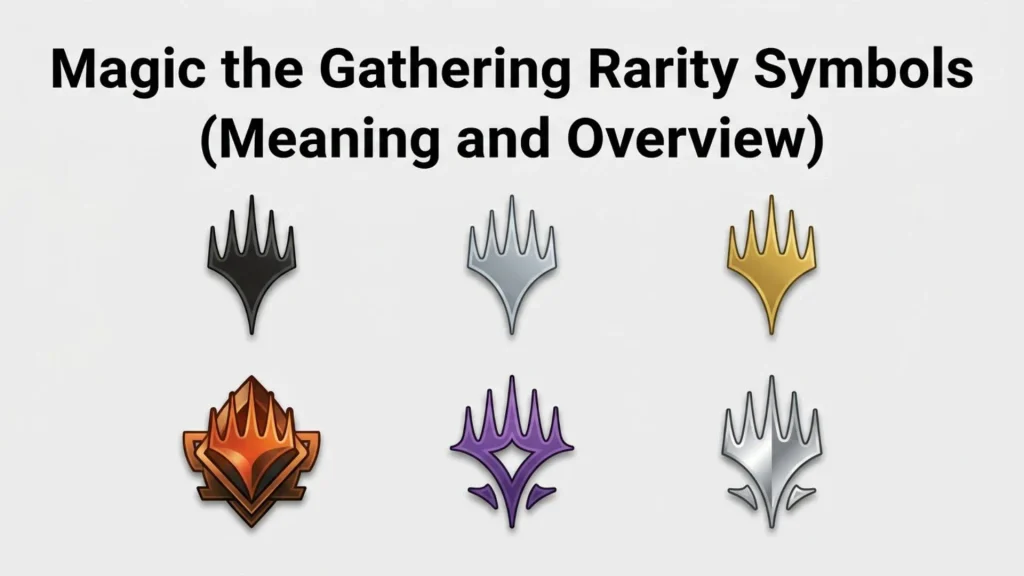
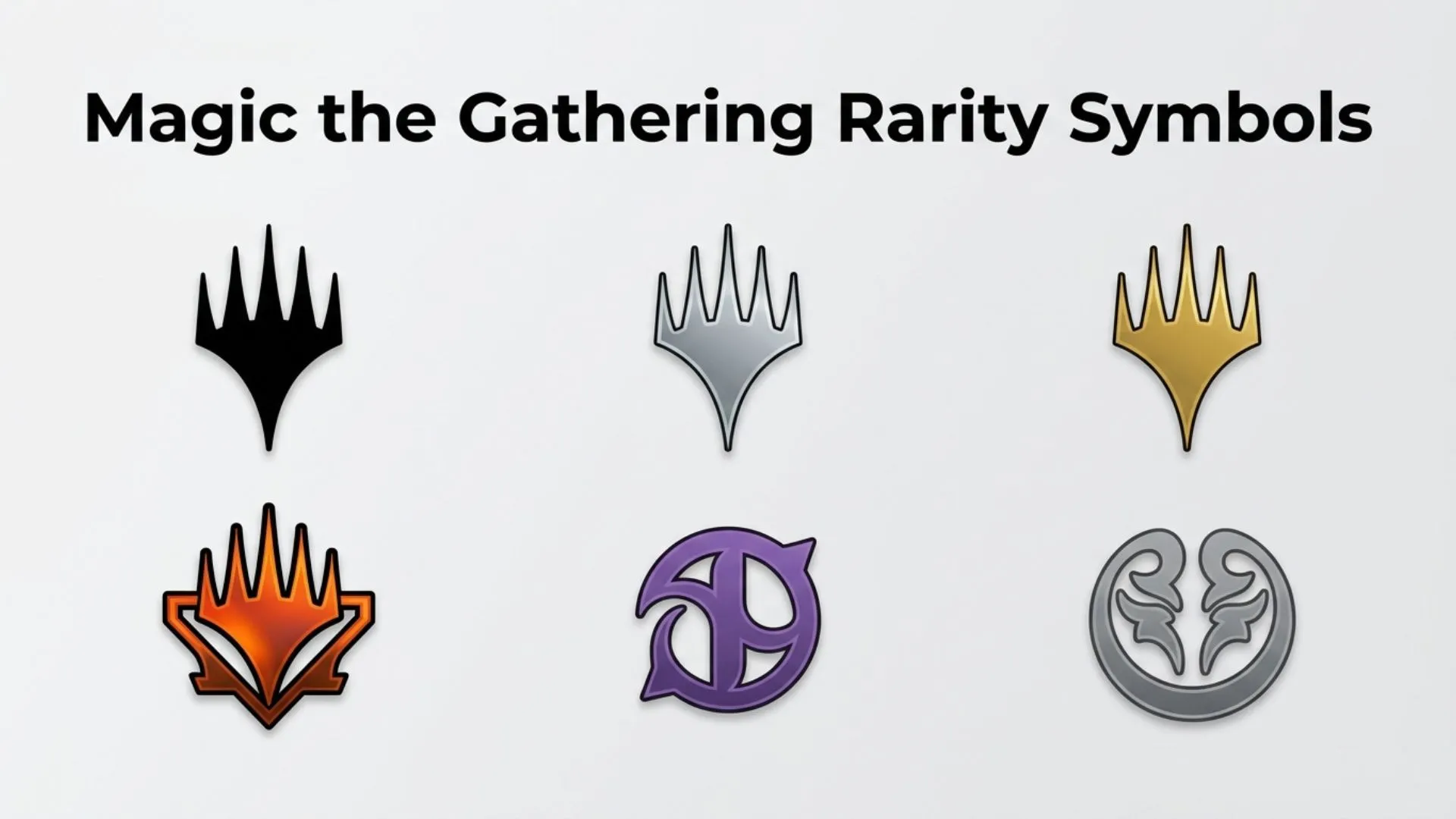
Magic: The Gathering rarity symbols are small expansion set icons printed on every modern MTG card. The symbol’s meaning is primarily communicated through color rather than shape.
Each expansion set has its own unique icon, but the color of that icon tells you the card’s rarity.
The standard rarity levels are:
- Common
- Uncommon
- Rare
- Mythic Rare
- Special rarities (depending on the set)
Instead of being a simple decorative symbol, the rarity icon serves as a practical communication symbol that instantly provides information about a card’s availability.
The expansion icon itself acts as a visual representation of the card’s set, while its color represents rarity. Together, they create a universal identification system recognized by players around the world.
History and Origin
When Magic| The Gathering debuted in 1993, cards did not include colored rarity symbols.
Early expansion sets used identical black set icons regardless of rarity. Players had to rely on card lists, collector guides, or pack collation patterns to determine rarity.
As the game expanded, Wizards of the Coast recognized the need for a clearer identification system.
In 1998, with the release of Exodus, colored expansion symbols officially appeared, making rarity instantly recognizable.
This innovation improved gameplay, collecting, and trading because players no longer needed external references.
The rarity system continued evolving.
In 2008, Wizards introduced Mythic Rare cards with the release of Shards of Alara, adding a new level above Rare for especially exciting cards, legendary creatures, planeswalkers, and iconic spells.
Today, rarity colors have become one of the most recognizable icons in collectible card gaming.
Types of Magic| The Gathering Rarity Symbols
Common Symbol
The Common rarity uses a black expansion symbol.
Characteristics include:
- Most frequently printed cards
- Foundation of Limited formats
- Excellent for beginners
- Usually simple mechanics
Although common cards are abundant, many become tournament staples because of their efficiency rather than rarity.
Examples include powerful removal spells, efficient creatures, and useful utility cards.
Uncommon Symbol
The Uncommon rarity uses a silver expansion symbol.
These cards appear less frequently than commons and generally feature:
- More complex abilities
- Stronger mechanics
- Greater strategic value
- Better synergy with deck themes
Many competitive decks rely heavily on uncommon cards because they offer exceptional value.
Rare Symbol
Rare cards feature a gold expansion symbol.
They appear much less often in booster packs and usually include:
- Powerful creatures
- High-impact spells
- Unique mechanics
- Valuable lands
- Popular Commander cards
Many collectible cards belong to this category.
Mythic Rare Symbol
Mythic Rare cards display an orange-red expansion symbol.
Introduced in 2008, Mythic Rares are intentionally printed less frequently than standard rares.
These cards often include:
- Legendary creatures
- Planeswalkers
- Game-changing spells
- Iconic dragons
- Story-defining characters
Although Mythic cards are often valuable, their rarity does not automatically make them the strongest cards in competitive play.
Special Rarity Symbols
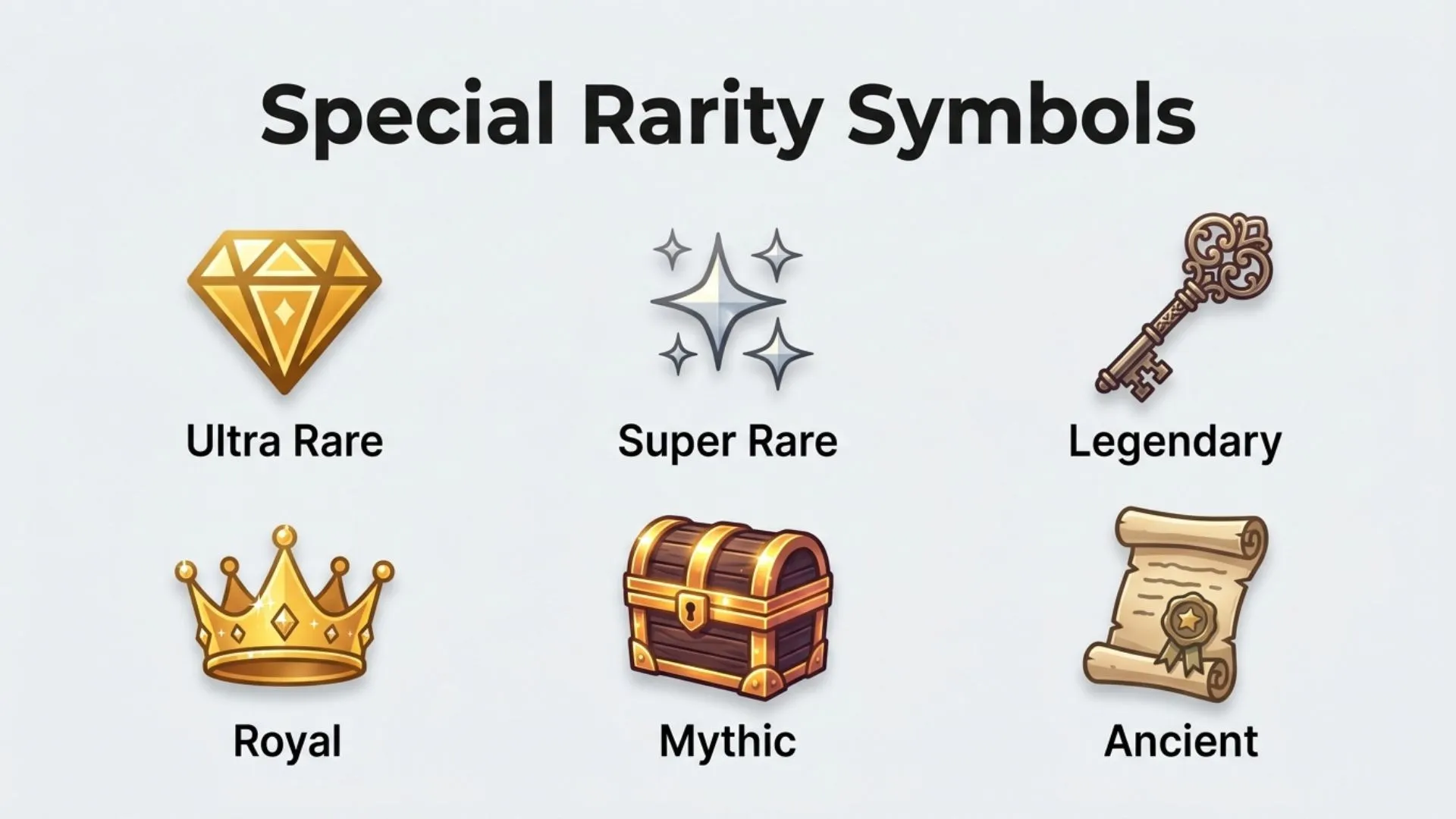
Some Magic products feature additional rarity classifications.
Examples include:
- Bonus Sheet cards
- Masterpiece Series
- Promotional cards
- Serialized cards
- Universes Beyond special printings
- Showcase treatments
- Extended art versions
These special categories often use unique visual designs while still following the game’s broader rarity system.
Understanding Expansion Symbols
One common misconception is that every rarity has its own unique shape.
In reality, the expansion icon changes with every set.
For example:
- One set may use a sword.
- Another may use a castle.
- Another may feature a dragon.
- Another could use a magical emblem.
The symbolic representation remains the same shape for every rarity within that set.
Only the color changes.
Therefore:
- Shape = Expansion Set
- Color = Card Rarity
This clever design keeps cards visually organized while maintaining a consistent identification system.
How Color Indicates Card Rarity
The easiest way to identify rarity is by looking at the expansion icon’s color.
| Color | Rarity |
| Black | Common |
| Silver | Uncommon |
| Gold | Rare |
| Orange-Red | Mythic Rare |
Modern card frames make these colors easy to recognize even during gameplay.
Foil cards may reflect light differently, but the underlying rarity color remains visible.
Why Card Rarity Matters
Rarity affects several aspects of Magic: The Gathering.
Booster Pack Distribution
Booster packs are carefully designed to include cards at specific rarity levels.
A typical play booster contains:
- Multiple commons
- Several uncommons
- One rare or mythic rare
This controlled distribution creates excitement during pack opening.
Trading Value
Although rarity alone doesn’t determine price, it strongly influences supply.
A powerful Mythic Rare usually has fewer copies available than an equally popular uncommon.
However, demand ultimately determines market value.
Some uncommon cards become more expensive than many rares because competitive players need them.
Collecting
Collectors often pursue complete rarity sets.
Many enjoy obtaining:
- Every Mythic
- Every Rare
- Alternate artwork
- Foil versions
- Serialized editions
Rarity symbols make organizing collections much easier.
Limited Formats
Draft and Sealed formats rely on rarity distribution to create balanced gameplay.
Commons provide consistency.
Uncommons introduce strategic depth.
Rares and Mythics create exciting moments without dominating every match.
Symbolism and Importance
Magic rarity symbols are much more than colorful decorations.
They represent:
- Card scarcity
- Game balance
- Collectibility
- Design philosophy
- Player expectations
These small icons have become part of Magic’s visual language.
Their symbolic significance extends beyond gameplay because they help establish anticipation when opening booster packs.
The rarity icon also contributes to the game’s typography and card design, functioning as both a practical character and an attractive visual element.
How to Identify Rarity Quickly
Learning to identify rarity takes only a few seconds.
Look for the Expansion Icon
Find the expansion symbol beneath the artwork on the right side of the card.
Ignore the Shape
Many beginners mistakenly believe different shapes indicate rarity.
Instead, focus on the color.
Learn the Four Main Colors
Remember this simple sequence:
- Black = Common
- Silver = Uncommon
- Gold = Rare
- Orange-Red = Mythic
Once memorized, identifying rarity becomes second nature.
Check Collector Numbers
Modern cards also include collector information near the bottom.
This additional information helps verify printings and special editions.
Common Uses and Applications
Magic rarity symbols serve many practical purposes.
Players use them when:
- Building decks
- Trading cards
- Organizing binders
- Buying singles
- Opening booster packs
- Cataloging collections
- Identifying valuable pulls
- Teaching new players
Online marketplaces also use rarity as one of the primary search filters.
Modern Digital Usage
Magic: The Gathering is no longer limited to physical cards.
Digital platforms such as MTG Arena also display rarity using colored icons.
These digital characters mirror the physical game’s visual language, ensuring consistency across platforms.
Although these are not Unicode symbols or standard text symbols, they function as recognizable digital icons that communicate rarity instantly.
This consistent modern usage helps players transition easily between tabletop and digital formats.
Interesting Facts
Mythic Rares Are Relatively New
The Mythic Rare category did not exist for the first fifteen years of Magic.
Rarity Doesn’t Equal Power
Some of the strongest tournament cards have been commons and uncommons.
Every Set Has a Unique Expansion Icon
The expansion symbol changes with every release, giving each set its own identity.
Collectors Love Misprints
Cards with printing errors involving rarity symbols can become valuable collector items.
Promotional Cards Can Be Confusing
Special promotional printings sometimes use alternate frames, making rarity identification slightly different from standard booster cards.
Common Mistakes or Misconceptions
Assuming Rare Means Expensive
Many Rare cards are inexpensive because demand remains low.
Conversely, highly playable commons and uncommons may become surprisingly valuable.
Confusing Shape with Rarity
The expansion icon’s shape identifies the set—not the rarity.
Believing Mythics Are Always Better
Mythic cards are designed to feel exciting, but they are not automatically stronger than rares or uncommons.
Ignoring Set Variations
Different printings of the same card may have different rarity levels across multiple sets.
Thinking Older Cards Follow Modern Rules
Early Magic sets often lack colored rarity symbols altogether.
Frequently Asked Questions
What do Magic: The Gathering rarity symbols mean?
They indicate how frequently a card appears in booster packs. The color of the expansion symbol identifies whether the card is Common, Uncommon, Rare, or Mythic Rare.
Where is the rarity symbol located?
The rarity indicator is the color of the expansion set icon positioned beneath the artwork on the right side of the card.
Are Mythic Rare cards always valuable?
No. Market value depends on player demand, tournament play, Commander popularity, and collectibility not just rarity.
Why do older Magic cards not have colored rarity symbols?
Early Magic expansions were printed before the colored rarity system was introduced. Colored expansion symbols became standard in 1998.
Can the same card have different rarities?
Yes. Reprints may appear at different rarity levels depending on the set and game design.
Does rarity affect gameplay?
Indirectly. Rarity influences booster distribution and Limited formats, but it does not determine how powerful a card is.
How can I quickly identify card rarity?
Simply check the color of the expansion icon:
- Black = Common
- Silver = Uncommon
- Gold = Rare
- Orange-Red = Mythic Rare
Conclusion
Magic: The Gathering rarity symbols are an essential part of the game’s identity, helping players instantly recognize how common or scarce a card is. While the expansion icon identifies the card’s set, its color communicates rarity through a clear and effective visual system. Understanding these symbols makes collecting, trading, deck building, and evaluating booster packs much easier.
Whether you’re opening your first booster or organizing a collection of thousands of cards, recognizing the meaning behind these iconic rarity symbols enhances your overall Magic experience. Remember that rarity is only one part of a card’s story playability, strategy, and personal enjoyment are equally important. Once you understand how these symbols work, you’ll be better equipped to navigate the vast and exciting world of Magic: The Gathering.

Daniel Carter is a writer and researcher focused on symbols, their meanings, origins, and practical uses. He enjoys turning complex symbolic concepts into simple, easy-to-understand explanations for everyday readers. Through his work, Daniel explores cultural, technical, historical, and commonly used symbols, helping readers understand what they mean and where they are used.
His work includes The Complete Guide to Symbols, Understanding Symbols and Their Meanings, and A Visual Guide to Common Symbols.