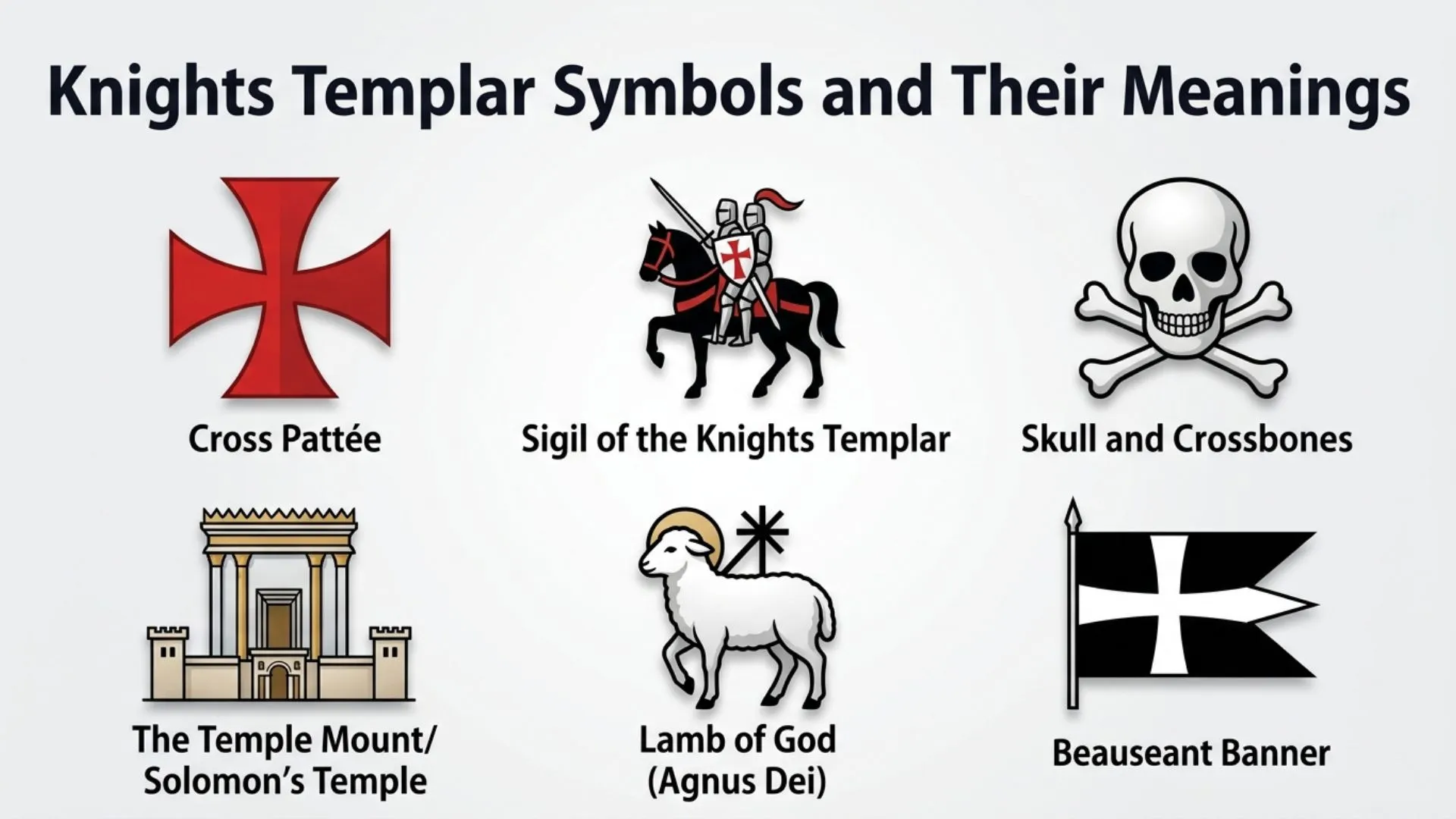
The Knights Templar symbols and their meanings have fascinated historians, collectors, artists, and mystery enthusiasts for centuries. From the iconic red cross to the legendary Seal of the Knights Templar, these medieval emblems continue to appear in books, architecture, jewelry, films, and popular culture. While many myths surround the Knights Templar, their authentic symbols tell a compelling story of faith, military service, sacrifice, and religious devotion.
Founded during the Crusades, the Knights Templar became one of the most influential military and religious orders in medieval Europe. Their symbols were far more than decorative designs; they served as powerful visual representations of identity, loyalty, authority, and Christian values. Each sign carried a specific purpose, whether displayed on banners, shields, clothing, official seals, or churches.
In this guide, you’ll discover the origins, meanings, history, and symbolism behind the most recognized Knights Templar symbols. We’ll also separate historical facts from popular myths to provide an accurate, trustworthy overview of these enduring medieval icons.
Knights Templar Symbols and Their Meanings (Meaning and Overview)
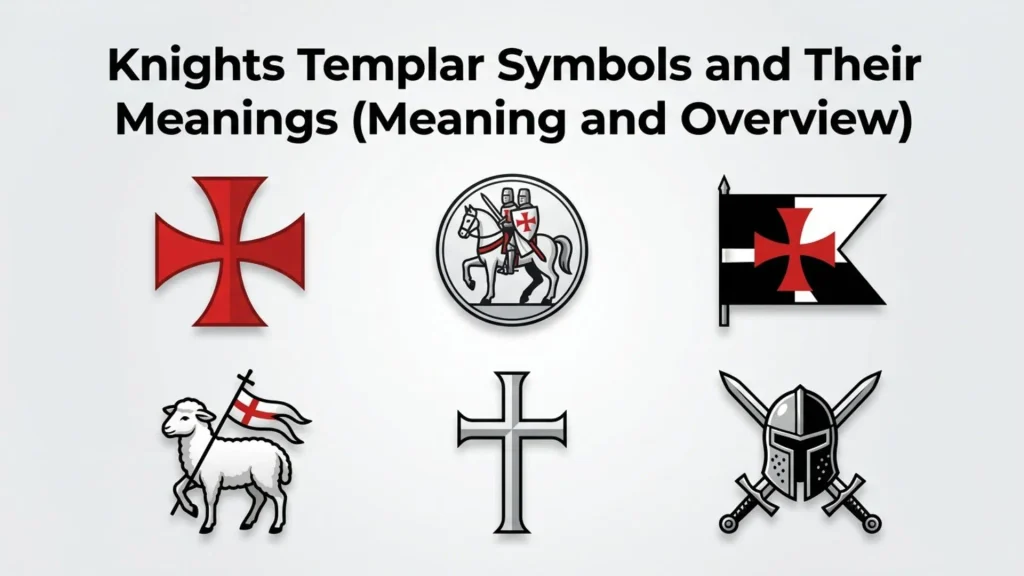
Knights Templar symbols are visual emblems associated with the Poor Fellow-Soldiers of Christ and of the Temple of Solomon, commonly known as the Knights Templar. Established in 1119, the order protected Christian pilgrims traveling to the Holy Land while also serving as a respected military force during the Crusades.
Each symbol had a practical and spiritual purpose. Some identified members on the battlefield, while others represented the order’s religious mission, humility, courage, and commitment to God.
Unlike ordinary decorative symbols, these medieval emblems functioned as communication symbols that conveyed authority, rank, and allegiance. Many continue to carry symbolic significance in historical studies, religious organizations, and modern fraternal groups.
Knights Templar Symbols and Their Meanings (History and Origin)
The Knights Templar were founded in Jerusalem after the First Crusade. Initially consisting of only a handful of knights, the order soon gained official recognition from the Catholic Church and expanded across Europe.
As their influence grew, so did the need for recognizable insignia. Symbols appeared on:
- White mantles
- Shields
- Battle flags
- Official seals
- Coins
- Churches
- Documents
These visual representations helped distinguish Templar knights from other military orders such as the Knights Hospitaller and the Teutonic Knights.
Many authentic symbols originated during the 12th and 13th centuries and reflected medieval Christian beliefs rather than the secret societies and conspiracy theories often associated with the order today.
Types of Knights Templar Symbols
The Red Cross Pattée
The red cross is the most famous symbol associated with the Knights Templar.
The order originally wore plain white mantles. Around the mid-12th century, Pope Eugene III authorized Templar knights to wear a red cross on their robes.
Symbol Meaning
The red cross represented:
- Sacrifice
- Christian faith
- Martyrdom
- Courage
- Dedication to Christ
The bright red color symbolized the willingness of every knight to shed blood in defense of Christianity.
Unlike a simple decorative symbol, the cross served as a sacred sign of religious commitment.
The Seal of Two Knights on One Horse
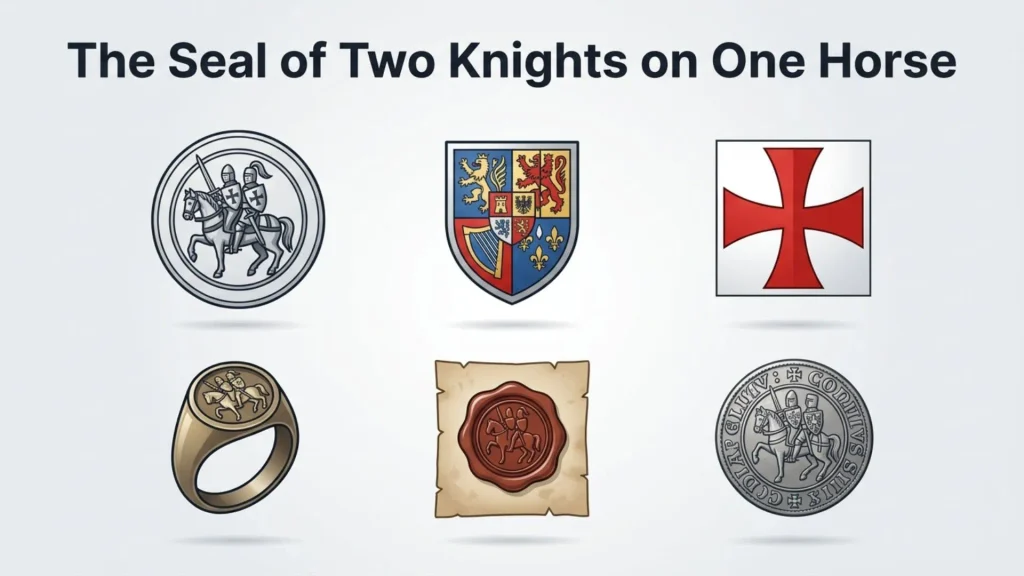
Perhaps the most recognizable Templar emblem is the official seal depicting two knights riding a single horse.
Symbol Meaning
Historians generally interpret this image as representing:
- Humility
- Brotherhood
- Poverty
- Unity
- Shared mission
One traditional explanation is that the early Knights Templar lacked financial resources, forcing two soldiers to share a single horse.
Others believe the image symbolized spiritual partnership rather than literal poverty.
Regardless of its exact origin, it remains one of medieval Europe’s most famous symbolic representations.
The Beauséant Banner
The Beauséant served as the official battle flag of the Knights Templar.
It featured two distinct colors:
- Black
- White
Symbol Meaning
The contrasting colors represented several important ideas, including:
- Good and evil
- Purity and strength
- Peace and warfare
- Spiritual and earthly responsibilities
The Beauséant inspired courage during battle and acted as a rallying point for Templar forces.
According to medieval accounts, retreat was forbidden as long as the banner remained standing.
The Jerusalem Cross
Although not exclusive to the Knights Templar, the Jerusalem Cross became closely associated with Crusader history.
The design includes:
- One large central cross
- Four smaller crosses
Symbol Meaning
Common interpretations include:
- Christ and the Four Gospels
- Christianity spreading across the world
- Jerusalem as the center of Christian faith
- Missionary work
Its historical symbolism continues to make it a popular icon in Christian art.
The Agnus Dei (Lamb of God)
Some Templar seals featured the Agnus Dei, or Lamb of God.
This Christian symbol depicts a lamb carrying a banner with a cross.
Symbol Meaning
The Lamb of God represents:
- Jesus Christ
- Innocence
- Redemption
- Victory over death
- Divine sacrifice
Its use emphasized the order’s religious identity rather than military power.
The Temple of Solomon Imagery
Because the order’s headquarters stood near the believed site of Solomon’s Temple, architectural imagery occasionally appeared in Templar artwork.
Symbol Meaning
These representations symbolized:
- Divine wisdom
- Sacred history
- Jerusalem
- Biblical heritage
- Religious duty
The connection also inspired the order’s full name.
Additional Symbols Linked to the Knights Templar
The Sword
The sword was more than a weapon.
It symbolized:
- Justice
- Honor
- Protection
- Duty
- Military discipline
In medieval Christian thought, the sword represented defending the innocent rather than seeking conquest.
The White Mantle
The white cloak became one of the defining characteristics of Templar knights.
Symbol Meaning
White represented:
- Purity
- Holiness
- Integrity
- Obedience
- Spiritual devotion
Only fully professed knights were permitted to wear the white mantle.
The Latin Cross
Various forms of the Latin Cross appeared throughout Templar churches and official documents.
Its traditional meaning centered on:
- Salvation
- Resurrection
- Faith
- Christian identity
Unlike fictional portrayals, the Latin Cross was the primary religious icon used by the order.
Symbolism and Importance
The enduring popularity of Knights Templar symbols comes from their rich historical symbolism and religious significance.
These emblems represented core ideals, including:
- Loyalty
- Faith
- Honor
- Discipline
- Service
- Sacrifice
- Brotherhood
- Humility
Rather than functioning as mystical signs, most symbols had practical uses in identifying members, communicating authority, and reinforcing shared values.
Their cultural meaning has expanded over time, influencing architecture, heraldry, literature, films, and modern organizations inspired by medieval traditions.
Common Uses and Applications
Today, Knights Templar symbols appear in many different contexts.
Common examples include:
Historical Research
Historians study these symbols to better understand medieval Europe, the Crusades, and Christian military orders.
Museums
Artifacts featuring authentic Templar icons can be found in museums throughout Europe and the Middle East.
Jewelry
Crosses, seals, and medieval emblems frequently appear in rings, necklaces, pendants, and commemorative coins.
Architecture
Some medieval churches and castles preserve carved Templar symbols in stonework, stained glass, and floor designs.
Modern Fraternal Organizations
Certain Masonic bodies incorporate Templar-inspired imagery as ceremonial symbols, though they are historically separate from the original medieval order.
Popular Culture
Movies, novels, documentaries, and video games often feature Templar symbols as visual representations of mystery, adventure, and medieval history.
How to Interpret Knights Templar Symbols
Understanding these symbols requires historical context rather than relying on myths.
When examining a Templar emblem:
Consider Its Historical Source
Authentic medieval seals provide stronger evidence than modern reproductions.
Understand Christian Symbolism
Many Templar icons originated from broader Christian traditions rather than the order itself.
Separate Fact from Fiction
Popular media frequently exaggerates secret meanings that lack historical evidence.
Study the Complete Design
Color, shape, inscriptions, and placement all contribute to a symbol’s meaning.
Interesting Facts
The Red Cross Was a Papal Privilege
The Pope officially granted the Knights Templar permission to wear the red cross as a mark of distinction.
Every Seal Was Handcrafted
No two medieval wax seals were perfectly identical because each was individually engraved.
White Cloaks Were Reserved for Knights
Sergeants and other members typically wore darker clothing instead of white mantles.
Many Symbols Were Shared
The Jerusalem Cross and Latin Cross were used by various Christian groups, not exclusively by the Knights Templar.
Myths Often Outnumber Facts
Stories involving hidden treasure, secret codes, or supernatural powers usually have little historical support despite their popularity.
Common Mistakes or Misconceptions
Every Cross Is a Templar Cross
Many medieval crosses belong to different Christian traditions and military orders.
The Seal Shows Poverty Only
While poverty is a common interpretation, historians also view the two riders as symbols of unity and brotherhood.
Templar Symbols Are Secret Codes
Most authentic symbols had clear religious or administrative purposes rather than hidden meanings.
The Templars Invented Every Symbol Associated with Them
Several famous symbols, including the Jerusalem Cross and Lamb of God, existed long before the Knights Templar adopted them.
Modern Designs Are Always Authentic
Many decorative symbols sold today combine historical elements with fictional artwork that never existed during the Middle Ages.
Frequently Asked Questions
What is the most famous Knights Templar symbol?
The red cross pattée is the best-known Knights Templar symbol. It represents Christian faith, sacrifice, courage, and devotion.
Why are there two knights on one horse?
The image is generally interpreted as symbolizing humility, brotherhood, and the early poverty of the order, although historians continue to debate its exact meaning.
Did the Knights Templar invent the Jerusalem Cross?
No. While closely associated with the Crusader period, the Jerusalem Cross was not created by the Knights Templar.
What does the black and white Templar flag mean?
The Beauséant symbolizes the balance between spiritual purity and military strength, as well as the contrast between good and evil.
Are modern Templar symbols historically accurate?
Some are based on authentic medieval designs, while others are modern artistic interpretations inspired by history.
Are Knights Templar symbols religious or military?
They are both. Most symbols combined Christian beliefs with the order’s military responsibilities during the Crusades.
Can anyone use Knights Templar symbols today?
Yes. Many symbols are used for educational, artistic, historical, or decorative purposes, though their cultural and religious significance should be respected.
Conclusion
The Knights Templar symbols and their meanings offer a fascinating glimpse into one of history’s most influential military and religious orders. Far from being mysterious codes, these symbols primarily reflected the Templars’ Christian faith, dedication, discipline, humility, and sense of duty. From the iconic red cross and the Seal of Two Knights on One Horse to the Beauséant banner and the Jerusalem Cross, each emblem served as a meaningful visual representation of the order’s identity and mission.
Understanding these historic icons allows us to appreciate their authentic origins while separating documented history from modern myths. Whether you’re studying medieval history, exploring religious symbolism, or simply curious about these enduring emblems, the Knights Templar’s symbols remain powerful reminders of a remarkable chapter in European history.

Ryan Mitchell is an independent writer with a strong interest in symbols, visual communication, and the meanings behind different signs and icons. His writing focuses on providing clear, accurate, and useful information that helps readers quickly understand unfamiliar symbols. Ethan covers a wide range of topics, from everyday and cultural symbols to technical and professional symbol systems.
His books include The World of Symbols, Symbols Explained Simply, and The Essential Symbol Reference Guide.