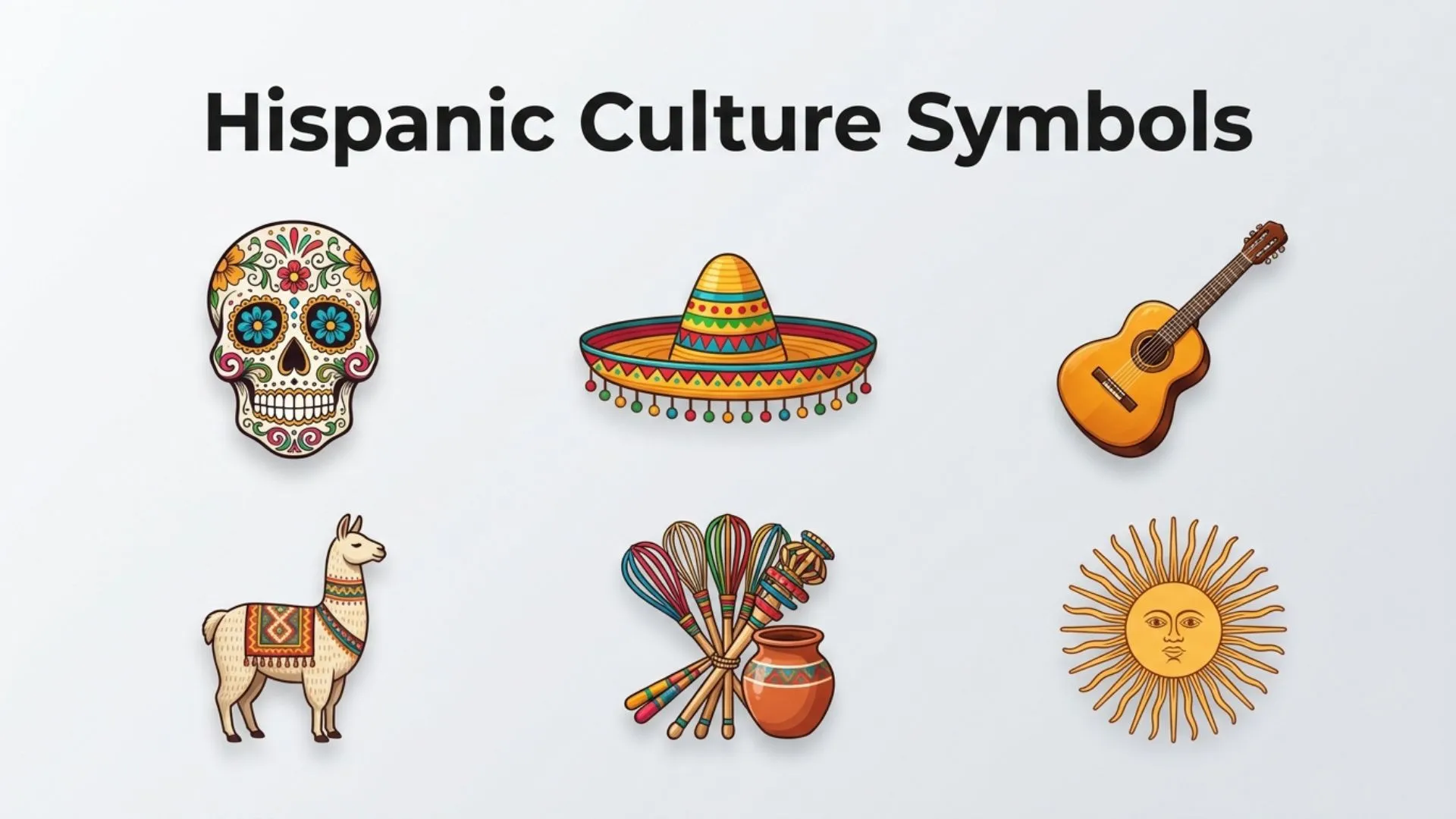
Hispanic culture is one of the world’s richest and most diverse cultural traditions, spanning more than 20 Spanish-speaking countries across Latin America, Europe, and parts of the Caribbean. While each nation has its own customs, languages, and history, many Hispanic culture symbols reflect shared values such as family, faith, resilience, community, celebration, and cultural pride.
These symbols appear in everyday life, from colorful festivals and traditional art to national emblems, religious icons, food, music, and architecture.
They serve as powerful visual representations of identity, heritage, and history, connecting generations while preserving cultural traditions.
In this guide, you’ll discover the meanings, origins, and importance of the most recognizable Hispanic culture symbols. Whether you’re researching Hispanic Heritage Month, exploring Latin American traditions, or simply interested in cultural symbolism, this article provides a comprehensive and respectful overview.
Hispanic Culture Symbols (Meaning and Overview)
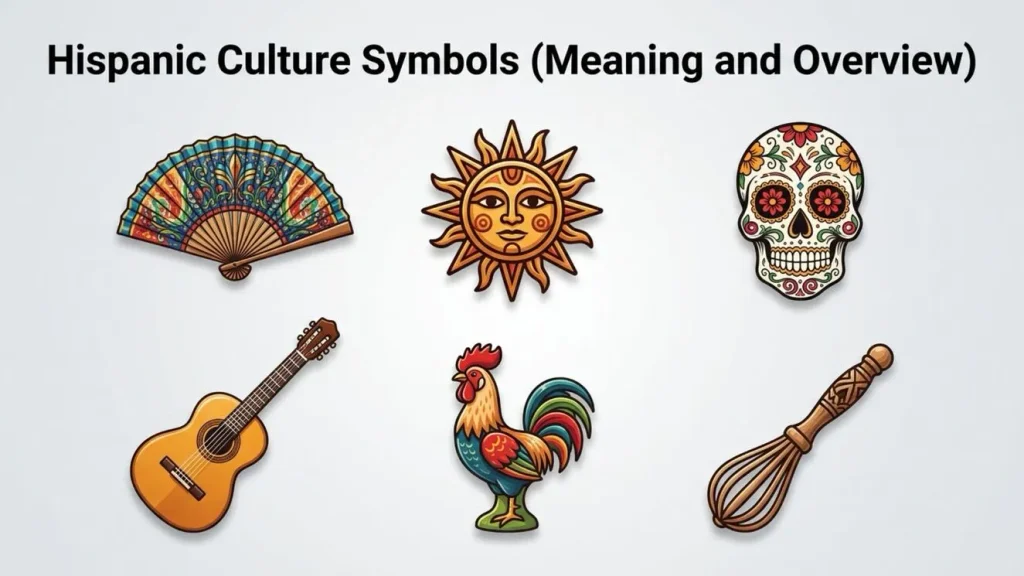
Hispanic culture symbols are objects, images, colors, traditions, and icons that represent the history, beliefs, customs, and identities of Hispanic communities. Rather than belonging to a single country, many of these symbols have cultural significance across Spanish-speaking nations, while others are unique to specific regions.
A symbol may communicate religious devotion, national pride, artistic heritage, family values, or historical events. These visual representations are often found in public celebrations, traditional clothing, artwork, literature, architecture, and everyday life.
It’s important to understand that “Hispanic” refers to people and cultures connected by the Spanish language, while each country maintains its own distinctive traditions. Therefore, not every symbol is universal across all Hispanic cultures.
History and Origin
The origins of Hispanic culture symbols date back thousands of years and reflect a blend of Indigenous civilizations, Spanish colonial influence, African heritage, and later cultural exchanges.
Before European contact, civilizations such as the Maya, Aztec, Taíno, and Inca developed rich symbolic traditions through architecture, pottery, textiles, and religious artwork. After Spain’s arrival in the Americas during the late 15th century, Catholic imagery, the Spanish language, and European artistic styles merged with Indigenous traditions.
Over centuries, this cultural fusion created unique symbols that continue to define Hispanic identity today. Festivals, music, dance, religious celebrations, and folk art all preserve these traditions while adapting to modern society.
Types of Hispanic Culture Symbols
The Spanish Language
One of the strongest symbols of Hispanic identity is the Spanish language itself.
Although vocabulary and pronunciation vary from country to country, Spanish serves as a cultural bridge connecting millions of people worldwide.
Symbol Meaning
The language represents:
- Shared heritage
- Communication
- Literature
- Education
- Cultural identity
It also preserves centuries of history through poetry, storytelling, and music.
The Virgen de Guadalupe
The Virgen de Guadalupe is among the most significant religious icons in Hispanic culture, particularly in Mexico and many Hispanic communities worldwide.
Symbol Meaning
She represents:
- Faith
- Hope
- Compassion
- Protection
- Unity
Her image appears in churches, homes, artwork, jewelry, murals, and community celebrations.
The Cross
Christian crosses are widely recognized throughout Hispanic countries because of the strong influence of Catholicism.
Symbol Meaning
The cross symbolizes:
- Faith
- Sacrifice
- Salvation
- Spiritual guidance
- Religious devotion
Crosses appear in churches, cemeteries, family homes, and cultural festivals.
The Eagle
Several Hispanic nations use eagles in national symbols.
The Mexican golden eagle, for example, appears on the country’s national flag.
Symbol Meaning
The eagle commonly represents:
- Strength
- Freedom
- Independence
- Courage
- National identity
Its cultural meaning originates from both Indigenous traditions and modern national history.
The Cactus
The prickly pear cactus is closely associated with Mexican heritage.
According to Aztec tradition, the founding of Tenochtitlán occurred where an eagle stood upon a cactus while holding a serpent.
Symbol Meaning
The cactus represents:
- Survival
- Endurance
- Homeland
- Natural beauty
- Historical heritage
Traditional Artistic Symbols
Papel Picado
Papel picado consists of colorful sheets of paper cut into intricate patterns.
These decorative symbols appear during weddings, birthdays, Día de los Muertos, Independence Day celebrations, and religious festivals.
Symbol Meaning
Papel picado symbolizes:
- Joy
- Celebration
- Community
- Creativity
- Cultural continuity
Its delicate designs demonstrate remarkable craftsmanship passed down through generations.
Talavera Pottery
Talavera pottery combines Spanish ceramic traditions with Indigenous artistic influences.
Known for its colorful hand-painted designs, it remains one of the most recognizable examples of Hispanic folk art.
Symbol Meaning
Talavera represents:
- Artistic heritage
- Skilled craftsmanship
- Cultural pride
- Traditional beauty
Embroidered Textiles
Handwoven blankets, dresses, shawls, and embroidered clothing carry symbolic patterns unique to many Hispanic regions.
Common motifs include:
- Flowers
- Birds
- Geometric shapes
- Plants
- Sacred designs
These patterns often communicate family history, local identity, or Indigenous ancestry.
Symbols Found in Festivals
Día de los Muertos Decorations
One of the best-known Hispanic traditions is Día de los Muertos (Day of the Dead).
Important symbols include:
- Marigold flowers
- Sugar skulls
- Candles
- Altars
- Photographs
- Butterflies
Together they honor deceased loved ones through remembrance rather than fear.
Piñatas
Originally introduced through cultural exchange, piñatas have become beloved symbols throughout many Hispanic celebrations.
They represent:
- Celebration
- Generosity
- Childhood joy
- Community gatherings
Although commonly associated with birthdays today, piñatas also have historical religious connections.
Candles
Candles appear in religious ceremonies, holidays, memorials, and family celebrations.
Their symbolic significance includes:
- Hope
- Prayer
- Guidance
- Spiritual light
- Remembrance
Musical and Dance Symbols
Music is central to Hispanic culture.
Several instruments have become powerful cultural icons.
Guitar
The guitar represents:
- Storytelling
- Celebration
- Romance
- Tradition
- Artistic expression
Mariachi
Mariachi performers symbolize Mexican cultural heritage through music, costumes, and celebration.
Flamenco
Although originating in Spain, flamenco remains one of the most internationally recognized Hispanic artistic traditions.
Its expressive dance, singing, and guitar music symbolize:
- Passion
- Strength
- Emotion
- Cultural resilience
Food as a Cultural Symbol
Food often functions as a symbol of identity and family tradition.
Popular examples include:
- Tamales
- Tortillas
- Empanadas
- Paella
- Arepas
- Churros
Recipes frequently pass from one generation to another, making food an important communication symbol of heritage and family unity.
Common Uses and Applications
Hispanic culture symbols appear in many aspects of everyday life.
They are commonly found in:
- Schools
- Museums
- Cultural festivals
- Churches
- Public murals
- Community centers
- Family celebrations
- Educational materials
- Traditional clothing
- National holidays
During Hispanic Heritage Month, these symbols help educate people about the diversity and contributions of Hispanic communities.
In digital communication, some traditional symbols are represented through modern usage using emoji, decorative icons, and digital characters. While they are not Unicode symbols in every case, many related text symbols and special characters are used creatively in educational content, social media, and graphic design.
Symbolism and Importance
Hispanic culture symbols preserve history while strengthening cultural identity.
Their symbolic representation extends beyond decoration by expressing values such as:
- Family
- Respect
- Faith
- Hospitality
- Unity
- Resilience
- Celebration
- Community
These visual representations connect modern generations with centuries of historical symbolism, ensuring that traditions remain meaningful in contemporary society.
Whether displayed in artwork, architecture, festivals, or national emblems, these symbols continue to inspire pride and cultural belonging.
How to Respect and Use Hispanic Culture Symbols
When using Hispanic culture symbols in education, art, or celebrations, it’s important to approach them thoughtfully.
Learn Their Historical Context
Understanding a symbol’s origins helps avoid misunderstandings.
Recognize Regional Differences
Not every symbol represents every Hispanic country.
Avoid Stereotypes
Hispanic culture is incredibly diverse and cannot be represented by a single tradition or image.
Support Authentic Artists
Purchasing handmade crafts from local artisans helps preserve traditional cultural practices.
Interesting Facts
Hispanic Heritage Includes More Than Latin America
Spain is also part of the Hispanic world because Spanish originated there.
Indigenous Symbols Remain Important
Many modern traditions still incorporate symbols from ancient civilizations.
Colors Often Carry Meaning
Red may symbolize courage, white can represent peace, and green frequently signifies hope or nature, depending on the country and context.
Murals Tell Community Stories
Public murals throughout Hispanic neighborhoods often celebrate local history, heroes, and cultural identity.
Music Is a Living Symbol
Traditional music styles continue evolving while preserving centuries-old cultural traditions.
Common Mistakes or Misconceptions
Hispanic and Latino Mean the Same Thing
While they overlap, the terms are not identical. Hispanic refers to Spanish language heritage, while Latino generally relates to Latin American geographic origins.
One Symbol Represents Every Hispanic Culture
Each country has unique symbols shaped by its own history.
Día de los Muertos Is Halloween
Although both occur around the same season, Día de los Muertos is a distinct cultural and religious tradition focused on honoring loved ones.
Every Hispanic Country Shares the Same Traditions
Regional customs, clothing, food, music, and symbols vary significantly.
Symbols Never Change
Many traditional symbols continue evolving through modern art, design, education, and digital communication.
Frequently Asked Questions
What are Hispanic culture symbols?
Hispanic culture symbols are images, traditions, objects, and icons that represent the history, beliefs, heritage, and cultural identity of Spanish-speaking communities.
What is the most recognized Hispanic symbol?
The answer depends on the country, but common examples include the Virgen de Guadalupe, the cross, papel picado, the eagle, and traditional folk art.
Why are symbols important in Hispanic culture?
They preserve history, strengthen cultural identity, celebrate traditions, and connect communities across generations.
Is the sugar skull a Hispanic symbol?
Yes. Sugar skulls are important symbols of Día de los Muertos, particularly in Mexican culture, where they honor the memory of deceased loved ones.
Are Hispanic culture symbols religious?
Some are religious, while others represent national identity, Indigenous heritage, music, food, festivals, or artistic traditions.
Can Hispanic symbols vary between countries?
Absolutely. Mexico, Spain, Colombia, Argentina, Peru, Cuba, and other Spanish-speaking countries each have distinctive cultural symbols alongside shared traditions.
How are Hispanic culture symbols used today?
They appear in education, festivals, artwork, architecture, museums, public celebrations, family traditions, and digital media, helping preserve and share cultural heritage.
Conclusion
Hispanic culture symbols reflect the remarkable diversity, resilience, and creativity of Spanish-speaking communities around the world. From the revered Virgen de Guadalupe and the Mexican eagle to colorful papel picado, traditional textiles, music, and festival traditions, these symbols tell stories of faith, family, history, and cultural pride. They are more than decorative icons; they are meaningful expressions of identity that connect past and present.
Understanding these symbols encourages greater appreciation for the many cultures that make up the Hispanic world. By recognizing their historical roots and cultural significance, we can celebrate Hispanic heritage with respect, curiosity, and a deeper understanding of its lasting impact on global history and society.

Daniel Carter is a writer and researcher focused on symbols, their meanings, origins, and practical uses. He enjoys turning complex symbolic concepts into simple, easy-to-understand explanations for everyday readers. Through his work, Daniel explores cultural, technical, historical, and commonly used symbols, helping readers understand what they mean and where they are used.
His work includes The Complete Guide to Symbols, Understanding Symbols and Their Meanings, and A Visual Guide to Common Symbols.