Insurance symbols are standardized codes, icons, and visual identifiers used throughout the insurance industry to classify vehicles, policies, risks, and coverage types. Although many people associate insurance with paperwork and premiums, these symbols play a critical role behind the scenes. They help insurance companies assess risk, calculate premiums, process claims, and ensure policies are applied consistently.
Whether you’re purchasing auto insurance, reviewing a commercial policy, or reading insurance documents, understanding insurance symbols can make the process less confusing. These symbols are more than simple abbreviations they serve as a universal language that allows insurers, agents, underwriters, and policyholders to communicate accurately and efficiently.
This comprehensive guide explains the meaning of insurance symbols, their history, different categories, practical applications, symbolic significance, and common misconceptions. By the end, you’ll have a clear understanding of how insurance symbols work and why they matter.
Insurance Symbols (Meaning and Overview)
Insurance symbols are standardized identifiers used to describe specific types of property, vehicles, risks, or insurance coverage. Depending on the type of insurance, these symbols may appear as numbers, letters, icons, or classification codes.
Unlike decorative symbols or Unicode characters, insurance symbols are functional communication tools developed to simplify underwriting and policy administration. They reduce ambiguity by providing a consistent way to identify insured items and coverage options.
For example, in commercial auto insurance, numerical symbols indicate which vehicles are covered under a policy. In personal auto insurance, vehicle symbols help insurers estimate repair costs, theft risk, and safety ratings. Health, life, and property insurance may also use internal coding systems to categorize policies and risks.
These standardized identifiers improve efficiency while ensuring accurate communication between insurance professionals.
Insurance Symbols (History and Origin)
Early Insurance Documentation
The insurance industry has existed for centuries, but early policies relied heavily on written descriptions rather than standardized symbols. As the number of policyholders grew, insurers needed a more organized method of classifying risks.
Development of Standardized Codes
During the twentieth century, insurance organizations introduced standardized classification systems to improve consistency across companies. Numerical symbols replaced lengthy descriptions, making underwriting faster and reducing administrative errors.
In the United States, commercial auto insurance adopted vehicle designation symbols that became widely accepted throughout the industry. Similar coding systems were later developed for other insurance products.
Digital Transformation
Modern insurance companies now use computerized databases where insurance symbols function as digital identifiers. These codes integrate with underwriting software, claims systems, and policy management platforms, allowing insurers to process information quickly and accurately.
Types, Variations, or Categories
Insurance symbols vary depending on the type of insurance policy.
Commercial Auto Insurance Symbols
Commercial auto policies commonly use numerical symbols to identify which vehicles receive coverage.
Some of the most frequently used symbols include:
| Symbol | Meaning |
| 1 | Any Auto |
| 2 | Owned Autos Only |
| 3 | Owned Private Passenger Autos Only |
| 4 | Owned Autos Other Than Private Passenger |
| 5 | Owned Autos Subject to No-Fault Laws |
| 6 | Owned Autos Subject to Compulsory Uninsured Motorist Laws |
| 7 | Specifically Described Autos |
| 8 | Hired Autos Only |
| 9 | Non-Owned Autos Only |
Each symbol determines exactly which vehicles qualify under specific coverage sections.
Vehicle Rating Symbols
Insurance companies assign rating symbols to passenger vehicles based on several factors, including:
- Repair costs
- Vehicle value
- Theft frequency
- Safety features
- Replacement expenses
- Historical claims data
Vehicles with higher repair costs often receive higher rating symbols, which may result in increased insurance premiums.
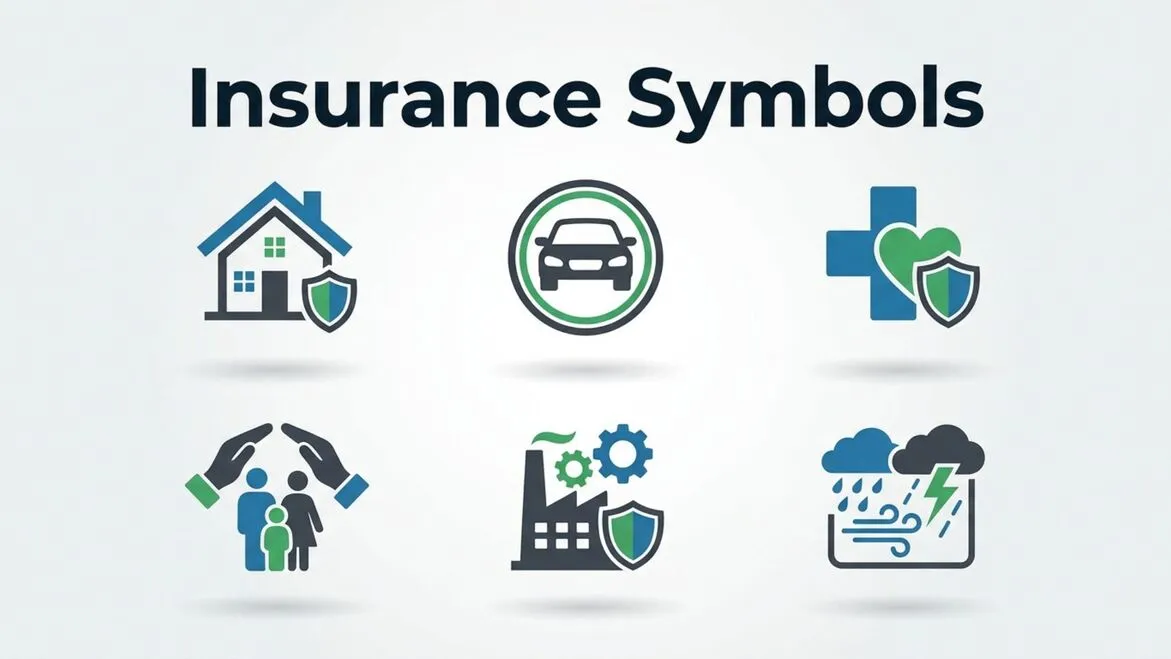
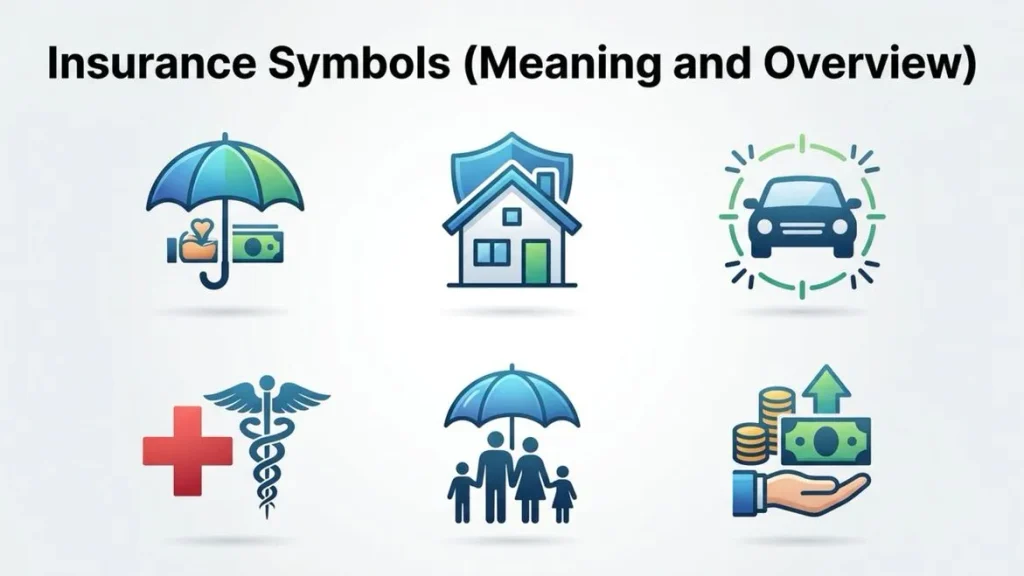
Coverage Icons
Many insurance documents include visual icons representing different coverage types.
Examples include:
- Car icon for auto insurance
- House icon for homeowners insurance
- Medical cross for health insurance
- Shield for protection
- Umbrella for umbrella liability coverage
- Briefcase for business insurance
These visual representations improve readability and help policyholders quickly identify different sections.
Commercial Auto Insurance Symbols Explained
Commercial auto insurance symbols are among the most searched insurance codes because they directly affect coverage.
Symbol 1- Any Auto
This provides the broadest level of coverage by including virtually any vehicle used by the insured business.
Symbol 2- Owned Autos Only
Coverage applies only to vehicles owned by the business.
Symbol 7 – Specifically Described Autos
Only vehicles specifically listed on the policy receive coverage.
Businesses often use this option to insure selected company vehicles.
Symbol 8 – Hired Autos
This symbol covers vehicles leased, rented, or borrowed for business purposes.
Symbol 9 – Non-Owned Autos
Coverage applies to employee-owned vehicles used for company business.
Understanding these symbols helps businesses avoid costly coverage gaps.
Insurance Symbols for Vehicle Rating
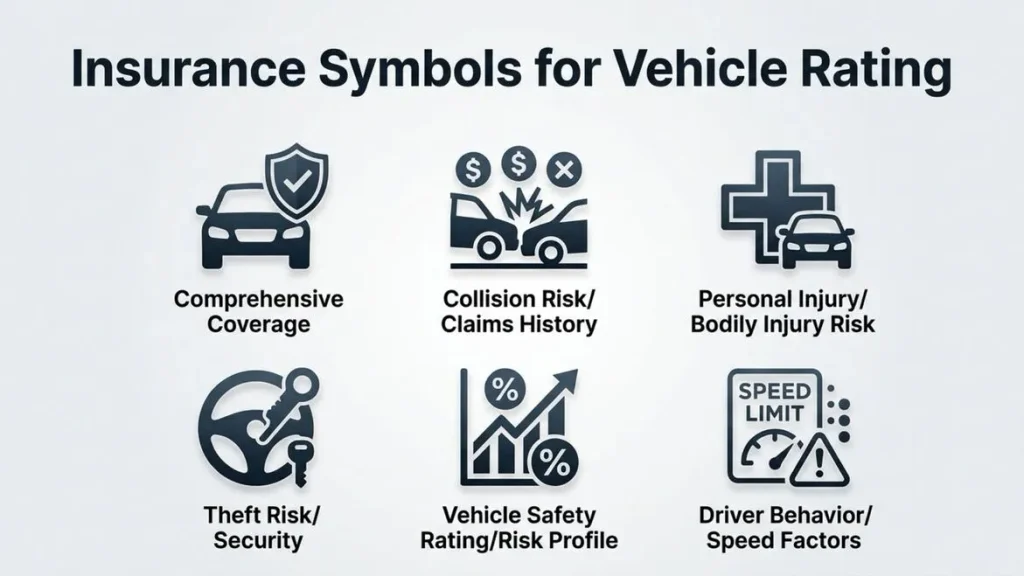
Vehicle symbols differ from commercial coverage symbols.
Insurers assign each vehicle a rating based on risk characteristics.
Factors considered include:
- Manufacturer
- Model year
- Engine type
- Repair complexity
- Safety technology
- Theft statistics
- Market value
Luxury vehicles generally receive higher rating symbols due to increased repair and replacement costs.
Economy vehicles often receive lower symbols because repairs tend to be less expensive.
Insurance Symbols in Policy Documents
Insurance documents frequently include icons and symbols that improve navigation.
Common examples include:
Shield Symbol
Represents protection and insurance coverage.
Checkmark
Indicates approved coverage, completed tasks, or verified information.
Warning Triangle
Highlights exclusions, limitations, or important policy conditions.
Information Icon
Directs readers to additional explanations or policy notes.
Lock Symbol
Represents secure information, privacy protection, or confidential data.
These communication symbols help policyholders quickly locate important information.
Common Uses and Applications
Insurance symbols serve numerous practical purposes throughout the industry.
Underwriting
Underwriters use standardized symbols to evaluate risk consistently across thousands of policies.
Premium Calculation
Vehicle and risk symbols influence insurance pricing by reflecting expected claim costs.
Claims Processing
Claims representatives rely on insurance symbols to identify applicable coverage quickly.
Policy Administration
Symbols simplify policy creation, updates, renewals, and endorsements.
Regulatory Compliance
Standardized classifications help insurers comply with legal and reporting requirements.
Customer Communication
Visual icons make insurance documents easier to understand for policyholders.
Symbolism, Significance, or Importance
Although insurance symbols are primarily functional, they also carry symbolic significance.
Many insurance companies use visual representations that communicate trust, security, and stability.
Common symbolic themes include:
Shield
Represents protection against financial loss.
Umbrella
Symbolizes broad coverage extending beyond standard policies.
Home
Represents security, family, and property protection.
Heart
Often associated with health and life insurance.
Hands
Suggest care, support, and customer service.
These icons reinforce the core purpose of insurance—providing financial protection during unexpected events.
How to Use Insurance Symbols
Understanding insurance symbols can help consumers make better coverage decisions.
Review Your Policy
Check the symbols listed on declarations pages to verify the intended coverage.
Ask Your Insurance Agent
If a symbol or code is unclear, request an explanation before purchasing or renewing a policy.
Compare Coverage
Two policies with similar prices may use different coverage symbols, resulting in different levels of protection.
Verify Commercial Vehicle Symbols
Business owners should ensure the appropriate commercial auto symbols appear on their policies to avoid uninsured exposures.
Keep Documentation Updated
Whenever vehicles are added or removed, confirm that policy symbols remain accurate.
Interesting Facts
- Insurance symbols reduce errors by standardizing policy language across the industry.
- Commercial auto symbols are recognized by insurance professionals throughout the United States.
- Vehicle rating symbols are updated regularly as new models enter the market.
- Advanced safety technology can influence vehicle insurance classifications.
- Insurance software automatically uses symbols during underwriting and claims processing.
- Many policyholders never notice insurance symbols until filing a claim.
- Some insurers use proprietary internal coding systems in addition to industry-standard symbols.
- Digital insurance platforms increasingly rely on icons to improve customer experience.
Common Mistakes or Misconceptions
Assuming Symbols Are Universal Worldwide
Insurance symbols often differ between countries because regulations and policy forms vary.
Confusing Coverage Symbols with Vehicle Ratings
Commercial coverage symbols identify which vehicles are insured, while rating symbols help determine premium costs.
Ignoring Policy Codes
Many policyholders overlook insurance symbols without realizing they define important coverage details.
Believing More Symbols Mean Better Coverage
Coverage quality depends on the specific symbols selected, not the number of symbols listed.
Assuming Icons Replace Policy Language
Visual icons improve readability but do not replace the legal wording contained in the insurance contract.
Frequently Asked Questions
What are insurance symbols?
Insurance symbols are standardized codes, numbers, and icons used to identify vehicles, coverage types, risks, and policy classifications within the insurance industry.
Why are commercial auto insurance symbols important?
They determine which vehicles receive coverage under a commercial auto policy, helping businesses avoid uninsured risks.
What does Symbol 1 mean in commercial auto insurance?
Symbol 1 generally represents “Any Auto,” providing the broadest vehicle coverage available under many commercial auto policies.
Do insurance symbols affect premiums?
Yes. Vehicle rating symbols and risk classifications influence premium calculations because they reflect expected repair costs and claim frequency.
Are insurance symbols the same for every company?
Many commercial auto symbols follow industry standards, but insurers may also use proprietary internal codes for underwriting and administrative purposes.
Where can I find insurance symbols on my policy?
They typically appear on the declarations page, coverage schedule, or vehicle listing section of your insurance documents.
Should I ask my insurance agent about policy symbols?
Absolutely. Understanding the symbols on your policy helps ensure you have the coverage you expect before a claim occurs.
Conclusion
Insurance symbols are an essential part of modern insurance, providing a standardized way to classify vehicles, policies, and coverage while simplifying underwriting and claims processing. Whether you’re reviewing a personal auto policy or managing commercial insurance for a business, understanding these symbols can help you interpret your coverage with greater confidence.
From commercial auto designation symbols to vehicle rating classifications and policy icons, each identifier serves a specific purpose in protecting both insurers and policyholders. Taking the time to understand these symbols can help you avoid costly misunderstandings, compare policies more effectively, and ensure your insurance coverage meets your needs.

Ryan Mitchell is an independent writer with a strong interest in symbols, visual communication, and the meanings behind different signs and icons. His writing focuses on providing clear, accurate, and useful information that helps readers quickly understand unfamiliar symbols. Ethan covers a wide range of topics, from everyday and cultural symbols to technical and professional symbol systems.
His books include The World of Symbols, Symbols Explained Simply, and The Essential Symbol Reference Guide.