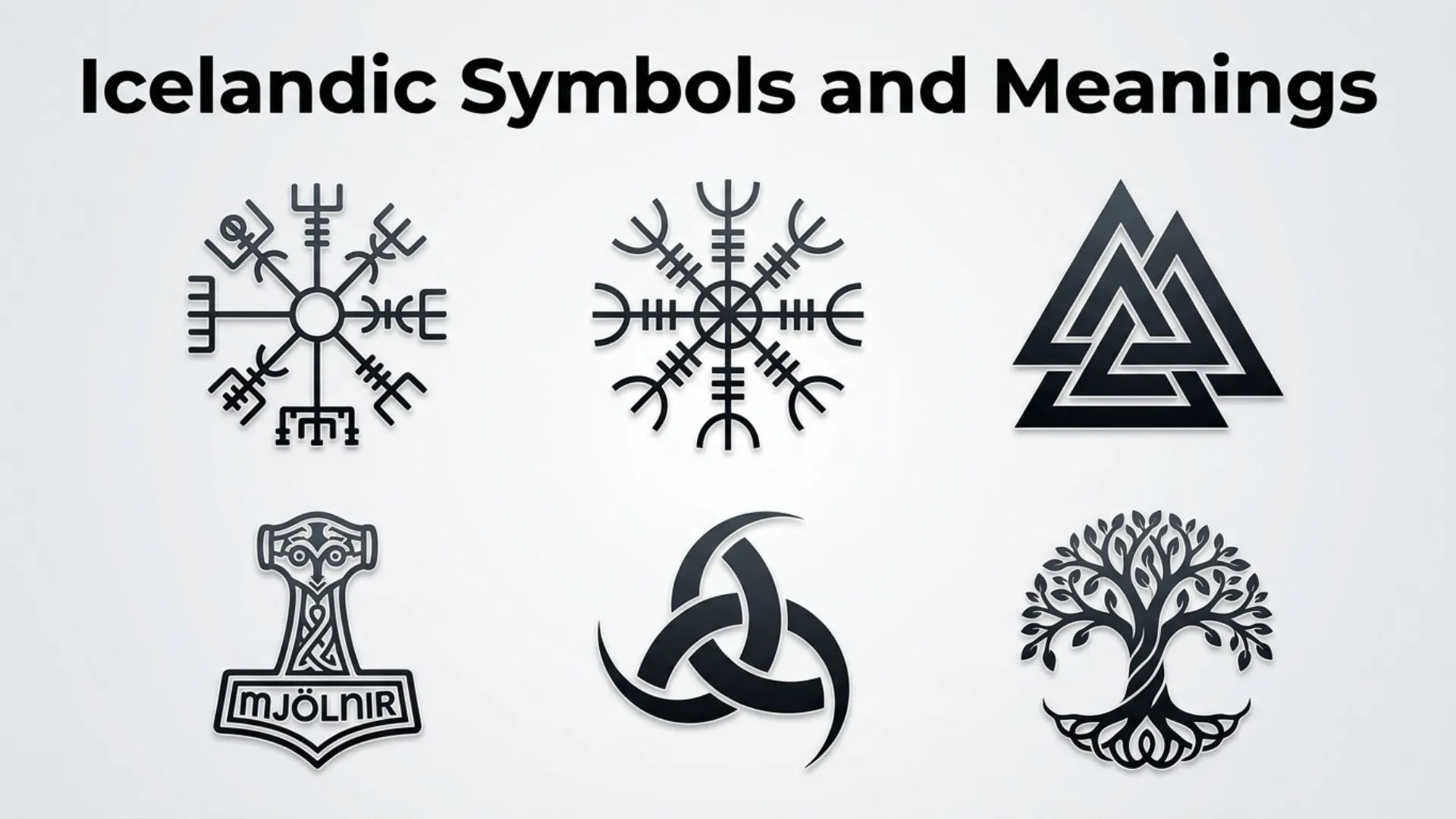
Icelandic symbols have fascinated historians, spiritual seekers, artists, and mythology enthusiasts for centuries. These mysterious signs are deeply connected to Norse culture, Viking traditions, medieval manuscripts, and Iceland’s unique folklore. While many people associate them with magic, protection, and navigation, each symbol carries its own cultural meaning, symbolic representation, and historical significance.
From the famous Vegvísir and Ægishjálmur to ancient runes and magical staves known as galdrastafir, Icelandic symbols continue to inspire tattoos, jewelry, home décor, digital artwork, and modern design. However, understanding their true origins is important because many popular beliefs mix historical facts with later folklore.
This comprehensive guide explores Icelandic symbols and meanings, their origins, variations, uses, symbolism, and modern relevance while separating historical evidence from common myths.
Icelandic Symbols and Meanings (Meaning and Overview)
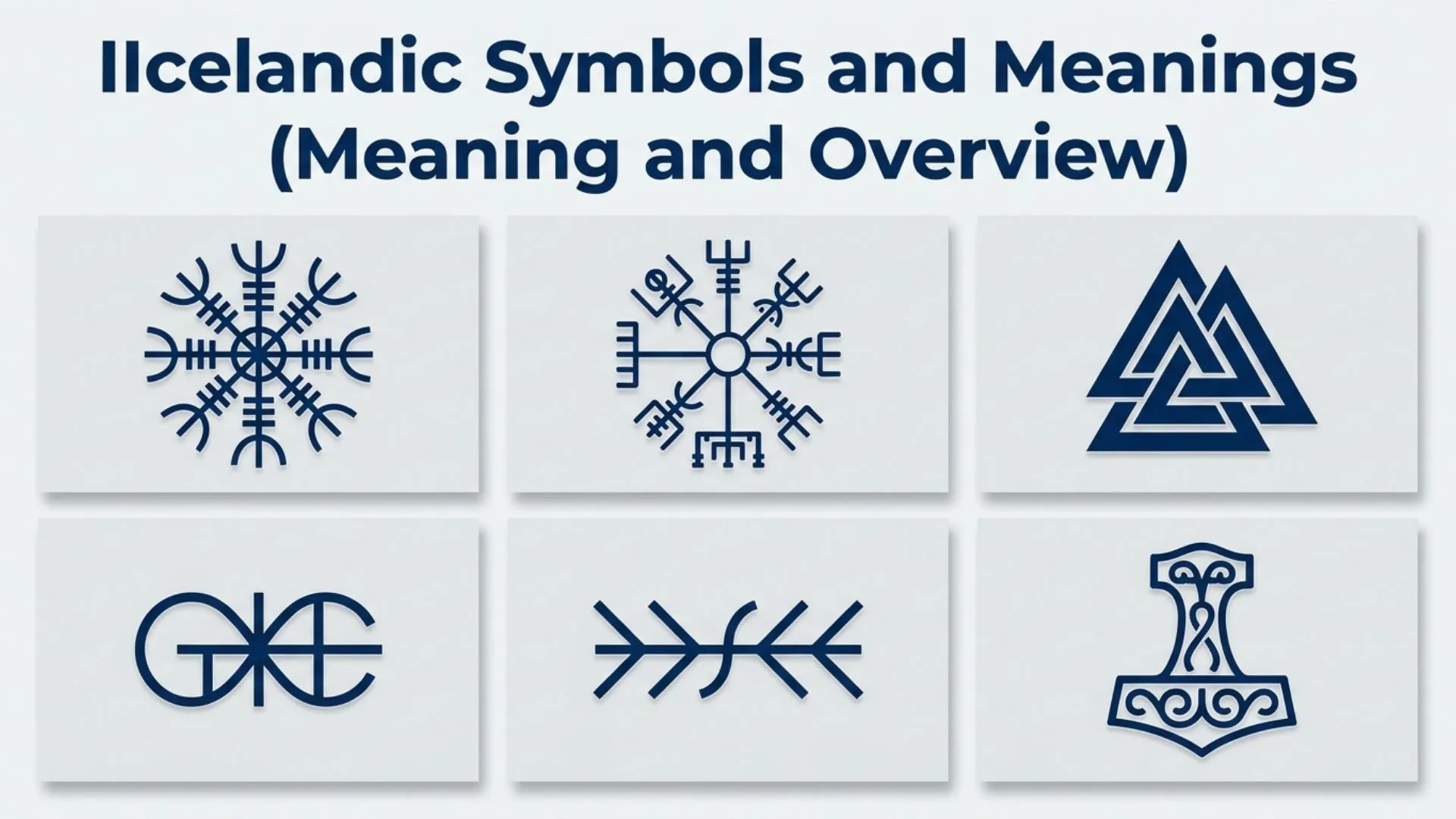
Icelandic symbols are visual representations found primarily in medieval Icelandic manuscripts, Norse traditions, and magical texts. Some functioned as protective signs, while others were believed to attract good fortune, guide travelers, or ward off evil spirits.
Unlike ordinary decorative symbols, these icons often combined spirituality, folklore, and practical beliefs. Many belong to a collection called galdrastafir, or magical staves, which were drawn using geometric patterns rather than letters.
It’s also important to distinguish Icelandic magical symbols from Viking Age symbols. Although many people refer to them collectively as Viking symbols, several well-known Icelandic magical staves were documented centuries after the Viking Age had ended.
Common characteristics include:
- Geometric symmetry
- Radial designs
- Spiritual symbolism
- Protective intentions
- Links to Icelandic folklore
- Connections with Norse mythology
Today, these symbols appear as decorative symbols in artwork, tattoos, jewelry, clothing, logos, and digital designs while retaining strong cultural meaning.
Symbols and Meanings (History and Origin)
The roots of Icelandic symbolism stretch back to the settlement of Iceland during the late ninth century. Early settlers brought Norse beliefs, mythology, and runic traditions from Scandinavia.
Norse Influence
Before Christianity became dominant, Norse mythology shaped daily life. Gods like Odin, Thor, Freyja, and Tyr influenced spiritual beliefs and symbolic traditions.
Runes were among the earliest communication symbols. Besides functioning as characters in writing, many believed they possessed magical properties.
Christian Influence
When Iceland officially adopted Christianity around the year 1000, older pagan traditions did not disappear overnight. Instead, Christian beliefs merged with folk practices.
Many magical manuscripts combined Christian prayers with symbolic signs, creating a unique blend of religion and folklore.
Icelandic Grimoires
Several famous manuscripts preserve Icelandic magical symbols.
These include:
- Galdrabók
- Huld Manuscript
- Lbs 143 8vo
- Other Icelandic magical books
These texts describe symbols intended for protection, healing, success, weather control, luck, or spiritual defense.
Most famous Icelandic magical staves originate from these later medieval and early modern manuscripts rather than the Viking Age itself.
Types of Icelandic Symbols
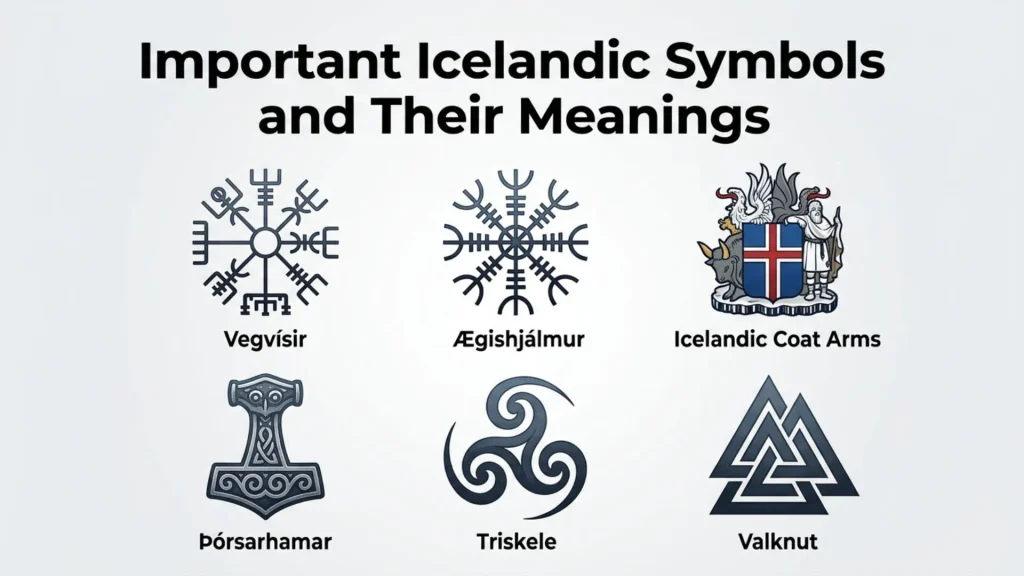
Vegvísir (The Viking Compass)
Perhaps the most famous Icelandic symbol is the Vegvísir.
Although commonly called the Viking compass, historical evidence places it in seventeenth-century Icelandic manuscripts rather than the Viking era.
Its name roughly translates as “wayfinder.”
According to folklore, carrying or wearing this symbol would help a traveler avoid becoming lost during storms or unfamiliar journeys.
The symbolic significance includes:
- Guidance
- Safe travel
- Direction
- Inner strength
- Spiritual protection
- Finding one’s path
Today, the Vegvísir appears on:
- Tattoos
- Necklaces
- Wall art
- Rings
- Digital icons
- Clothing
Ægishjálmur (Helm of Awe)
Another well-known Icelandic magical sign is the Ægishjálmur.
Its name means “Helm of Awe.”
According to Icelandic tradition, warriors used this protective symbol to inspire fear in enemies while strengthening their own courage.
Common meanings include:
- Protection
- Personal power
- Courage
- Confidence
- Mental resilience
- Victory
The symbol consists of eight trident-like arms extending from a central point, creating a striking visual representation of strength.
Galdrastafir (Magical Staves)
Galdrastafir are magical signs designed for specific purposes.
Unlike alphabetic characters or Unicode symbols, these images served ritual or symbolic functions.
Examples include symbols intended for:
- Love
- Wealth
- Fishing success
- Fertility
- Protection from theft
- Good harvest
- Health
- Safe childbirth
Each stave had its own traditional meaning depending on the manuscript where it appeared.
Icelandic Runes
Although runes originated throughout Germanic Europe rather than Iceland alone, they became part of Iceland’s cultural heritage.
The Elder Futhark contains twenty-four runic characters.
Later Scandinavian alphabets developed into the Younger Futhark.
Every rune served multiple purposes:
- Letter
- Sound
- Symbol meaning
- Spiritual concept
- Historical symbolism
For example:
- Fehu represents wealth.
- Uruz symbolizes strength.
- Ansuz relates to wisdom and communication.
- Raidho represents journeys.
- Algiz symbolizes protection.
Runes remain among the most recognizable Nordic symbols today.
Important Icelandic Symbols and Their Meanings
Ginfaxi
Ginfaxi is associated with success and attracting favorable outcomes.
Some traditions viewed it as a symbol for gaining respect and improving one’s social standing.
Kaupaloki
This magical sign was believed to assist merchants.
Its traditional meaning centered on successful trade, profitable business, and favorable negotiations.
Lukkustafir
The word literally means “luck staves.”
Various versions were believed to attract:
- Fortune
- Prosperity
- Positive opportunities
- Financial success
Gapaldur
Gapaldur often appears alongside Ginfaxi.
According to folklore, together they represented victory in competitions and legal disputes.
Svefnþorn
Known as the “sleep thorn,” this mysterious symbol appears in Icelandic legends connected with magical sleep and enchantment.
It appears in folklore more often than documented magical practice.
Symbolism and Cultural Significance
Icelandic symbols represent far more than attractive artwork.
Their symbolic representation reflects the worldview of medieval Icelanders, who believed unseen forces influenced everyday life.
Major themes include:
Protection
Many symbols were intended to shield individuals from danger, illness, accidents, or supernatural threats.
Guidance
Signs like the Vegvísir symbolize finding direction both physically and emotionally.
Today, many people interpret this meaning as navigating life’s challenges.
Courage
The Ægishjálmur has become an international icon of bravery and determination.
Prosperity
Several magical staves sought blessings for farming, fishing, commerce, and family life.
Spiritual Connection
Many modern users appreciate Icelandic symbols as reminders of resilience, heritage, and personal growth rather than literal magical objects.
Common Uses and Applications
Although their original purposes belonged to folklore and ritual traditions, Icelandic symbols have found many modern applications.
Popular uses include:
Tattoos
Many people choose Icelandic symbols because they represent guidance, protection, courage, or personal transformation.
Before getting a tattoo, researching the symbol’s historical meaning helps avoid misunderstandings.
Jewelry
Necklaces, bracelets, rings, and pendants frequently feature:
- Vegvísir
- Ægishjálmur
- Runes
- Protective staves
Home Decoration
Decorative symbols appear in:
- Wooden carvings
- Wall art
- Metal signs
- Paintings
- Handmade crafts
Graphic Design
Designers often incorporate these visual representations into:
- Logos
- Typography projects
- Book covers
- Gaming artwork
- Fantasy illustrations
Educational Resources
Museums, historical exhibits, and academic publications use Icelandic symbols to teach Nordic history and folklore.
How to Use Icelandic Symbols Responsibly
Modern appreciation should always be balanced with historical accuracy and cultural respect.
Here are several best practices.
Learn the Original Meaning
Research reliable historical sources instead of relying solely on social media posts or internet myths.
Avoid Mislabeling
Not every Icelandic magical symbol is genuinely Viking.
Understanding the historical timeline preserves cultural accuracy.
Respect Cultural Heritage
These signs represent an important part of Iceland’s historical identity rather than simply fashionable designs.
Use Them Thoughtfully
Whether creating artwork, choosing jewelry, or selecting a tattoo, understanding the cultural meaning adds depth and authenticity.
Interesting Facts
- The famous Vegvísir does not appear in surviving Viking Age archaeological discoveries.
- Many Icelandic magical staves were recorded hundreds of years after the Viking period.
- Iceland preserved numerous medieval manuscripts that helped protect Nordic folklore.
- Several magical symbols combine Christian references with older folk beliefs.
- Some galdrastafir were designed for extremely specific situations, including fishing, livestock, weather, and legal disputes.
- Icelandic runes differ from magical staves because runes formed an alphabet while magical staves functioned as symbolic signs.
- Many modern interpretations are influenced by popular culture rather than historical scholarship.
- Icelandic symbols remain popular worldwide in fantasy literature, gaming, and historical reenactment communities.
Common Mistakes or Misconceptions
Every Icelandic Symbol Is Viking
This is perhaps the biggest misconception.
Many famous symbols originated long after the Viking Age.
All Symbols Were Used in Battle
Only certain symbols were associated with warriors. Many were intended for farming, travel, healing, or household protection.
Every Symbol Has Proven Magical Power
Historical manuscripts describe magical beliefs, but there is no scientific evidence supporting supernatural effects.
Today, most people appreciate these symbols for their historical symbolism, cultural meaning, or personal inspiration.
Runes and Magical Staves Are the Same
They are different.
Runes are alphabetic characters used for writing and symbolic purposes, while galdrastafir are unique magical designs rather than letters or text symbols.
Every Design Online Is Historically Authentic
Many modern artists create original Nordic-inspired designs that may resemble authentic Icelandic symbols but have no historical basis.
Frequently Asked Questions
What is the most famous Icelandic symbol?
The Vegvísir is probably the best-known Icelandic symbol. It represents guidance and protection during journeys and has become one of the most recognized Nordic icons.
Is the Vegvísir really a Viking symbol?
No. Despite its nickname as the “Viking Compass,” surviving evidence places it in later Icelandic manuscripts rather than the Viking Age.
What does the Ægishjálmur symbolize?
The Ægishjálmur, or Helm of Awe, traditionally symbolizes protection, courage, strength, confidence, and victory.
Are Icelandic runes different from Viking runes?
Runes belong to the broader Germanic writing systems used throughout Northern Europe. Iceland preserved runic traditions, but the magical staves are separate symbolic designs.
Can Icelandic symbols be used in tattoos?
Yes. Many people choose them for their symbolic significance. However, researching the historical background helps ensure the design reflects its authentic cultural meaning.
Do Icelandic symbols have Unicode versions?
Most traditional Icelandic magical staves do not exist as official Unicode symbols because they are complex historical illustrations rather than standardized digital characters. Individual runic letters, however, are included in the Unicode Standard.
Are Icelandic magical symbols still used today?
Today, they are mainly appreciated as historical, artistic, and cultural icons. Some people also use them in modern spiritual or neopagan practices, though these uses are contemporary interpretations rather than direct continuations of medieval traditions.
Conclusion
Icelandic symbols are remarkable examples of how history, folklore, spirituality, and artistic expression can intersect. Whether exploring the protective power associated with the Ægishjálmur, the guiding symbolism of the Vegvísir, or the fascinating world of galdrastafir and runes, these ancient signs offer valuable insight into Iceland’s cultural heritage.
Understanding their historical context is just as important as appreciating their visual beauty. Many popular symbols are often mistaken for Viking-era creations when they actually come from later Icelandic manuscripts. Recognizing this distinction helps preserve historical accuracy while deepening our appreciation for their authentic origins.
Today, Icelandic symbols continue to inspire people around the world through art, tattoos, jewelry, design, and education. By learning their traditional meaning and respecting their cultural significance, we can enjoy these enduring icons not only as decorative symbols but also as meaningful connections to one of the world’s richest folklore traditions.

Ryan Mitchell is an independent writer with a strong interest in symbols, visual communication, and the meanings behind different signs and icons. His writing focuses on providing clear, accurate, and useful information that helps readers quickly understand unfamiliar symbols. Ethan covers a wide range of topics, from everyday and cultural symbols to technical and professional symbol systems.
His books include The World of Symbols, Symbols Explained Simply, and The Essential Symbol Reference Guide.