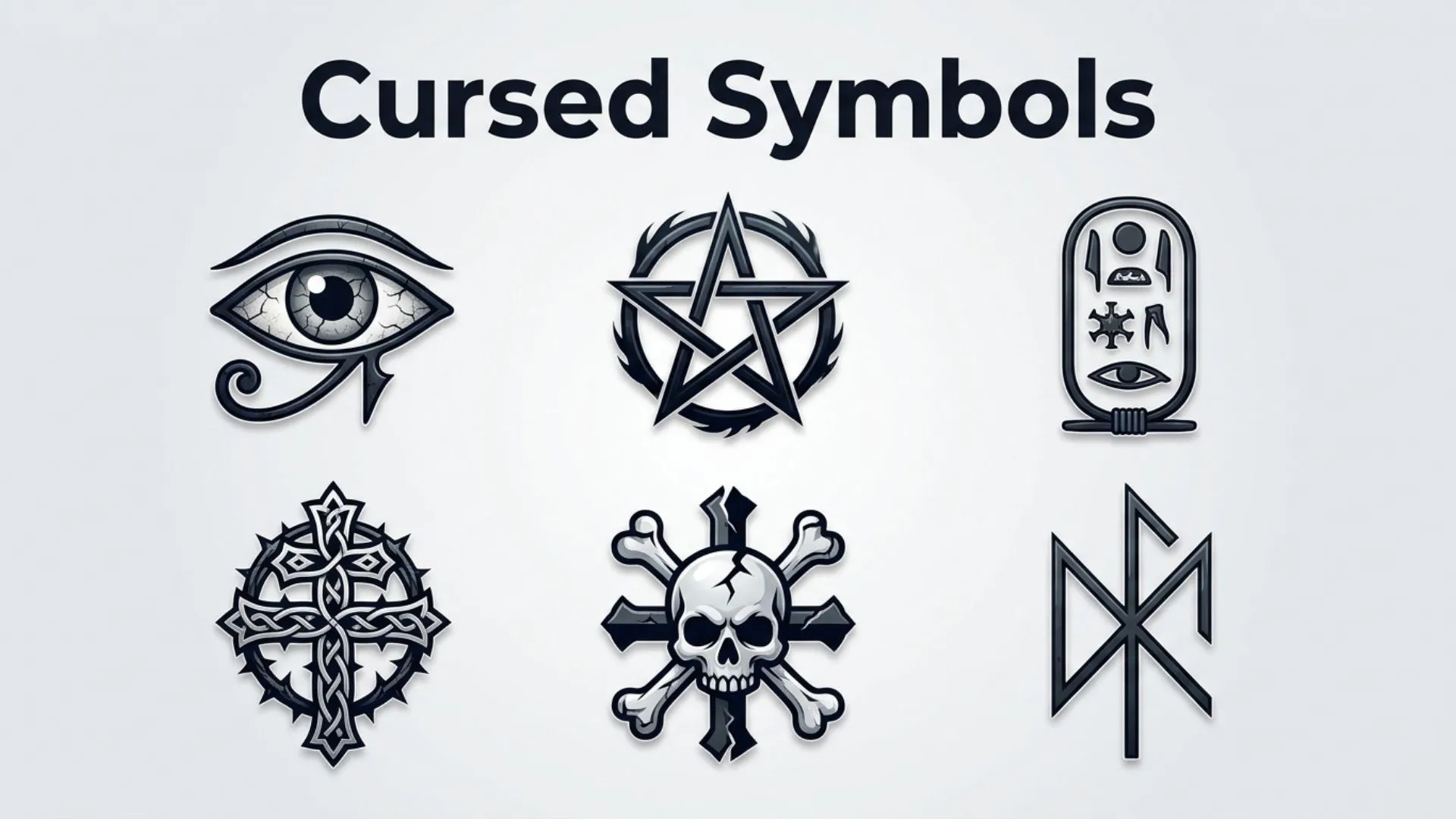
Throughout history, people have assigned powerful meanings to symbols. Some represent hope, love, protection, or prosperity, while others have become associated with fear, mystery, misfortune, and the supernatural. These are often referred to as cursed symbols images, signs, or markings believed in folklore, religion, mythology, or popular culture to bring bad luck, represent evil, or carry ominous meanings.
The fascination with cursed symbols spans thousands of years and crosses many cultures. Ancient civilizations carved mysterious markings into stone, medieval manuscripts depicted unsettling icons, and modern horror stories continue to introduce fictional cursed symbols that capture the imagination. While many people believe these symbols possess supernatural power, historians generally view them as cultural expressions shaped by beliefs, traditions, and storytelling rather than evidence of actual curses.
This guide explores the origins, meanings, symbolism, and common misconceptions surrounding cursed symbols. You’ll also learn how these symbols are used in history, religion, literature, art, entertainment, and modern media while separating historical facts from myths.
Cursed Symbols (Meaning and Overview)
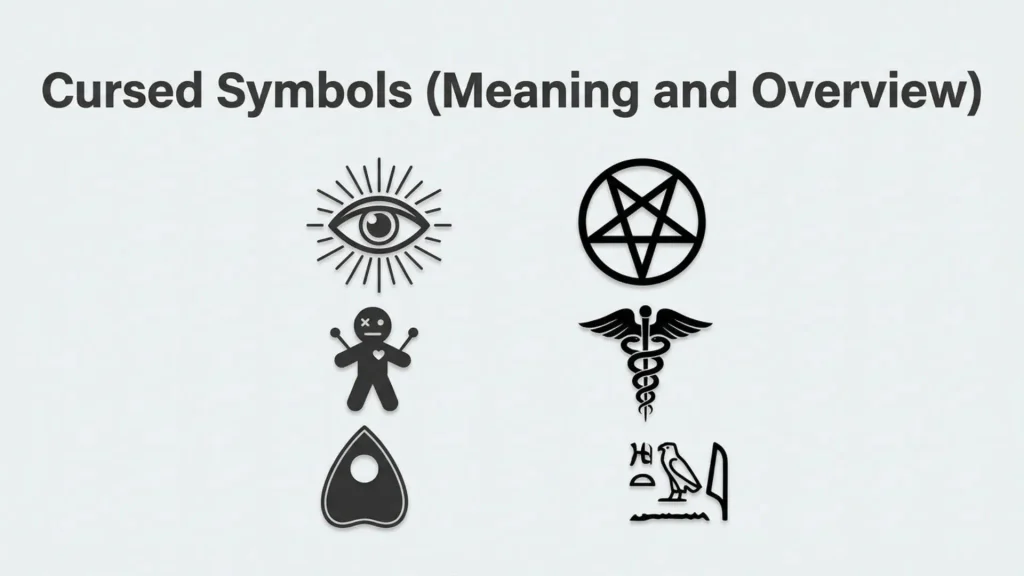
A cursed symbol is a visual sign, icon, or mark that is traditionally believed to represent bad luck, danger, misfortune, forbidden knowledge, or supernatural forces. In many cultures, these symbols appear in legends, religious texts, folklore, and fictional stories.
It’s important to note that there is no scientific evidence that any symbol can cause real-world curses or supernatural harm. Instead, their symbolic significance comes from cultural beliefs, historical events, and the meanings people have assigned to them over time.
Some cursed symbols were originally neutral or even positive before their meanings changed because of historical events or popular culture. Others were created specifically for fictional stories, films, and video games.
Cursed Symbols (History and Origin)
The idea of cursed symbols dates back to ancient civilizations, where symbols often carried religious or spiritual importance. Egyptians, Mesopotamians, Greeks, Romans, Celts, and Norse cultures all used symbolic representations in rituals, temples, and sacred writings.
During the Middle Ages, fear of witchcraft, demons, and the supernatural led many people to associate certain markings with curses or forbidden practices. Religious authorities sometimes viewed unfamiliar symbols as signs of heresy or occult activity, even when their original meanings were different.
In later centuries, Gothic literature, horror fiction, and modern entertainment expanded the idea of cursed symbols. Today, many well-known examples come from novels, movies, television, and video games rather than authentic historical traditions.
Understanding the historical context behind these symbols helps separate documented history from folklore and fictional storytelling.
Types of Cursed Symbols
The Inverted Cross
One of the most misunderstood symbols is the inverted cross.
Symbol Meaning
In Christian tradition, the upside-down cross is historically associated with Saint Peter, who requested to be crucified upside down because he felt unworthy to die in the same manner as Jesus.
However, modern horror films often portray it as a symbol of evil or anti-religious beliefs.
This demonstrates how cultural meaning can evolve dramatically over time.
The Number 666
The number 666 is one of the world’s most recognizable symbols associated with fear.
Symbol Meaning
Appearing in the Book of Revelation, it is traditionally called the “Number of the Beast.”
Over centuries, it has become linked with:
- Evil
- Temptation
- Apocalyptic imagery
- Religious prophecy
Its symbolic representation has been widely used in literature, films, and popular culture.
The Skull
Although commonly viewed as a cursed symbol, the skull has many meanings across cultures.
Traditional Meaning
Depending on context, it can represent:
- Mortality
- Danger
- Transformation
- Protection
- Remembrance
Modern warning signs frequently use skull icons to communicate poison or hazardous materials rather than supernatural ideas.
The Black Crow or Raven
Crows and ravens have long appeared in folklore.
Symbol Meaning
Common associations include:
- Mystery
- Death
- Change
- Wisdom
- Omens
Many cultures also view ravens positively as symbols of intelligence and guidance.
The Evil Eye
The Evil Eye is one of history’s oldest symbolic concepts.
Unlike being a cursed symbol itself, it refers to the belief that envy or malicious intent can bring misfortune.
Protective versions of the Evil Eye symbol are intended to ward off negative energy rather than create curses.
Symbols Commonly Associated with Curses
Pentagrams
The pentagram is frequently misunderstood.
Historically, it has represented:
- Protection
- Harmony
- Balance
- Nature
- Spirituality
Only in certain modern contexts has it become associated with occult imagery.
Broken Mirrors
Broken mirrors are often linked to the superstition of seven years of bad luck.
This belief likely developed from ancient ideas that mirrors reflected a person’s soul.
The broken mirror itself functions as a symbolic representation of misfortune in folklore rather than an actual cursed object.
Black Cats
In medieval Europe, black cats became associated with witchcraft.
Today, attitudes vary greatly.
Many cultures consider black cats symbols of:
- Good luck
- Prosperity
- Protection
- Mystery
Their reputation depends almost entirely on regional traditions.
Cursed Dolls
Objects such as haunted dolls appear frequently in urban legends and horror stories.
While these dolls have become modern cultural icons, documented evidence supporting supernatural claims remains lacking.
Fictional Cursed Symbols
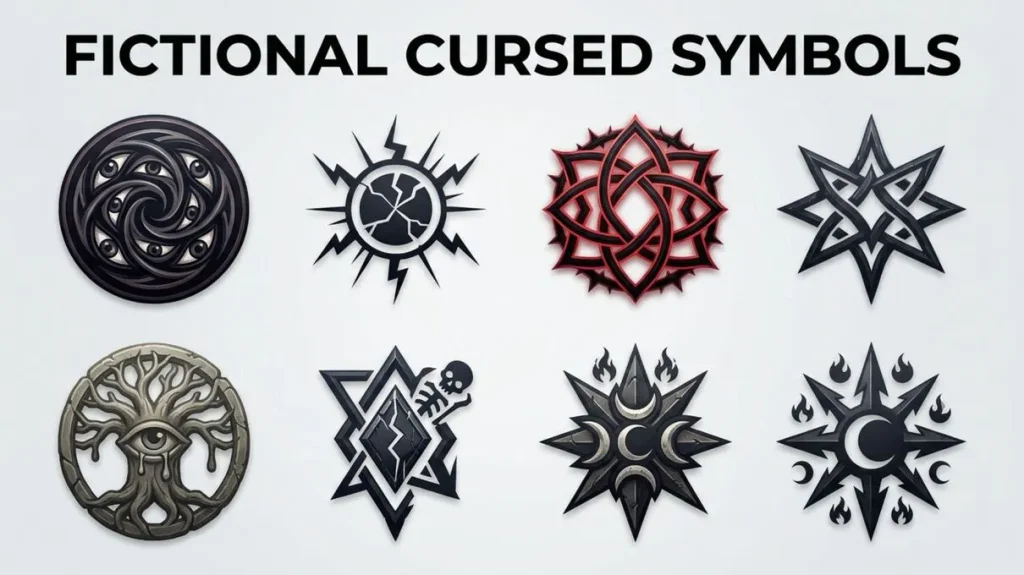
Many famous cursed symbols were invented for entertainment.
Examples appear in:
- Horror movies
- Fantasy novels
- Video games
- Television series
- Comic books
These fictional symbols often feature:
- Ancient-looking runes
- Circular sigils
- Mysterious geometric patterns
- Occult-inspired artwork
Their purpose is to build suspense rather than represent authentic historical symbolism.
Symbolism and Importance
Cursed symbols remain culturally significant because they reflect humanity’s fascination with mystery, fear, and the unknown.
Their symbolic significance often represents:
- Human mortality
- Moral lessons
- Religious beliefs
- Cultural anxieties
- Superstition
- Storytelling traditions
Rather than possessing supernatural power, these visual representations help societies express abstract ideas through recognizable icons and signs.
They also demonstrate how historical symbolism evolves over time as cultures reinterpret older traditions.
Common Uses and Applications
Today, cursed symbols appear in many different settings.
Literature
Authors use symbolic imagery to create suspense and deepen fictional worlds.
Movies and Television
Horror films frequently feature mysterious symbols to suggest supernatural danger.
Video Games
Fantasy and horror games use cursed icons as visual storytelling devices.
Tattoos
Some people choose these symbols because they appreciate their artistic or historical design rather than believing in supernatural powers.
Halloween Decorations
Decorative symbols such as skulls, ravens, and haunted imagery are common seasonal decorations.
Digital Media
Modern usage includes graphic design, emojis, digital illustrations, and fictional logos. Although some resemble Unicode symbols or decorative text symbols, most cursed icons are artistic creations rather than official Unicode characters.
How to Interpret Cursed Symbols Responsibly
When researching cursed symbols, historical context is essential.
Consider Cultural Background
A symbol’s meaning may differ dramatically between cultures.
Separate Myth from History
Many supernatural claims originate from folklore rather than historical evidence.
Recognize Fictional Influences
Popular media often exaggerates or invents meanings for dramatic effect.
Respect Religious Traditions
Symbols associated with faith should be understood within their original religious context before accepting popular interpretations.
Interesting Facts
Meanings Can Change
Many symbols once considered sacred later became associated with fear through literature or folklore.
Horror Films Created New Symbolism
Several well-known cursed symbols originated entirely in fictional movies.
One Symbol Can Have Opposite Meanings
The same icon may symbolize protection in one culture and misfortune in another.
Ancient Civilizations Used Protective Symbols More Often
Many symbols now described as cursed were originally intended to protect people from evil.
Modern Design Uses Dark Symbolism
Graphic designers frequently incorporate mysterious symbols into logos, book covers, and artwork because of their dramatic visual appeal.
Common Mistakes or Misconceptions
Every Dark Symbol Is Cursed
Dark imagery does not automatically indicate supernatural meaning.
Symbols Have Universal Meanings
Interpretations vary widely across cultures and historical periods.
The Pentagram Always Represents Evil
Historically, the pentagram has symbolized protection and balance in many traditions.
Horror Movies Reflect Historical Facts
Many cinematic symbols were created solely for entertainment.
Looking at a Symbol Causes Bad Luck
There is no reliable evidence that viewing or displaying a symbol creates supernatural consequences.
Frequently Asked Questions
What are cursed symbols?
Cursed symbols are signs or icons traditionally associated with bad luck, supernatural beliefs, or misfortune in folklore, religion, mythology, or fiction.
Are cursed symbols real?
They are real as cultural and historical symbols, but there is no scientific evidence that they possess supernatural powers.
What is the most famous cursed symbol?
The number 666 is among the best-known symbols associated with curses because of its connection to the Book of Revelation and popular culture.
Are all occult symbols evil?
No. Many symbols associated with the occult originally represented protection, spirituality, or philosophical beliefs.
Why do horror movies use cursed symbols?
They help create suspense, mystery, and emotional impact through recognizable visual storytelling.
Can symbols have different meanings in different cultures?
Yes. A symbol considered unlucky in one culture may represent protection, wisdom, or prosperity in another.
Should I avoid wearing symbols associated with curses?
That is a personal choice. Many people wear such symbols for artistic, historical, or cultural reasons without believing they have supernatural effects.
Conclusion
Cursed symbols have fascinated humanity for centuries because they blend history, folklore, religion, mythology, and storytelling into powerful visual representations. While some symbols have become associated with fear, bad luck, or supernatural forces, their meanings are usually rooted in cultural traditions rather than proven reality. Understanding the historical origins of symbols such as the inverted cross, the number 666, skulls, ravens, and the Evil Eye allows us to separate myth from fact and appreciate their broader cultural significance.
Whether encountered in ancient manuscripts, religious art, horror films, or modern design, cursed symbols continue to capture the imagination because they reflect humanity’s enduring curiosity about mystery and the unknown. By exploring their authentic history and evolving symbolism, we gain a deeper appreciation for how cultures create and reinterpret meaning through symbols across generations.

Ryan Mitchell is an independent writer with a strong interest in symbols, visual communication, and the meanings behind different signs and icons. His writing focuses on providing clear, accurate, and useful information that helps readers quickly understand unfamiliar symbols. Ethan covers a wide range of topics, from everyday and cultural symbols to technical and professional symbol systems.
His books include The World of Symbols, Symbols Explained Simply, and The Essential Symbol Reference Guide.