
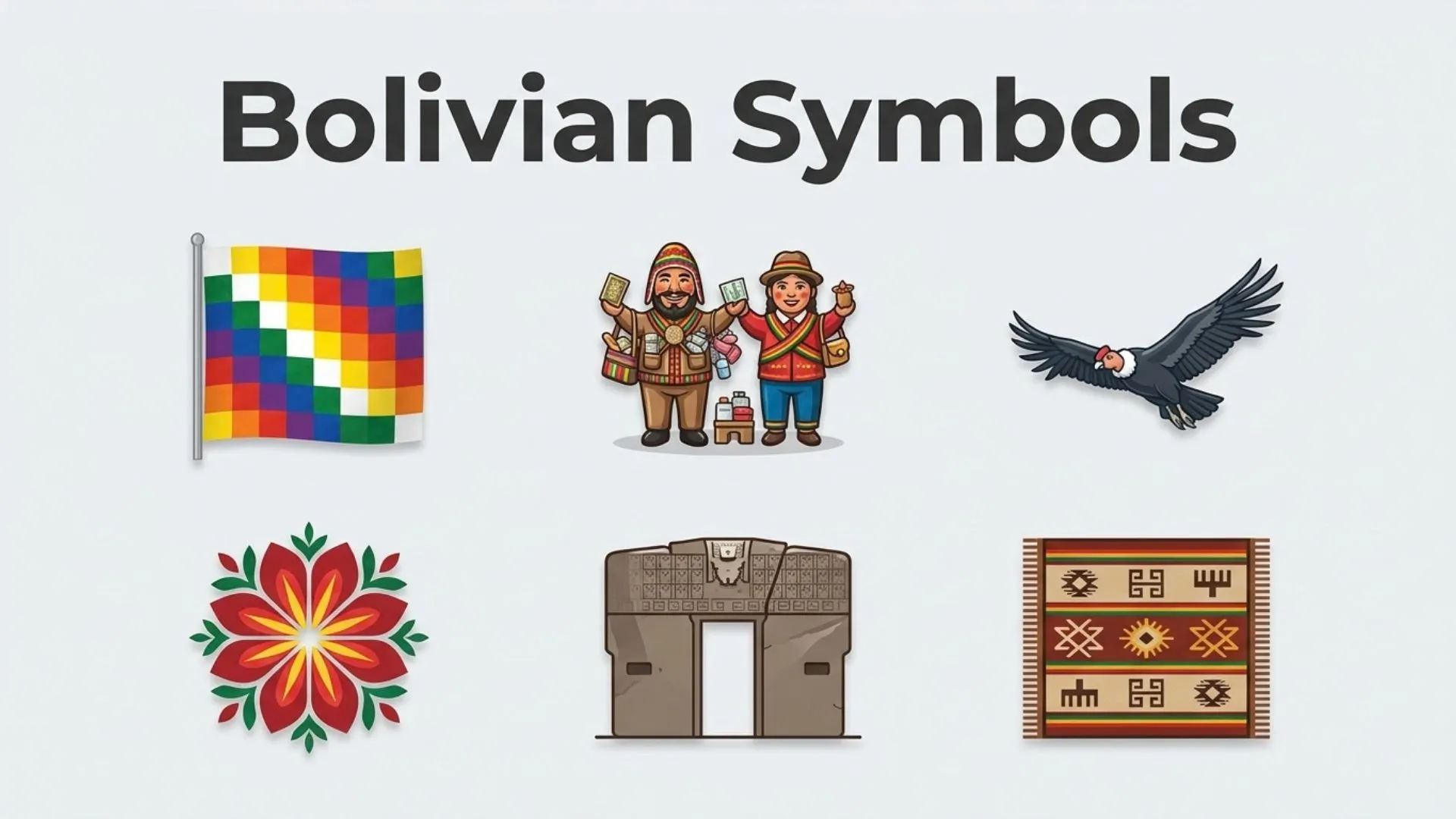
Bolivian symbols reflect the country’s remarkable cultural diversity, rich Indigenous heritage, breathtaking landscapes, and long history of independence. From the vibrant national flag and detailed coat of arms to native wildlife and traditional emblems, each symbol tells a story about Bolivia’s identity and values. These national icons are more than decorative images they are visual representations of the nation’s history, unity, natural wealth, and multicultural traditions.
Understanding Bolivian symbols helps visitors, students, and history enthusiasts appreciate what makes Bolivia unique. Whether displayed during national celebrations, featured on official documents, or incorporated into traditional artwork, these symbols preserve the country’s heritage while inspiring national pride.
This comprehensive guide explores the meanings, origins, history, symbolism, and modern uses of Bolivia’s official and cultural symbols.
Meaning and Overview of Bolivian Symbols
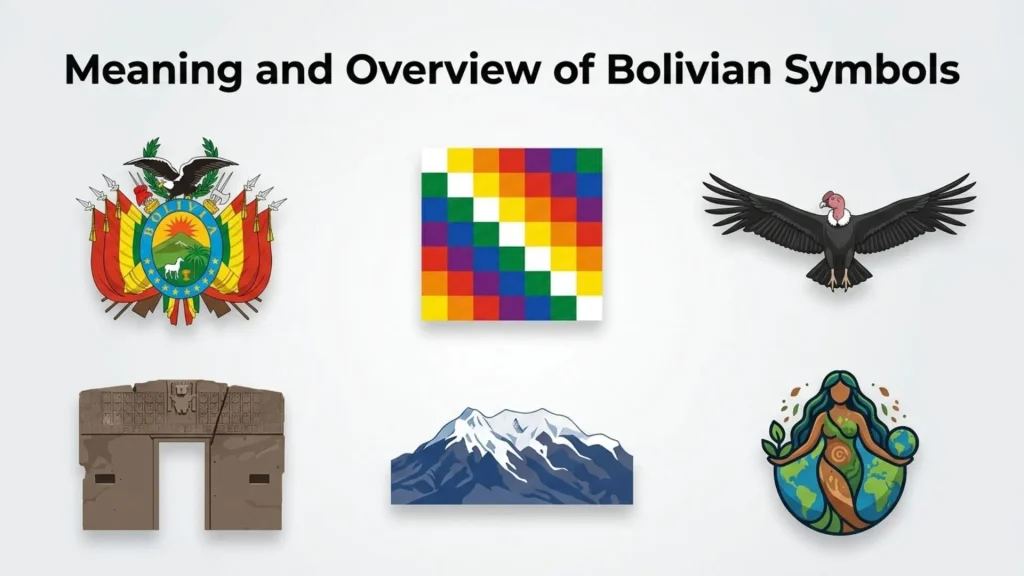
Bolivian symbols are official and cultural emblems representing the nation’s identity, sovereignty, natural resources, and historical journey. These symbols include national emblems recognized by law as well as traditional icons deeply connected to Bolivia’s Indigenous communities and regional customs.
Together, these symbolic representations celebrate:
- National independence
- Indigenous heritage
- Cultural diversity
- Natural beauty
- Freedom
- Unity
- Patriotism
- Environmental richness
Many of these symbols appear on government buildings, educational materials, passports, currency, military insignia, and ceremonial decorations.
History and Origin of Bolivian Symbols
Bolivia declared its independence from Spain on August 6, 1825. Following independence, national leaders established official symbols that reflected the country’s aspirations and cultural identity.
Over the following decades, Bolivia refined many of its national emblems. While some symbols originated shortly after independence, others evolved to recognize the country’s multicultural heritage and Indigenous traditions.
Today, Bolivia officially recognizes numerous national symbols that honor both its republican history and the civilizations that flourished long before European colonization.
Official National Symbols of Bolivia
National Flag
The Bolivian flag consists of three horizontal stripes:
- Red
- Yellow
- Green
Each color carries symbolic significance.
Red represents the courage and sacrifice of those who fought for independence.
Yellow symbolizes Bolivia’s rich mineral resources and economic wealth, particularly its historic deposits of gold and other valuable minerals.
Green represents the country’s fertile lands, forests, agriculture, and hope for the future.
The state version of the flag includes the national coat of arms in the center, while the civil flag typically displays only the three colors.
Coat of Arms
The Bolivian coat of arms is among the country’s most detailed national symbols.
It includes numerous elements representing Bolivia’s geography, economy, wildlife, and history.
Major features include:
- Cerro Rico mountain
- Alpaca
- Wheat sheaf
- Palm branch
- Bolivian flag
- Muskets
- Cannons
- Liberty cap
- Condor
Together, these elements symbolize freedom, prosperity, agriculture, defense, and natural wealth.
National Anthem
The Bolivian National Anthem is another important national symbol.
Its lyrics celebrate patriotism, freedom, sacrifice, and the nation’s independence while reminding citizens of their shared history.
It is performed during national holidays, official ceremonies, and school events throughout Bolivia.
National Animal Symbols
Andean Condor
The Andean Condor serves as one of Bolivia’s most recognizable national animals.
As one of the world’s largest flying birds, it symbolizes:
- Freedom
- Strength
- Power
- Independence
- Spiritual elevation
The condor also appears prominently in the national coat of arms.
Llama
Although not always designated as the official national animal, the llama is widely recognized as a cultural icon of Bolivia.
For centuries, llamas have supported Andean communities by providing:
- Transportation
- Wool
- Food
- Agricultural assistance
They remain one of the country’s most beloved symbolic representations.
National Flower
Kantuta Flower
The Kantuta is Bolivia’s national flower.
Its vibrant red, yellow, and green blossoms mirror the colors of the national flag.
The flower represents:
- Unity
- Patriotism
- Beauty
- Indigenous heritage
It grows naturally in the Andes and holds great cultural meaning throughout the country.
National Tree
Kewiña Tree
The Kewiña (Polylepis) is one of Bolivia’s important native tree species.
It symbolizes:
- Environmental conservation
- Mountain ecosystems
- Biodiversity
- Ecological resilience
These trees thrive at high elevations where few other forests can survive.
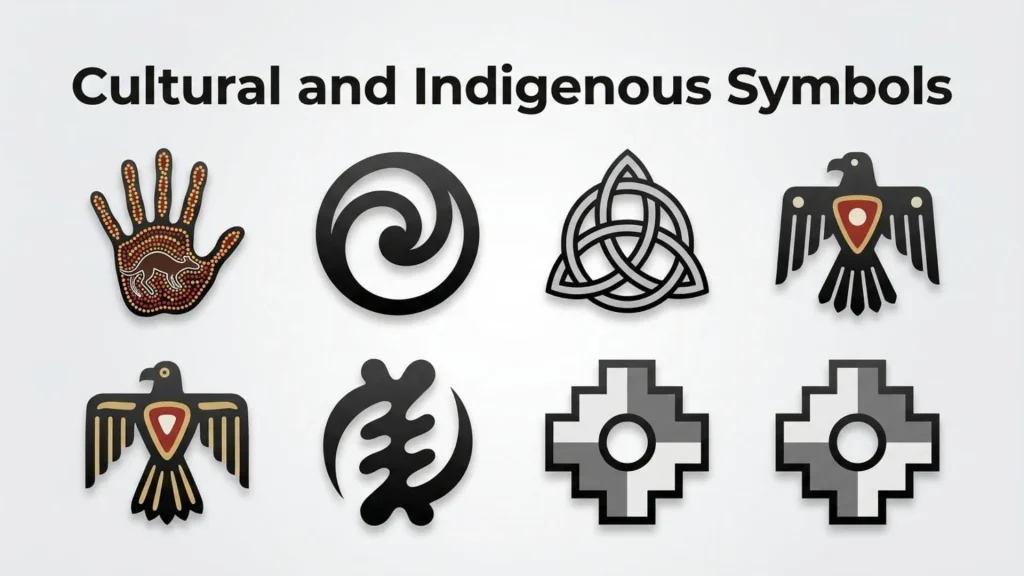
Cultural and Indigenous Symbols of Bolivia
Wiphala
The Wiphala is one of Bolivia’s most significant Indigenous symbols.
It consists of a colorful checkerboard pattern representing the Indigenous peoples of the Andes.
Each color symbolizes values such as:
- Community
- Nature
- Energy
- Time
- Spirituality
- Harmony
The Wiphala became an official national symbol of Bolivia in recognition of the country’s multicultural identity.
Chakana (Andean Cross)
The Chakana, often called the Andean Cross, predates the Inca Empire.
Its stepped design symbolizes:
- The three levels of existence in Andean cosmology
- Harmony between humanity and nature
- Spiritual balance
- Universal order
Today, it appears in traditional textiles, architecture, jewelry, and artwork.
Pachamama
Pachamama, or Mother Earth, represents one of the most respected spiritual concepts in Andean culture.
Although not an official state emblem, she symbolizes:
- Fertility
- Nature
- Agriculture
- Balance
- Gratitude
Traditional ceremonies honoring Pachamama remain an important part of Bolivian cultural life.
Regional and Historical Symbols of Bolivia
Cerro Rico
Located near Potosí, Cerro Rico (“Rich Mountain”) symbolizes Bolivia’s historic mining industry.
Its vast silver deposits shaped both Bolivian history and the global economy during the colonial era.
Today, the mountain represents:
- Economic history
- National resilience
- Cultural heritage
Lake Titicaca
Lake Titicaca holds deep cultural and historical significance.
According to Andean traditions, it is closely associated with the origins of the Inca civilization.
The lake symbolizes:
- Spiritual heritage
- Natural beauty
- Ancient traditions
- Cultural continuity
Common Uses and Applications
Bolivian symbols appear in many aspects of everyday life.
Common applications include:
- Government documents
- Passports
- Currency
- School textbooks
- National holidays
- Military uniforms
- Public monuments
- Museums
- Educational materials
- Traditional festivals
- Cultural exhibitions
- Tourism campaigns
- Official seals
- National celebrations
These visual representations reinforce national identity while preserving Bolivia’s cultural traditions.
Symbolism and National Importance
Bolivian symbols communicate the values that define the nation.
Their symbolic significance includes:
- Freedom
- Courage
- Unity
- Diversity
- Environmental stewardship
- Indigenous identity
- Patriotism
- Peace
- Prosperity
- Cultural continuity
Together, these symbols remind citizens of Bolivia’s rich history while promoting respect for its multicultural society.
How to Recognize and Respect Bolivian Symbols
Learn Their Historical Background
Understanding the origin of each symbol provides greater appreciation for Bolivia’s history and traditions.
Distinguish Official and Cultural Symbols
Some symbols, such as the national flag and coat of arms, are official state emblems, while others, including the Chakana and Pachamama, represent cultural and spiritual traditions.
Respect Indigenous Heritage
Many Bolivian symbols originate from Indigenous communities whose traditions continue to shape the nation’s identity.
Use Accurate Designs
Whether creating educational materials or cultural displays, use authentic visual representations rather than altered or simplified versions.
Interesting Facts About Bolivian Symbols
- Bolivia officially recognizes both the national flag and the Wiphala as national symbols.
- The colors of the Kantuta flower match those of the Bolivian flag.
- The Andean Condor can have a wingspan exceeding 10 feet (3 meters).
- Cerro Rico produced enormous quantities of silver during the colonial period.
- Bolivia is one of South America’s most culturally diverse nations, with dozens of Indigenous groups.
- Many traditional Bolivian textiles incorporate ancient symbolic patterns passed down for generations.
- Several national symbols reflect both republican history and pre-Columbian civilizations.
Common Mistakes and Misconceptions
Assuming Every Symbol Is Government-Issued
Some important Bolivian symbols are cultural rather than official state emblems.
Confusing the Wiphala With the National Flag
The Wiphala and Bolivia’s tricolor flag are distinct symbols that represent different aspects of national identity.
Overlooking Indigenous Contributions
Bolivia’s national identity is deeply influenced by Indigenous cultures that existed long before independence.
Believing Every Region Uses Identical Symbols
Regional traditions, festivals, and Indigenous communities often emphasize different cultural icons.
Misinterpreting Historical Symbols
Understanding the historical context behind symbols like Cerro Rico helps explain their lasting significance.
Frequently Asked Questions
What are the official national symbols of Bolivia?
Bolivia’s official national symbols include the national flag, coat of arms, national anthem, the Kantuta flower, and other legally recognized emblems, including the Wiphala.
What do the colors of the Bolivian flag mean?
Red symbolizes bravery and sacrifice, yellow represents mineral wealth and natural resources, and green stands for hope, fertile land, and nature.
What is the Wiphala?
The Wiphala is a colorful Indigenous flag representing the Andean peoples and Bolivia’s multicultural identity.
Why is the Andean Condor important?
The Andean Condor symbolizes freedom, strength, independence, and the nation’s connection to the Andes.
What is the national flower of Bolivia?
The Kantuta is Bolivia’s national flower and is admired for its striking red, yellow, and green blossoms.
What does the Chakana symbolize?
The Chakana, or Andean Cross, represents harmony, spirituality, balance, and the interconnectedness of life according to Andean beliefs.
Are Bolivian symbols used in everyday life?
Yes. They appear on official documents, schools, public buildings, cultural festivals, currency, military insignia, and educational resources throughout the country.
Conclusion
Bolivian symbols offer a fascinating window into the nation’s history, cultural diversity, and enduring traditions. From the bold colors of the national flag and the intricate coat of arms to the sacred Wiphala, the majestic Andean Condor, and the vibrant Kantuta flower, each symbol carries profound historical and cultural meaning. Together, these emblems celebrate Bolivia’s independence, Indigenous heritage, natural beauty, and multicultural identity. By understanding their meanings and significance, readers gain a deeper appreciation for one of South America’s richest cultural landscapes.

Daniel Carter is a writer and researcher focused on symbols, their meanings, origins, and practical uses. He enjoys turning complex symbolic concepts into simple, easy-to-understand explanations for everyday readers. Through his work, Daniel explores cultural, technical, historical, and commonly used symbols, helping readers understand what they mean and where they are used.
His work includes The Complete Guide to Symbols, Understanding Symbols and Their Meanings, and A Visual Guide to Common Symbols.