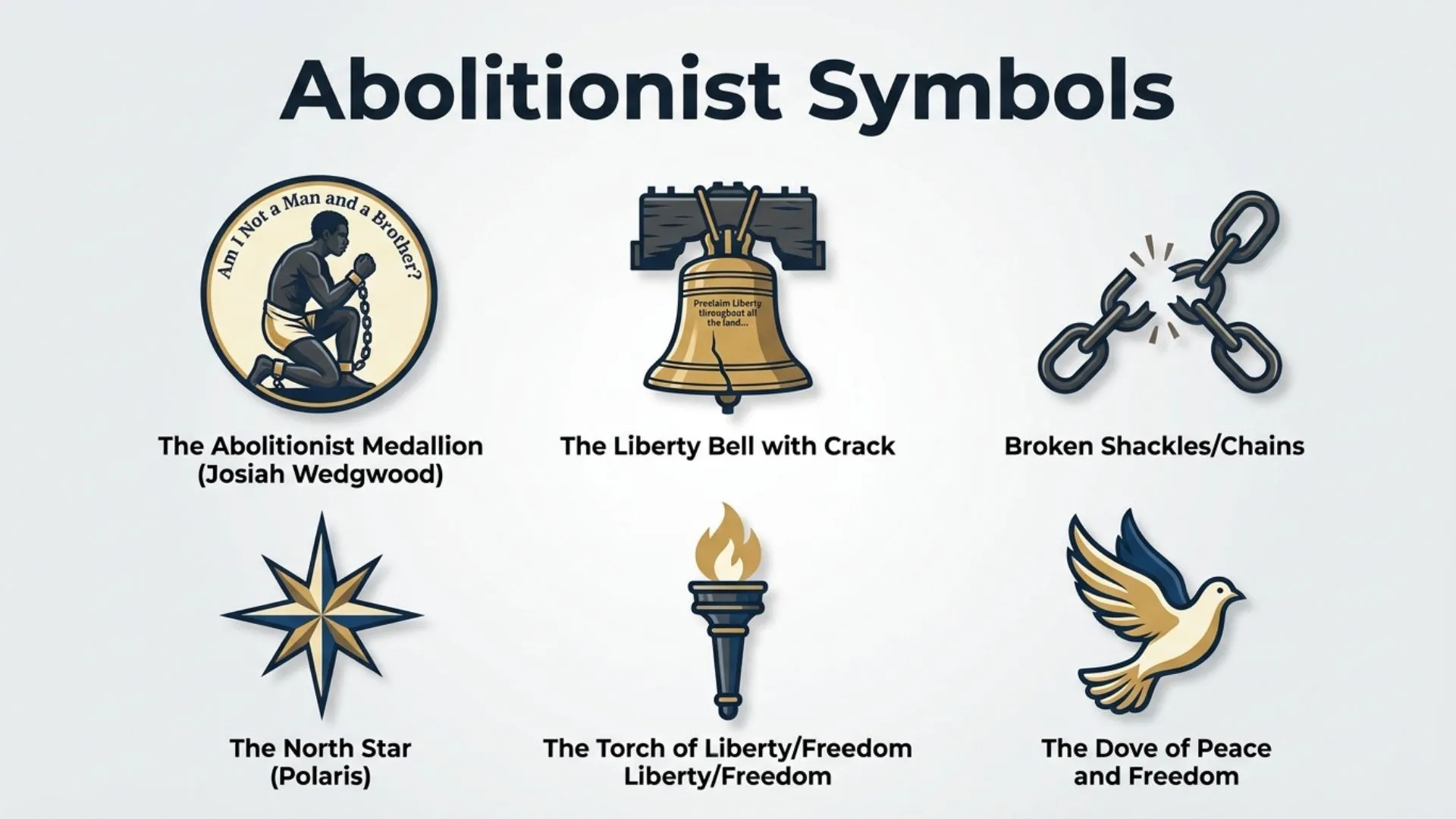
Throughout history, symbols have served as powerful tools for expressing beliefs, inspiring social movements, and communicating messages that transcend language. During the abolitionist movement of the 18th and 19th centuries, symbols played a crucial role in rallying support for the fight against slavery.
These visual representations appeared on medallions, banners, clothing, pamphlets, books, and public demonstrations, helping spread the movement’s ideals across Europe and the Americas.
Abolitionist symbols represented freedom, equality, justice, and human dignity. They reminded people that slavery was not merely a political issue but a profound moral and humanitarian crisis. Even today, many of these symbols continue to hold historical significance and are studied in museums, classrooms, and civil rights discussions.
This guide explores the meaning, history, major types, symbolism, and modern relevance of abolitionist symbols while providing practical insight into how these historical icons shaped one of the world’s most influential human rights movements.
Abolitionist Symbols (Meaning and Overview)
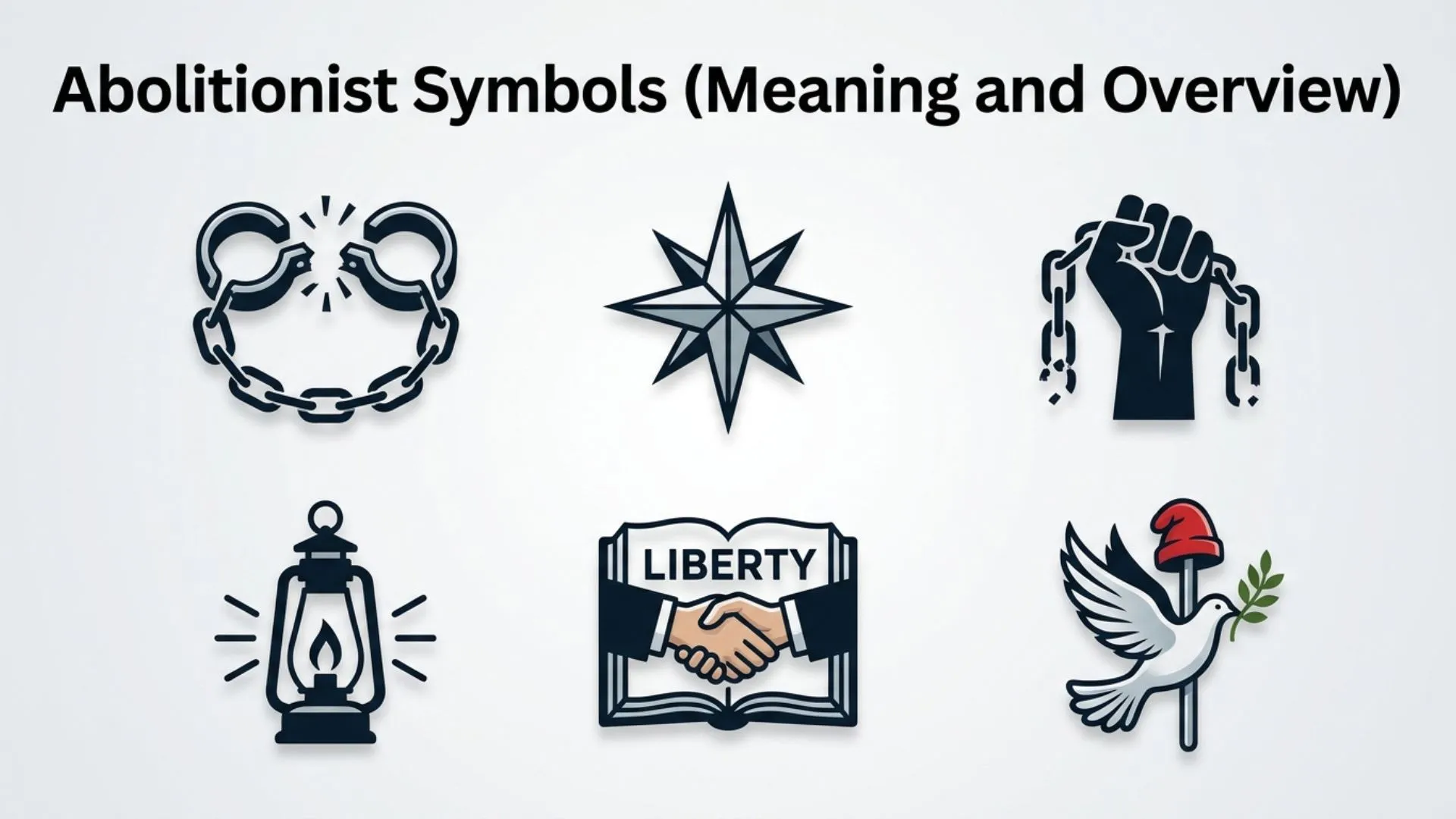
Abolitionist symbols are visual signs, emblems, and symbolic representations associated with the movement to abolish slavery. These symbols communicated powerful messages supporting freedom and opposing the enslavement of human beings.
Unlike modern logos or branding, abolitionist symbols were designed to inspire empathy, encourage activism, and unite supporters around a common cause. Their visual simplicity allowed them to communicate across different languages and literacy levels.
Many abolitionist symbols incorporated imagery such as broken chains, clasped hands, rising suns, open books, doves, and symbolic figures representing enslaved people seeking freedom. Together, these icons became recognizable signs of resistance against oppression and injustice.
Today, historians view abolitionist symbols as important examples of communication symbols that combined art, politics, religion, and humanitarian ideals.
Abolitionist Symbols (History and Origin)
The Rise of the Abolitionist Movement
Organized abolitionist movements emerged during the late 18th century, particularly in Britain and the United States. Religious groups, reformers, writers, and activists worked to end both the transatlantic slave trade and slavery itself.
Visual symbols quickly became an essential part of public campaigns because they could convey complex moral arguments through simple imagery.
Early Campaign Materials
Before photography became widespread, abolitionists relied on engravings, illustrations, medallions, newspapers, posters, and printed literature. These materials featured symbolic representations that encouraged people to support abolition.
Campaigns often distributed inexpensive items displaying abolitionist imagery, allowing ordinary citizens to publicly express their support.
Influence of Religious Ideals
Many abolitionist symbols reflected Christian teachings about compassion, equality, and justice. Biblical imagery frequently appeared alongside messages promoting universal human dignity.
These religious connections helped persuade audiences who viewed slavery as incompatible with their faith.
Types, Variations, or Categories
Several abolitionist symbols became internationally recognized during the movement.
Broken Chains
The broken chain remains one of the most recognizable abolitionist symbols.
It represents:
- Freedom from slavery
- Liberation
- The end of oppression
- Human independence
- Justice restored
Even today, broken chains appear in monuments, memorials, museums, and educational materials discussing emancipation.
The Kneeling Enslaved Figure
One of history’s most influential abolitionist images depicts an enslaved man kneeling with chains, accompanied by the phrase:
“Am I Not a Man and a Brother?”
This powerful visual representation appealed directly to viewers’ sense of humanity.
It emphasized that enslaved people deserved equal rights, compassion, and dignity.
Later versions included women with the message:
“Am I Not a Woman and a Sister?”
These images became iconic throughout abolitionist campaigns.
Clasped Hands
Two joined hands symbolized:
- Unity
- Equality
- Brotherhood
- Shared humanity
- Mutual respect
The image encouraged cooperation across racial and social boundaries.
Liberty Cap
The Phrygian cap, commonly known as the liberty cap, symbolized freedom and resistance against tyranny.
Although associated with several historical revolutions, abolitionists also adopted it as a sign of liberation.
Rising Sun
A rising sun represented:
- Hope
- New beginnings
- Freedom
- Social progress
- A future without slavery
It conveyed optimism that justice would ultimately prevail.
Open Bible
Many abolitionists believed slavery violated religious principles.
An open Bible symbolized:
- Moral truth
- Justice
- Compassion
- Equality before God
It reinforced arguments that slavery conflicted with Christian teachings.
Famous Abolitionist Emblems
The Wedgwood Medallion
Perhaps the best-known abolitionist icon was the famous medallion designed in the late 18th century.
It featured the kneeling enslaved man surrounded by the words:
“Am I Not a Man and a Brother?”
This medallion appeared on jewelry, snuffboxes, bracelets, and decorative objects.
It became one of history’s earliest examples of political branding through symbolic design.
Anti-Slavery Society Seals
Numerous abolitionist organizations created official seals featuring symbolic imagery such as broken chains, liberty, justice, and equality.
These seals authenticated publications while reinforcing the movement’s identity.
Abolitionist Symbols in Literature and Art
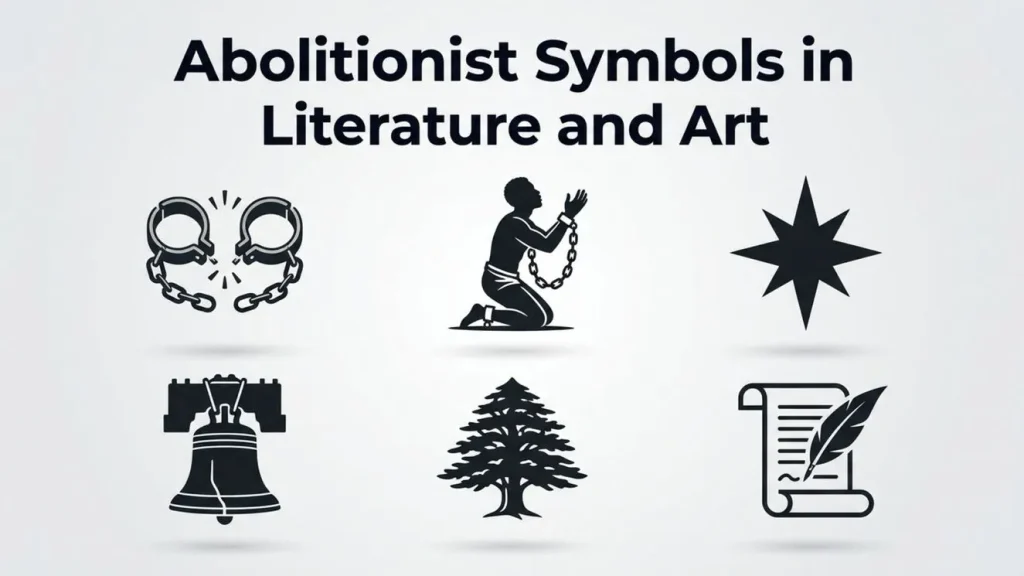
Artists and writers used symbolism extensively to expose the realities of slavery.
Common artistic symbols included:
- Chains
- Whips
- Birds in flight
- Light breaking through darkness
- Open doors
- Families reunited
These visual metaphors communicated emotional truths that statistics alone could not express.
Literature likewise relied on symbolic representation to encourage empathy among readers.
Abolitionist Symbols in Flags and Banners
Public demonstrations often featured banners displaying symbolic imagery.
Popular elements included:
- Olive branches
- Broken shackles
- Stars
- Rays of light
- Liberty caps
- Freedom slogans
These banners helped unify protesters while making abolitionist gatherings visually memorable.
Symbolism, Significance, or Importance
Abolitionist symbols remain historically significant because they transformed abstract moral principles into recognizable visual icons.
Their symbolic significance includes representing:
- Human rights
- Equality
- Justice
- Freedom
- Courage
- Compassion
- Resistance against oppression
- Social reform
Unlike decorative symbols created purely for aesthetics, abolitionist imagery carried deep cultural meaning rooted in the struggle for universal human dignity.
Many historians consider these symbols among the earliest examples of organized social justice communication.
Common Uses and Applications
Although slavery has been abolished in most parts of the world, abolitionist symbols continue to appear in many settings.
Museums
Historical museums display abolitionist emblems to educate visitors about anti-slavery movements.
Educational Materials
Schools and universities use these symbols to teach:
- History
- Civil rights
- Ethics
- Political movements
- Social justice
Memorials
Many monuments include broken chains or related imagery honoring those who fought against slavery.
Books and Documentaries
Publishers often feature abolitionist icons on book covers discussing slavery, emancipation, and civil rights history.
Historical Reenactments
Living history events frequently recreate abolitionist banners and campaign materials to provide historical authenticity.
How to Use Abolitionist Symbols Respectfully
Because these symbols represent profound historical suffering and resistance, they should be used thoughtfully.
Understand Their History
Learn the historical background before using abolitionist imagery in educational or creative projects.
Provide Context
When displaying these symbols, explain their historical symbolism rather than presenting them merely as decorative designs.
Avoid Commercialization
Using abolitionist symbols purely for fashion or marketing may diminish their historical importance.
Support Educational Purposes
The most appropriate modern usage includes:
- Museum exhibits
- Classroom teaching
- Historical research
- Public history projects
- Awareness campaigns
Interesting Facts
- The famous “Am I Not a Man and a Brother?” medallion became one of the first internationally recognized activist symbols.
- Women played a major role in distributing abolitionist jewelry featuring symbolic designs.
- Many abolitionist symbols were intentionally simple so they could be reproduced cheaply in newspapers and pamphlets.
- Some anti-slavery campaigns used wearable symbols much like modern awareness ribbons.
- Broken chains remain universal icons of liberation in many cultures.
- Abolitionist imagery influenced later civil rights and human rights movements.
- Symbolic art often reached audiences who could not read lengthy political arguments.
- Many original abolitionist medallions are now preserved in museums around the world.
Common Mistakes or Misconceptions
Assuming Every Broken Chain Represents Abolition
While broken chains frequently symbolize abolition, they also represent freedom in broader historical and cultural contexts.
Confusing Abolitionist Symbols with Civil Rights Symbols
Although related, abolitionist symbols specifically originated during campaigns to end slavery, while many civil rights symbols emerged during later movements.
Viewing Them Only as Decorative Icons
These images were powerful communication symbols designed to inspire political and moral action.
Ignoring Their Religious Influence
Many abolitionist symbols reflected Christian ethics and humanitarian beliefs that motivated early reformers.
Believing There Was Only One Symbol
The abolitionist movement used a diverse collection of signs, icons, banners, and artistic motifs rather than a single official emblem.
Abolitionist Symbols in Modern Society
Modern discussions about human rights, equality, and freedom continue to reference historical abolitionist imagery.
Museums, educators, artists, and historians use these visual representations to encourage conversations about justice and historical memory.
Although their original purpose centered on ending slavery, the broader themes of dignity, equality, and compassion remain relevant today.
Understanding these symbols helps preserve an important chapter in world history while reminding future generations of the importance of defending human rights.
Frequently Asked Questions
What are abolitionist symbols?
Abolitionist symbols are visual representations associated with historical movements that sought to abolish slavery and promote freedom, equality, and human dignity.
What is the most famous abolitionist symbol?
One of the best-known abolitionist symbols is the image of a kneeling enslaved man with the phrase, “Am I Not a Man and a Brother?” It became an internationally recognized emblem of the anti-slavery movement.
Why were broken chains used by abolitionists?
Broken chains symbolized liberation from slavery, the end of oppression, and the restoration of personal freedom.
Were abolitionist symbols used only in the United States?
No. Abolitionist symbols appeared in Britain, Europe, the United States, and other regions involved in anti-slavery campaigns.
Are abolitionist symbols still used today?
Yes. They are commonly found in museums, memorials, educational resources, documentaries, and historical research discussing slavery and human rights.
What did the clasped hands symbolize?
Clasped hands represented unity, cooperation, equality, friendship, and shared humanity across racial and social divisions.
Why are abolitionist symbols historically important?
They helped communicate powerful moral messages, unite supporters, influence public opinion, and advance one of history’s most significant human rights movements.
Conclusion
Abolitionist symbols are far more than historical images; they are enduring reminders of humanity’s struggle for justice, equality, and freedom. From broken chains and clasped hands to the iconic “Am I Not a Man and a Brother?” medallion, these symbols transformed powerful moral ideals into memorable visual messages that inspired millions.
Today, they continue to educate, commemorate, and encourage reflection on the importance of human rights and social justice. By understanding the meaning, history, and symbolism of abolitionist icons, we gain a deeper appreciation for the individuals who fought against slavery and the enduring values their movement represents.
Meta Description: Discover the history, meanings, symbolism, and importance of abolitionist symbols, including broken chains, anti-slavery emblems, and their lasting legacy.

Ryan Mitchell is an independent writer with a strong interest in symbols, visual communication, and the meanings behind different signs and icons. His writing focuses on providing clear, accurate, and useful information that helps readers quickly understand unfamiliar symbols. Ethan covers a wide range of topics, from everyday and cultural symbols to technical and professional symbol systems.
His books include The World of Symbols, Symbols Explained Simply, and The Essential Symbol Reference Guide.