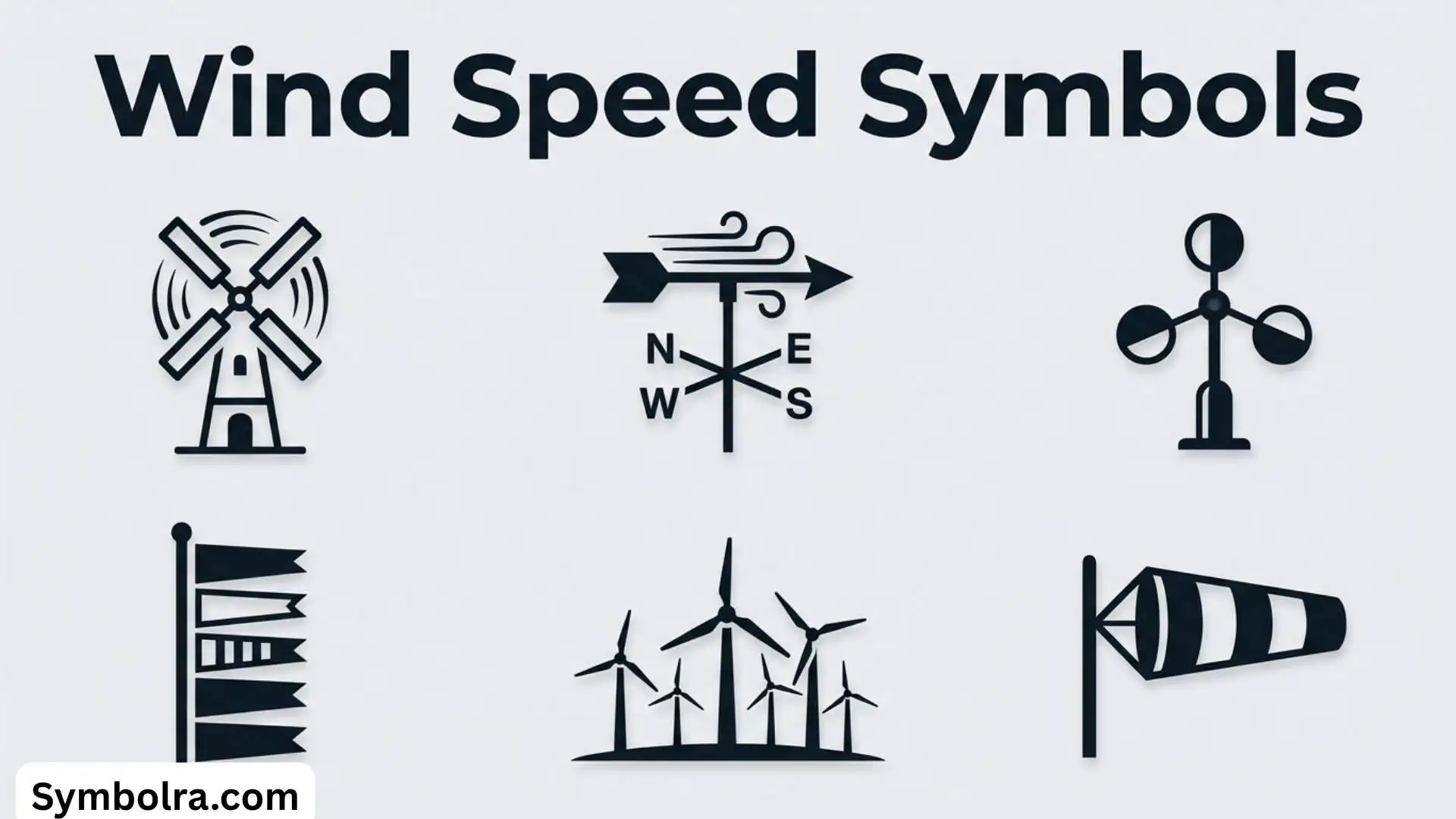
Wind speed symbols are essential visual tools used in weather forecasting, aviation, marine navigation, and meteorology. Instead of displaying wind information using only numbers, weather maps rely on standardized symbols that quickly communicate both wind speed and wind direction. These symbols allow meteorologists, pilots, sailors, and even casual weather enthusiasts to understand weather conditions at a glance.
If you’ve ever looked at a weather map and noticed lines with small feathers or triangular flags attached, you’ve encountered wind speed symbols. While they may seem confusing at first, these symbols follow a simple international standard. Learning how to read them can help you interpret forecasts more accurately, prepare for outdoor activities, and understand changing weather patterns.
This guide explains the meaning of wind speed symbols, their history, different types, real-world applications, and common misconceptions. By the end, you’ll be able to confidently interpret wind barbs and other wind-related weather icons.
Wind Speed Symbols (Meaning and Overview)
Wind speed symbols are standardized graphical representations that show both the speed and direction of the wind. Rather than writing numerical wind speeds across weather charts, meteorologists use symbolic representation to present information in a compact and universally understood format.
The most common wind speed symbol is called a wind barb. A wind barb consists of:
- A long staff indicating the direction the wind is coming from.
- Short feathers representing specific wind speeds.
- Triangular pennants representing stronger winds.
Unlike many communication symbols used in everyday typography, wind speed symbols are scientific icons developed for precision rather than decoration. Their visual representation is recognized worldwide and follows guidelines established by international meteorological organizations.
These weather signs appear on:
- Surface weather maps
- Aviation weather reports
- Marine forecasts
- Hurricane tracking charts
- Weather station observations
- Forecast apps
- Climate research data
Because they combine direction and speed into one compact symbol, wind barbs are one of the most efficient weather communication tools ever created.
History and Origin
The development of wind speed symbols dates back to the early twentieth century as meteorology became more standardized. Before modern weather charts, observers simply wrote wind speed and direction in text form, making large weather maps difficult to read.
As international cooperation in weather science expanded, meteorologists introduced standardized weather symbols to simplify forecasting. Wind barbs soon became part of this system because they allowed forecasters to display large amounts of atmospheric data without cluttering maps.
Organizations such as the World Meteorological Organization (WMO) and national weather agencies later adopted consistent standards for these symbols. Today, weather services around the world use nearly identical wind speed symbols, making forecasts understandable regardless of language.
Modern computer forecasting systems automatically generate these symbols, but their design has changed very little over the decades because it remains both accurate and efficient.
Types, Variations, or Categories
Several kinds of wind speed symbols are used depending on the weather chart and intended audience.
Wind Barbs
Wind barbs are the most common scientific symbol meaning for wind speed.
Each component represents a specific speed:
- Half feather = 5 knots
- Full feather = 10 knots
- Triangle (Pennant) = 50 knots
Meteorologists combine these elements to show almost any wind speed.
Examples include:
- One half feather = 5 knots
- One full feather = 10 knots
- Two full feathers = 20 knots
- Three full feathers = 30 knots
- Four full feathers = 40 knots
- One triangle = 50 knots
- One triangle plus one feather = 60 knots
- One triangle plus two feathers = 70 knots
This symbolic representation is easy to recognize after only a little practice.
Wind Arrows
Many consumer weather apps replace traditional wind barbs with simple arrows.
These arrows usually indicate:
- Wind direction
- Numerical speed beside the arrow
Although easier for beginners, arrows provide less detailed information than professional wind barbs.
Color-Coded Wind Symbols
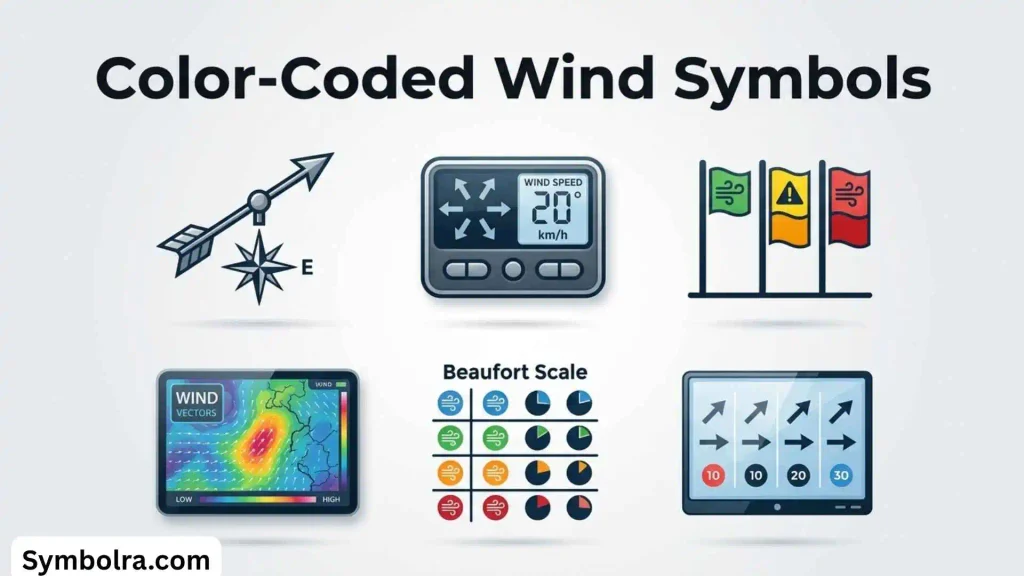
Some digital weather maps use colored icons to indicate wind intensity.
Typical color ranges include:
- Blue for light winds
- Green for moderate winds
- Yellow for strong winds
- Orange for very strong winds
- Red for dangerous winds
These visual cues help users identify hazardous conditions quickly.
Understanding Wind Barb Components
Reading a wind barb becomes simple once you understand each element.
Wind Direction
The long line points toward the direction the wind is coming from.
For example:
- Staff pointing north means wind is coming from the north.
- Staff pointing southwest means wind originates from the southwest.
Remember that meteorologists describe wind based on where it begins, not where it is traveling.
Wind Speed
The feathers attached to the staff indicate speed.
A quick reference includes:
| Symbol Component | Wind Speed |
| Half feather | 5 knots |
| Full feather | 10 knots |
| Triangle | 50 knots |
Multiple feathers are added together.
For example:
- Two full feathers + one half feather = 25 knots
- Three full feathers = 30 knots
- Triangle + two full feathers = 70 knots
Calm Wind Symbol
When there is almost no wind, weather maps often display a simple circle instead of a wind barb.
This indicates calm conditions, generally below one knot.
Wind Speed Units Used with Symbols
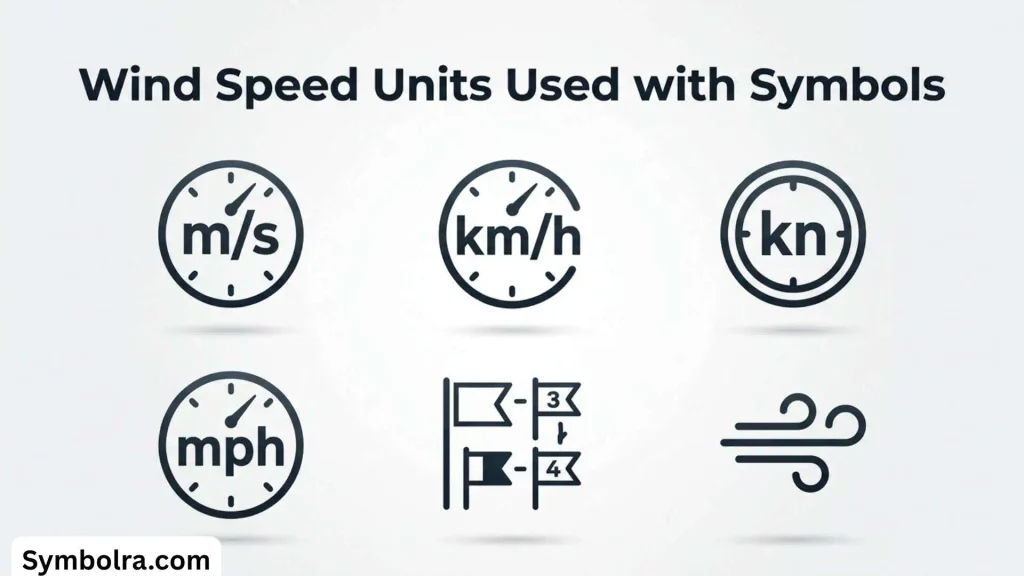
Although wind barbs represent knots, weather services often convert values into other units.
Common measurements include:
Knots
The standard unit in aviation and marine forecasting.
One knot equals approximately:
- 1.15 miles per hour
- 1.85 kilometers per hour
Miles Per Hour (mph)
Commonly used in the United States for public forecasts.
Kilometers Per Hour (km/h)
Used by many countries around the world.
Meters Per Second (m/s)
Often used in scientific research and climate studies.
Understanding these units helps users compare weather reports across different countries.
Common Uses and Applications
Wind speed symbols appear in many professional and everyday settings.
Weather Forecasting
Meteorologists rely on wind barbs to display observations from hundreds of weather stations on a single map.
Instead of reading long lists of numbers, forecasters instantly identify wind patterns.
Aviation
Pilots depend heavily on wind speed symbols.
They help determine:
- Takeoff conditions
- Landing safety
- Crosswind strength
- Turbulence potential
- Flight planning
Accurate wind interpretation is critical for aviation safety.
Marine Navigation
Sailors and commercial shipping companies use wind symbols to plan routes, avoid storms, and improve fuel efficiency.
Strong winds can significantly affect vessel handling and wave height.
Agriculture
Farmers monitor wind conditions before:
- Spraying crops
- Irrigation planning
- Controlled burning
- Protecting delicate plants
Wind speed influences both crop health and chemical application.
Renewable Energy
Wind farms use wind measurements to optimize electricity generation.
Understanding wind speed symbols helps engineers monitor turbine performance.
Outdoor Recreation
Weather enthusiasts, hikers, campers, surfers, cyclists, and fishermen frequently check wind forecasts before heading outdoors.
Knowing how to interpret symbols helps improve both safety and planning.
Symbolism, Significance, or Importance
Wind speed symbols represent much more than weather measurements.
They demonstrate how visual communication can simplify complex scientific information.
Their symbolic significance includes:
- Universal scientific communication
- Efficient weather forecasting
- Improved transportation safety
- Disaster preparedness
- Climate monitoring
- Global weather cooperation
Unlike decorative symbols or Unicode symbols used in typography, wind speed symbols prioritize clarity, precision, and rapid interpretation.
Their standardized design reduces language barriers and enables international collaboration in meteorology.
How to Read Wind Speed Symbols
Learning wind symbols requires only a few simple steps.
Step 1: Identify the Staff
Determine the direction the staff points.
This tells you where the wind originates.
Step 2: Count the Feathers
Add together all feathers.
- Half feather = 5 knots
- Full feather = 10 knots
- Triangle = 50 knots
Step 3: Calculate Total Speed
Add all values.
Example:
- Triangle = 50 knots
- Full feather = 10 knots
- Half feather = 5 knots
Total wind speed = 65 knots.
Step 4: Consider Weather Context
Interpret the wind together with:
- Temperature
- Air pressure
- Storm systems
- Rainfall
- Humidity
This provides a more complete understanding of weather conditions.
Interesting Facts
- Wind barbs are used in nearly every country because they follow international meteorological standards.
- Weather balloons also record wind information using similar data interpretation methods.
- Modern weather software automatically generates wind speed symbols from observation data.
- Strong hurricane-force winds may require multiple pennants and feathers on weather charts.
- Wind speed symbols appear on aviation charts thousands of times every day.
- Some smartphone weather apps simplify traditional wind barbs into modern digital icons for easier public understanding.
- Professional meteorologists can often interpret wind barbs almost instantly without performing calculations.
Common Mistakes or Misconceptions
Confusing Wind Direction
Many people believe the staff points where the wind is going.
In reality, it points toward where the wind comes from.
Assuming Every Feather Equals 5
Only half feathers represent 5 knots.
Full feathers equal 10 knots.
Ignoring Units
Wind barbs represent knots rather than miles per hour.
This distinction matters when comparing weather reports.
Thinking Wind Symbols Are Universal Icons
Although weather agencies use standardized wind barbs, some weather apps display simplified icons that may not follow professional conventions exactly.
Believing Stronger Winds Always Mean Storms
High wind speeds can occur under clear skies as well as during severe weather.
Wind should always be interpreted alongside other atmospheric conditions.
Frequently Asked Questions
What do wind speed symbols represent?
They represent both wind speed and wind direction using standardized weather symbols called wind barbs.
Why are wind speeds measured in knots?
Knots have long been the international standard for aviation and marine navigation because they are directly related to nautical miles.
What does a triangle on a wind barb mean?
A triangle, also called a pennant, represents 50 knots of wind speed.
What does a half feather indicate?
A half feather equals 5 knots.
How do weather apps display wind speed?
Some apps use traditional wind barbs, while others use arrows, digital characters, or simple icons with numerical values.
Are wind speed symbols used worldwide?
Yes. Most national weather agencies follow internationally recognized standards established for meteorological observations.
Can beginners learn wind barbs easily?
Absolutely. Once you understand the values assigned to feathers and pennants, reading wind barbs becomes straightforward with a little practice.
Conclusion
Wind speed symbols are among the most practical communication symbols used in modern science. They transform complex atmospheric data into simple, universally recognized visual representations that communicate both wind direction and speed in seconds. From aviation and marine navigation to weather forecasting and outdoor recreation, these symbols improve safety, efficiency, and decision-making.
Understanding wind barbs is a valuable skill for anyone interested in weather. By learning how feathers, pennants, and directional staffs work together, you can interpret forecasts with greater confidence and better prepare for changing conditions. Whether you’re planning a flight, checking tomorrow’s forecast, or simply exploring meteorology, mastering wind speed symbols gives you a clearer picture of the atmosphere around you.

Ryan Mitchell is an independent writer with a strong interest in symbols, visual communication, and the meanings behind different signs and icons. His writing focuses on providing clear, accurate, and useful information that helps readers quickly understand unfamiliar symbols. Ethan covers a wide range of topics, from everyday and cultural symbols to technical and professional symbol systems.
His books include The World of Symbols, Symbols Explained Simply, and The Essential Symbol Reference Guide.