
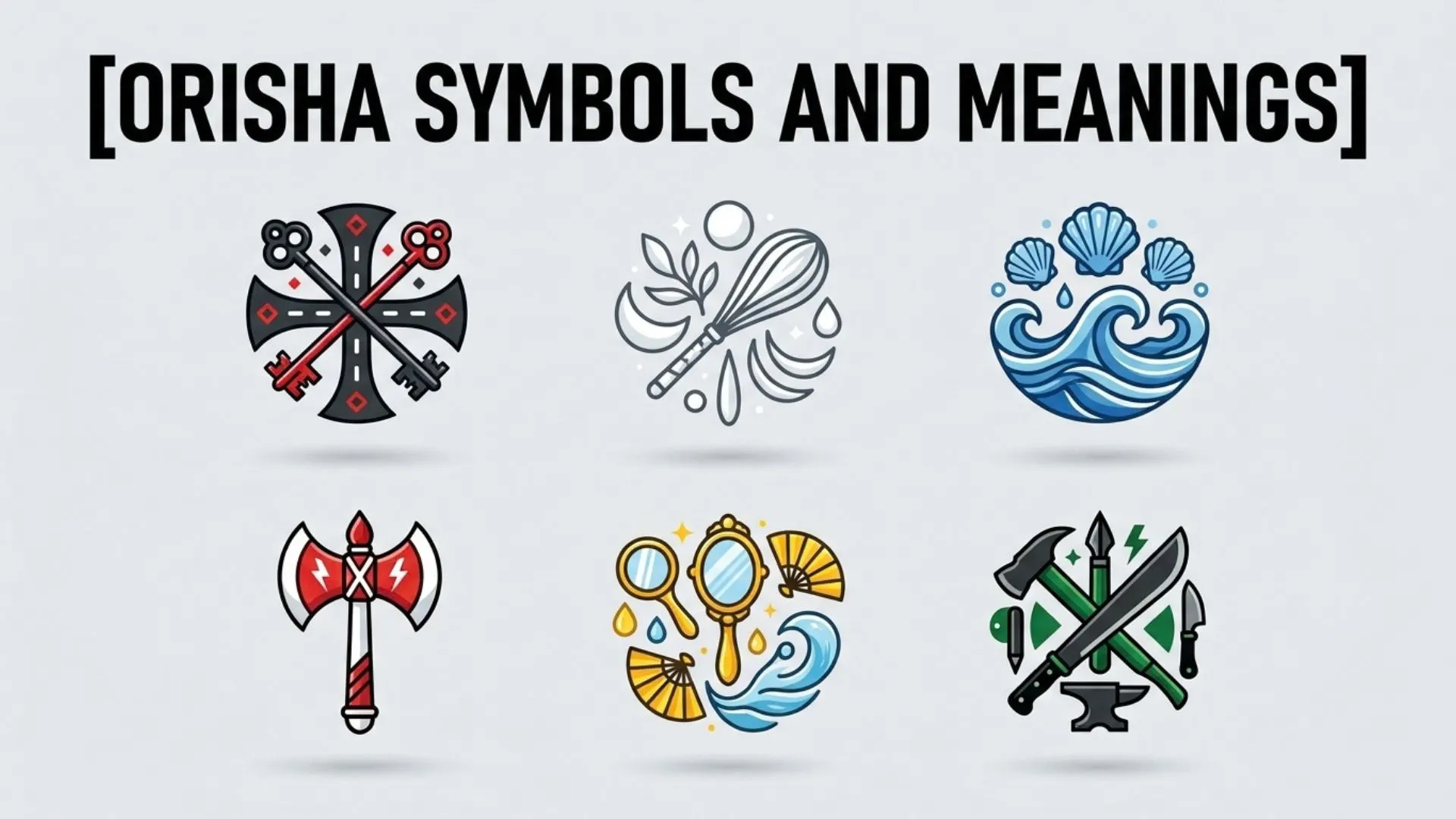
Orisha symbols are sacred visual representations connected to the Orishas, the divine spiritual beings honored in the Yoruba religion and many Afro-diasporic traditions. These symbols carry deep cultural meaning, spiritual significance, and historical symbolism that has been preserved for generations. Rather than being simple decorative symbols, they represent divine forces, natural elements, moral values, and the relationship between humanity and the spiritual world.
People searching for Orisha symbols and meanings are often looking to understand their origins, symbolic representation, cultural importance, or spiritual applications. Whether you are studying Yoruba spirituality, exploring African history, appreciating sacred art, or simply curious about these powerful icons, learning their meanings provides valuable insight into one of the world’s oldest living spiritual traditions.
This guide explores the history, symbolism, categories, uses, and significance of Orisha symbols while explaining how these sacred signs continue to influence art, religion, communication, and cultural identity today.
Orisha Symbols and Meanings (Meaning and Overview)
Orisha symbols are sacred signs, icons, colors, objects, natural elements, and visual representations associated with specific Orishas. Each symbol reflects the qualities, responsibilities, powers, and personality of a particular divine being.
In Yoruba belief, an Orisha serves as an intermediary between humanity and the Supreme Creator, Olodumare. Every Orisha governs certain aspects of life such as wisdom, justice, rivers, thunder, fertility, healing, hunting, or craftsmanship. Their symbols help practitioners recognize their presence and understand their spiritual role.
Unlike a standard text symbol or Unicode symbol used in digital communication, Orisha symbols are rooted in centuries of oral tradition, ritual practice, sacred art, and cultural memory. Their symbolic significance extends beyond appearance they represent living spiritual concepts.
Some symbols are physical objects, while others are natural signs or artistic motifs used in altars, ceremonies, clothing, jewelry, architecture, and ceremonial tools.
History and Origin
The origins of Orisha symbols trace back thousands of years to the Yoruba people of present-day southwestern Nigeria, Benin, and Togo. The Yoruba civilization developed a sophisticated spiritual system centered around reverence for Olodumare and numerous Orishas responsible for different aspects of creation.
Before written language became widespread, symbolic representation played an important role in preserving religious teachings. Sacred objects, ritual tools, colors, patterns, animals, and natural features became visual communication symbols that carried spiritual knowledge across generations.
As millions of Africans were forcibly taken during the transatlantic slave trade, Yoruba religious traditions spread throughout the Caribbean and the Americas. Despite persecution, practitioners preserved many Orisha symbols by blending them with local customs and other religious traditions.
Today, Orisha symbolism appears within traditions including:
- Yoruba Religion
- Ifá
- Santería (Lucumí)
- Candomblé
- Trinidad Orisha
- Umbanda (with some adaptations)
Although practices differ, many traditional meanings remain remarkably consistent.
Types, Variations, or Categories
Orisha symbols can be grouped into several categories depending on how they communicate spiritual meaning.
Sacred Objects
Many Orishas are identified through ceremonial tools.
Examples include:
- Double-headed axe
- Iron tools
- Cowrie shells
- Spears
- Staffs
- Bells
- Gourds
These objects are far more than decorative items—they represent divine authority and spiritual power.
Natural Symbols
Nature itself serves as an important symbolic language.
Common natural symbols include:
- Rivers
- Oceans
- Mountains
- Forests
- Fire
- Lightning
- Rainbows
- Wind
Each natural element reflects the unique domain of a specific Orisha.
Colors
Color symbolism is central to Yoruba tradition.
Examples include:
- White
- Blue
- Red
- Green
- Yellow
- Purple
- Black
These colors often appear in clothing, beads, ritual items, and altars.
Animals
Animals frequently serve as sacred signs connected with particular Orishas.
Examples include:
- Peacock
- Ram
- Rooster
- Fish
- Snake
- Horse
- Dog
- Vulture
These animals symbolize specific divine characteristics rather than functioning as ordinary mascots.
Major Orisha Symbols and Their Meanings
Eshu (Elegba)
Eshu is the divine messenger and guardian of crossroads.
Common symbols include:
- Crossroads
- Keys
- Walking stick
- Stones
- Pathways
These symbols represent communication, opportunity, decision-making, and the opening or closing of life’s paths.
Ogun
Ogun is the Orisha of iron, technology, labor, warfare, and craftsmanship.
His symbolic representation includes:
- Machete
- Iron
- Anvil
- Hammer
- Chains
- Railroad tracks
These icons symbolize strength, determination, innovation, and productive work.
Shango
Shango governs thunder, lightning, leadership, courage, and justice.
His primary symbols include:
- Double-headed axe
- Lightning bolt
- Drum
- Fire
The double axe remains one of the most recognizable Orisha symbols and represents balance between justice and power.
Oshun
Oshun is associated with rivers, beauty, prosperity, love, and fertility.
Her sacred symbols include:
- River
- Mirror
- Fan
- Honey
- Peacock
- Gold
These signs symbolize compassion, abundance, elegance, femininity, and emotional healing.
Yemaya
Yemaya is regarded as the mother of oceans and protector of families.
Her symbols include:
- Ocean waves
- Fish
- Moon
- Seashells
- Anchor
They represent motherhood, nurturing, emotional depth, wisdom, and protection.
Obatala
Obatala represents peace, wisdom, purity, justice, and creation.
His visual representation includes:
- White cloth
- White dove
- Staff
- Crown
White symbolizes purity, calmness, honesty, and spiritual enlightenment.
Oya
Oya governs storms, transformation, cemeteries, and powerful change.
Her symbols include:
- Tornado
- Buffalo
- Sword
- Lightning
- Purple colors
These symbols remind followers that transformation often follows periods of challenge.
Colors and Their Symbolic Significance
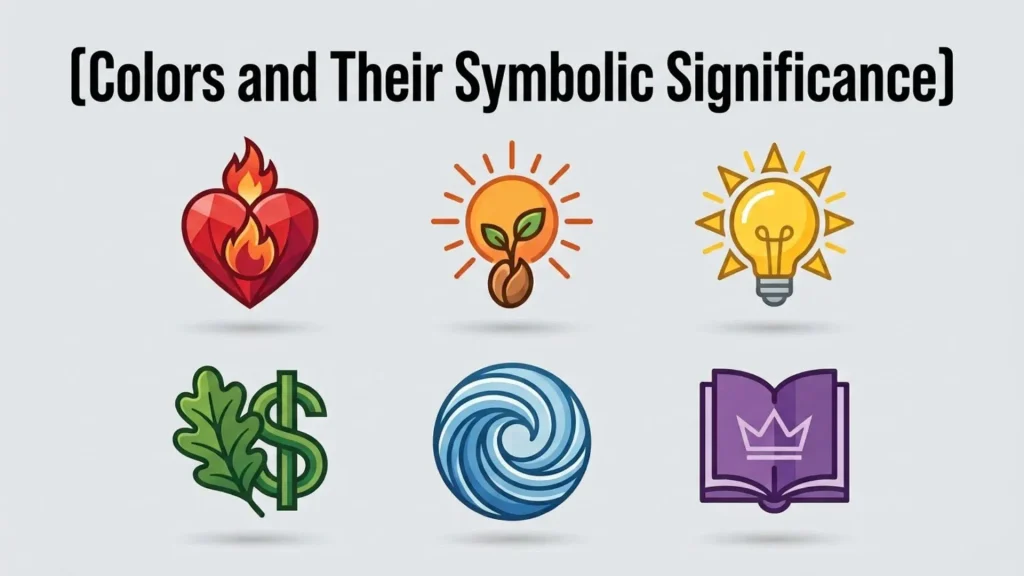
Colors function as powerful communication symbols throughout Orisha traditions.
White
White represents:
- Purity
- Wisdom
- Peace
- Spiritual clarity
It is especially connected with Obatala.
Blue
Blue often symbolizes:
- Water
- Protection
- Healing
- Motherhood
It is commonly associated with Yemaya.
Yellow and Gold
Yellow reflects:
- Wealth
- Happiness
- Beauty
- Prosperity
These colors frequently honor Oshun.
Red
Red symbolizes:
- Passion
- Energy
- Courage
- Fire
It often appears in traditions honoring Shango.
Green
Green represents:
- Nature
- Growth
- Healing
- Agriculture
Some Orishas connected with forests and plant life use green symbolism.
Common Uses and Applications
Orisha symbols continue to serve meaningful purposes in both traditional and modern settings.
Religious Ceremonies
Priests and practitioners use sacred symbols during prayers, offerings, festivals, and initiation ceremonies.
These visual representations help identify specific Orishas and create spiritually meaningful ritual spaces.
Home Altars
Many devotees include symbolic objects on home altars.
These may include:
- Candles
- Colored cloth
- Sacred stones
- Bowls of water
- Ritual tools
- Flowers
Each object reflects the traditional meaning associated with a particular Orisha.
Jewelry and Personal Items
Bracelets, necklaces, pendants, and rings often incorporate Orisha symbols as expressions of faith, identity, or cultural heritage.
These should always be worn respectfully, recognizing their sacred significance.
Art and Architecture
Artists throughout Africa and the African diaspora use Orisha icons in:
- Murals
- Sculptures
- Paintings
- Ceramics
- Textiles
- Wood carvings
These artistic works preserve historical symbolism while introducing new generations to Yoruba culture.
Education and Cultural Preservation
Museums, universities, and cultural organizations use Orisha symbols to teach African history, religion, anthropology, and traditional art.
Symbolism, Significance, and Cultural Importance
The importance of Orisha symbols extends far beyond visual appearance.
They preserve oral traditions that existed long before widespread literacy.
They strengthen cultural identity among Yoruba communities and descendants throughout the world.
They communicate complex spiritual concepts using recognizable visual signs.
They remind practitioners of ethical values such as honesty, courage, compassion, patience, justice, and respect for nature.
Many symbols also represent humanity’s relationship with natural forces including rivers, forests, oceans, mountains, and storms, emphasizing harmony between people and the environment.
Because these symbols embody sacred beliefs, they should always be approached with cultural awareness and respect rather than treated as ordinary decorative characters.
How to Use Orisha Symbols Respectfully
If you appreciate Orisha symbols, it is important to understand their sacred nature.
Some helpful guidelines include:
Learn Their Background
Study the history, traditions, and cultural meaning behind each symbol before using it.
Respect Sacred Contexts
Recognize that many symbols belong to living religious traditions rather than historical artifacts.
Avoid Misrepresentation
Do not combine symbols randomly or assign meanings without understanding their traditional significance.
Support Authentic Artists
When purchasing artwork, jewelry, or ceremonial items, consider supporting Yoruba or Afro-diasporic artisans who preserve these traditions.
Appreciate Without Appropriation
Respectful learning and cultural appreciation differ from using sacred symbols purely for fashion or commercial purposes.
Interesting Facts
- The Yoruba religion recognizes hundreds of Orishas, although a smaller number are widely known internationally.
- Colors play an essential symbolic role during ceremonies and festivals.
- Cowrie shells have historically served both as sacred ritual objects and as currency in parts of West Africa.
- Many Orisha symbols are inspired directly by nature rather than abstract geometric designs.
- Sacred drumming patterns often function alongside visual symbols to communicate with the Orishas.
- Oral storytelling remains one of the primary methods of preserving symbolic knowledge.
- Different Afro-diasporic traditions may interpret certain symbols slightly differently while maintaining their core meanings.
- Many contemporary artists blend traditional symbolism with modern artistic styles to celebrate African heritage.
Common Mistakes or Misconceptions
Assuming Every Symbol Has One Universal Meaning
Interpretations may vary slightly between Yoruba religion, Santería, Candomblé, and other related traditions.
Treating Sacred Symbols as Decorations
Many Orisha symbols hold deep religious importance and should not be viewed merely as aesthetic designs.
Confusing Orishas with Gods
In Yoruba belief, Orishas are divine spiritual beings serving under the Supreme Creator, not independent supreme deities.
Ignoring Cultural Context
Understanding the historical and cultural background provides far greater appreciation than viewing symbols in isolation.
Believing Colors Always Mean the Same Thing
Color symbolism depends on the specific Orisha and ritual tradition rather than having one fixed interpretation.
Frequently Asked Questions
What are Orisha symbols?
Orisha symbols are sacred visual representations connected to the divine beings of the Yoruba religion. They include objects, colors, animals, natural elements, and ritual icons that express spiritual meaning.
Are Orisha symbols the same in every tradition?
No. While many core meanings remain consistent, traditions such as Ifá, Santería, and Candomblé may have slight differences in symbolism and ritual practice.
Can anyone learn about Orisha symbols?
Yes. Anyone can respectfully study their history, cultural meaning, and symbolic significance while recognizing that some ceremonial knowledge remains specific to initiated practitioners.
Why are colors important in Orisha symbolism?
Colors help identify individual Orishas and communicate their spiritual qualities, powers, and traditional associations during ceremonies and rituals.
Are Orisha symbols considered lucky?
Some practitioners believe certain symbols bring protection, guidance, prosperity, or spiritual balance, but their primary purpose is sacred rather than simply bringing good luck.
Do Orisha symbols appear in modern art?
Yes. Many contemporary artists, designers, and cultural institutions incorporate traditional Orisha symbols into paintings, sculptures, textiles, and educational projects while honoring their historical roots.
Are Orisha symbols Unicode or text symbols?
No. Orisha symbols are cultural and religious visual representations rather than standardized Unicode symbols or digital typography symbols, although digital artwork may depict them online.
Conclusion
Orisha symbols represent far more than attractive icons or decorative designs. They are sacred visual representations that preserve centuries of Yoruba history, spirituality, cultural identity, and philosophical wisdom. Each symbol communicates unique qualities associated with a particular Orisha, helping practitioners express devotion, preserve traditions, and strengthen their connection to the spiritual world.
Whether represented through colors, sacred objects, animals, natural elements, or ceremonial tools, these symbols continue to inspire communities across Africa and the global African diaspora. By understanding their historical symbolism, traditional meaning, and cultural significance, readers gain a deeper appreciation for one of humanity’s richest symbolic traditions. Approaching Orisha symbols with curiosity, respect, and cultural awareness ensures these timeless sacred signs remain honored for generations to come.

Ryan Mitchell is an independent writer with a strong interest in symbols, visual communication, and the meanings behind different signs and icons. His writing focuses on providing clear, accurate, and useful information that helps readers quickly understand unfamiliar symbols. Ethan covers a wide range of topics, from everyday and cultural symbols to technical and professional symbol systems.
His books include The World of Symbols, Symbols Explained Simply, and The Essential Symbol Reference Guide.