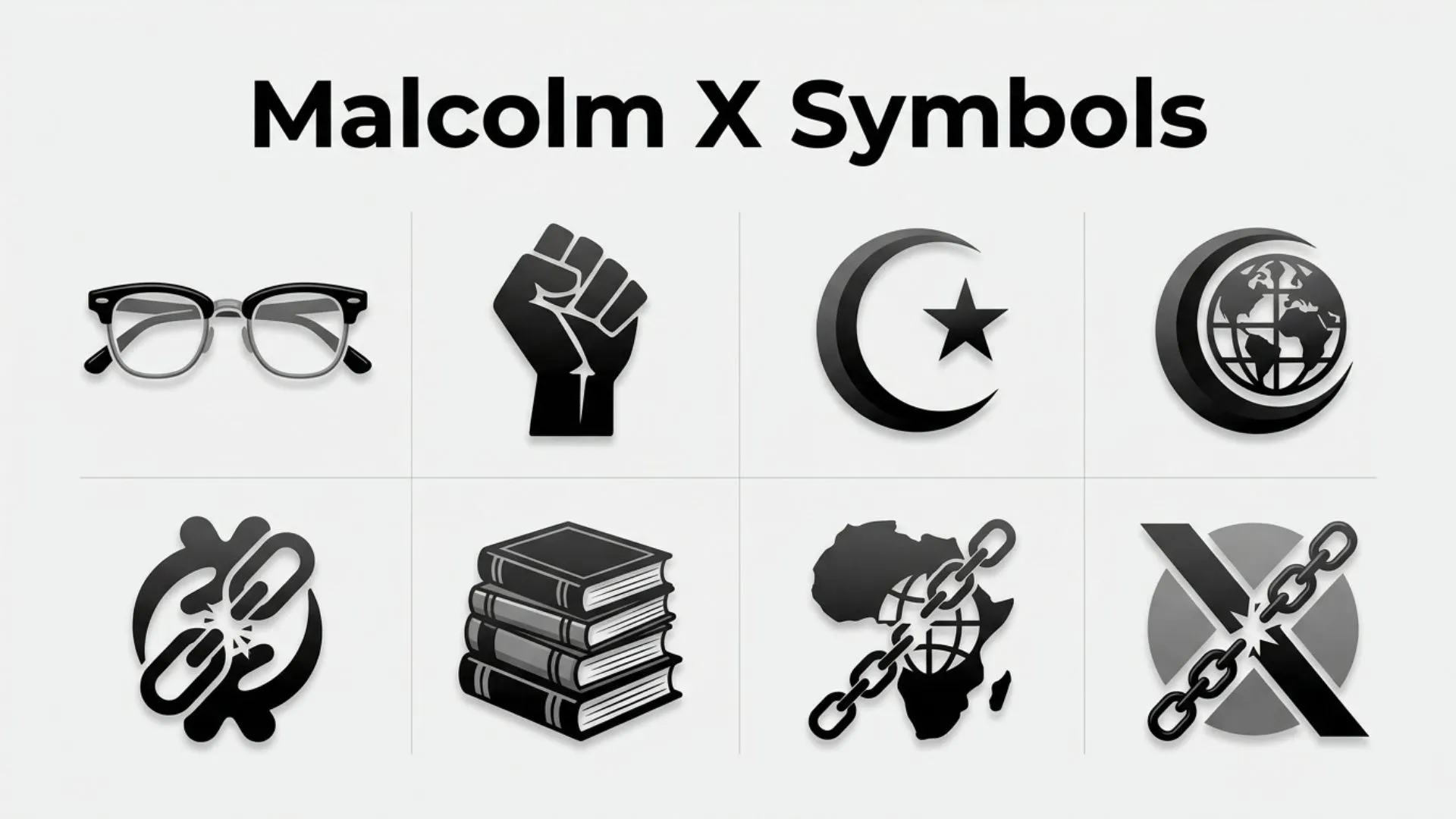
Malcolm X remains one of the most influential and recognizable figures in modern history. Known for his powerful speeches, advocacy for Black empowerment, and commitment to social justice, Malcolm X became a symbol of resistance, self-determination, and personal transformation.
The symbols of Malcolm X represent more than the image of one person. They reflect important ideas connected to identity, dignity, education, human rights, cultural pride, and the struggle for equality. From his iconic glasses and formal appearance to the “X” representing an unknown ancestral name, each symbol carries a deeper meaning.
Understanding Malcolm X symbols helps explain how his message continues to influence movements, artwork, literature, and public discussions today. These symbols serve as visual representations of his beliefs and the historical experiences that shaped his life.
This guide explores the most important symbols connected to Malcolm X, their meanings, origins, and significance in modern culture.
Meaning and Overview of Malcolm X Symbols
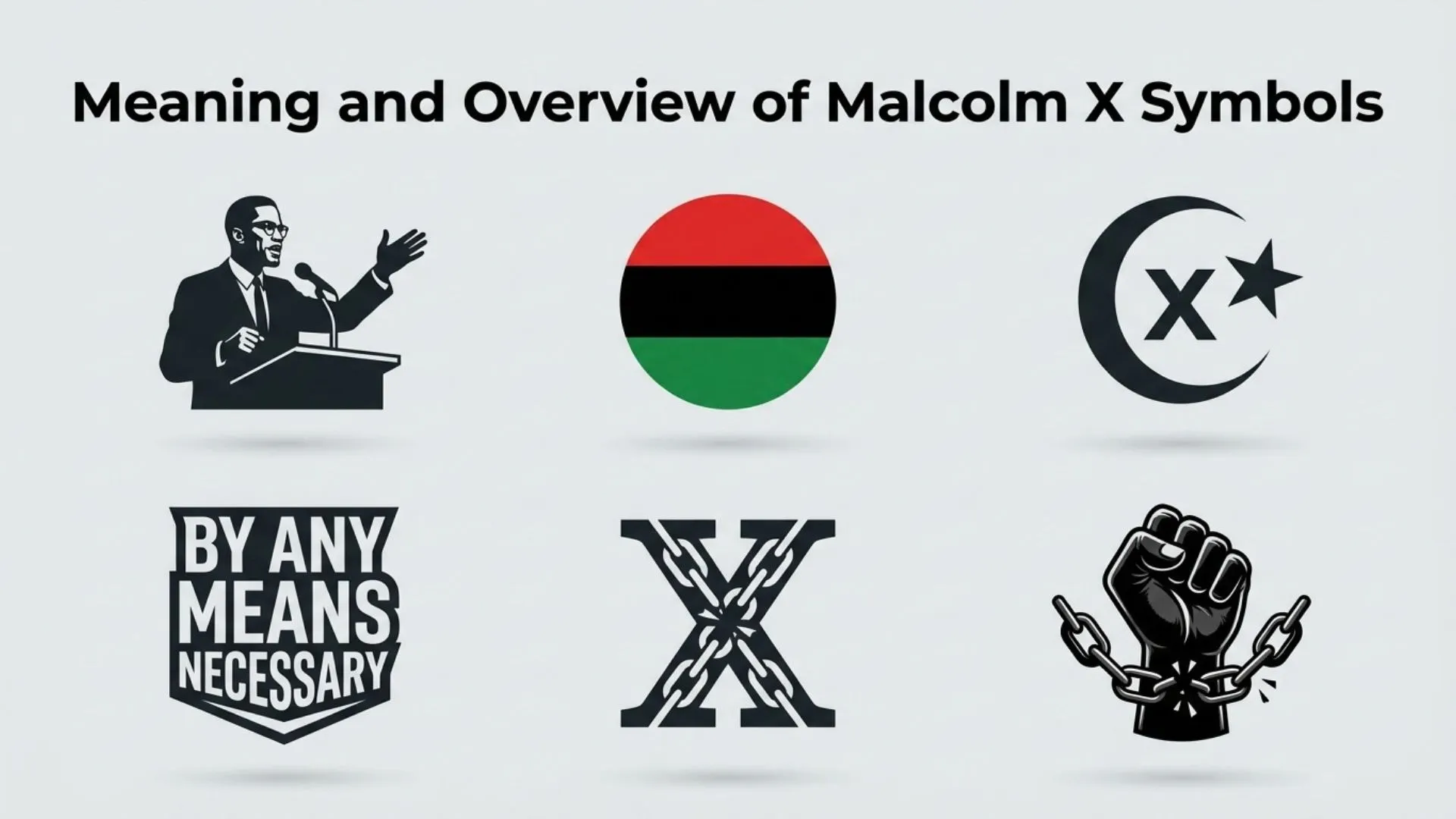
Symbols connected to Malcolm X are visual representations, objects, words, and images that communicate ideas associated with his life and philosophy.
Unlike traditional religious or national symbols, Malcolm X symbols developed through history, activism, and cultural memory. They are connected to his personal journey, including his transformation from Malcolm Little to Malcolm X and later El-Hajj Malik El-Shabazz.
The primary meanings associated with Malcolm X symbols include:
- Identity and self-discovery
- Black pride and empowerment
- Resistance against oppression
- Education and knowledge
- Human dignity
- Cultural heritage
- Personal transformation
These symbols function as communication symbols that allow people to express connection with Malcolm X’s ideas and historical impact.
History and Origin of Malcolm X Symbols
Malcolm X was born Malcolm Little in 1925 in Omaha, Nebraska. His early life was shaped by racial discrimination, family struggles, and social inequality. These experiences influenced his later activism and worldview.
During his time with the Nation of Islam, he adopted the name Malcolm X. The “X” became one of the most important symbols associated with him.
After leaving the Nation of Islam, completing the Hajj pilgrimage, and embracing a broader human rights perspective, he became known as El-Hajj Malik El-Shabazz.
Over time, images, words, and objects connected to his life became powerful cultural symbols. These symbols developed through:
- Civil rights movements
- Educational discussions
- Political activism
- Art and literature
- Public memorials
Today, Malcolm X symbols continue to represent ideas about justice, identity, and empowerment.
Major Malcolm X Symbols and Their Meanings
The Letter “X”
The letter “X” is the most famous symbol associated with Malcolm X.
When Malcolm Little joined the Nation of Islam, he replaced his surname with “X” because he believed “Little” was a name connected to slavery and an unknown African ancestry.
Symbol Meaning of the “X”
The “X” represents:
- Lost ancestral identity
- Rejection of imposed names
- Search for heritage
- Self-definition
- Freedom from historical oppression
The letter became a powerful symbolic representation of reclaiming identity.
For many people, the “X” is not just a character in a name. It represents the journey of discovering personal and cultural history.
Malcolm X’s Glasses
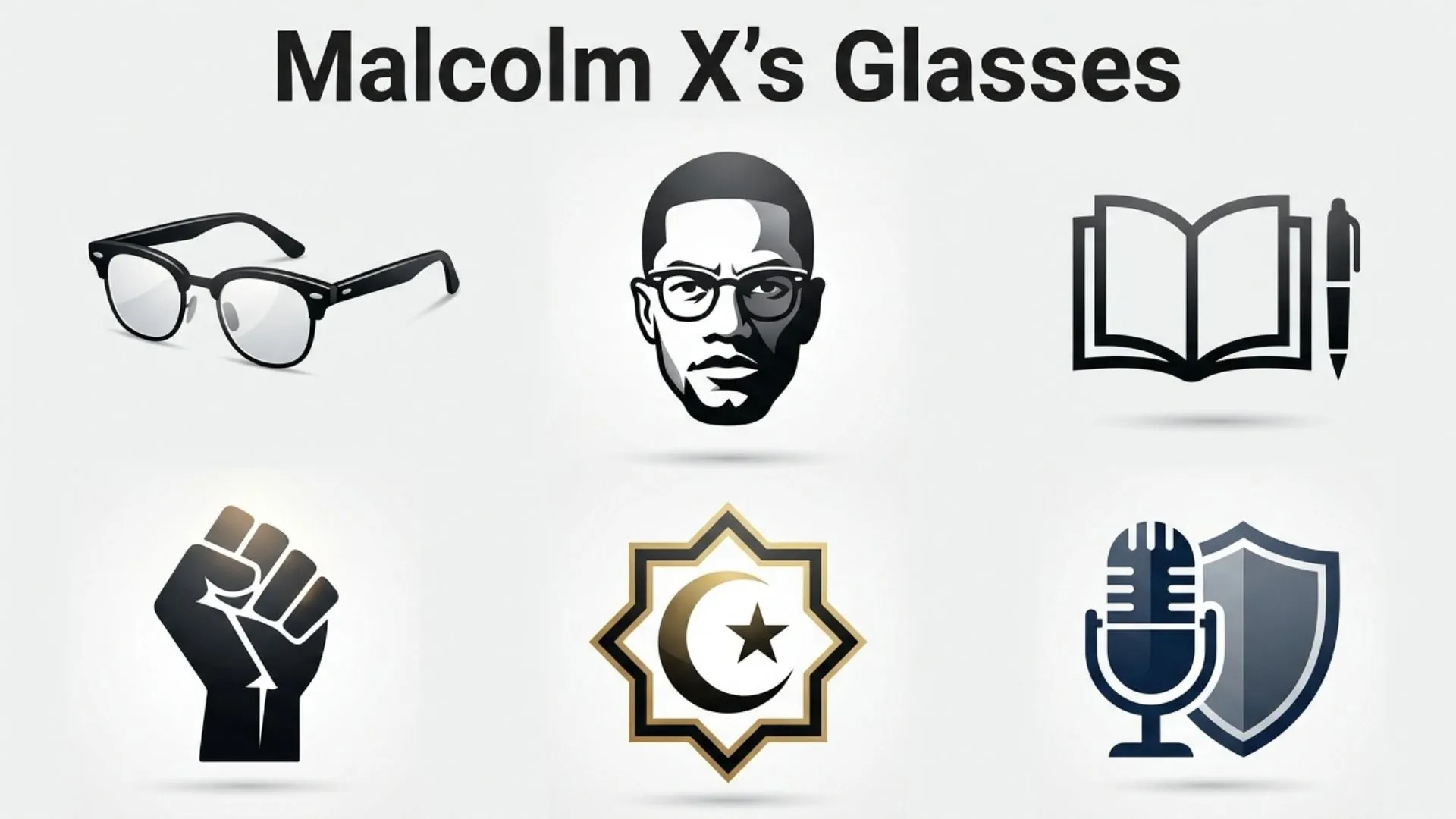
Malcolm X’s glasses became one of his most recognizable visual symbols.
His dark-framed glasses appeared frequently in photographs, speeches, and public appearances.
Meaning of the Glasses
The glasses symbolize:
- Intelligence
- Awareness
- Vision
- Education
- Critical thinking
They became part of his public image as a serious speaker and thinker.
The glasses are often included in artwork and portraits as a simple visual sign that immediately identifies Malcolm X.
The Afro and Natural Hair Symbolism
Although Malcolm X’s hairstyle changed throughout his life, images of Black identity and cultural pride are often connected to his legacy.
Symbolic Significance
Natural hair symbolism connected with Malcolm X represents:
- Cultural pride
- Rejection of assimilation pressures
- Acceptance of African heritage
- Individual identity
During the civil rights era, appearance often became a form of communication and resistance.
The Raised Fist
The raised fist is commonly associated with resistance movements worldwide and is sometimes connected with Malcolm X’s legacy.
Meaning of the Raised Fist
It represents:
- Strength
- Unity
- Resistance
- Solidarity
- Empowerment
While the symbol was used by many movements, its connection with Malcolm X reflects themes of self-defense, independence, and social change.
Books and Education Symbols
Malcolm X strongly emphasized learning and self-education.
His autobiography and speeches became important sources for understanding his ideas.
Symbolism of Books
Books represent:
- Knowledge
- Awareness
- Personal growth
- Liberation through education
For Malcolm X, education was a tool for understanding history and challenging injustice.
The Red, Black, and Green Colors
The colors red, black, and green are often associated with Pan-African movements and Black cultural identity.
Meaning of These Colors
They commonly symbolize:
- Red: Struggle and sacrifice
- Black: Black identity and people
- Green: African land and heritage
These colors appear in many cultural and political contexts connected to Black empowerment.
The Afrocentric Symbolism
Malcolm X’s later views emphasized global human rights and connections with African heritage.
Symbolic Meaning
Afrocentric symbols connected to his legacy represent:
- Cultural roots
- Historical awareness
- Global identity
- Pride in heritage
They reflect his belief that understanding history is essential for empowerment.
Types and Categories of Malcolm X Symbols
Personal Symbols
These are objects directly connected to Malcolm X’s life.
Examples include:
- The letter X
- Glasses
- Formal clothing
- His photographs
They create a visual connection to his identity.
Activism Symbols
These represent his work for social justice.
Examples include:
- Raised fists
- Protest imagery
- Public speeches
- Freedom symbols
They communicate ideas about equality and resistance.
Cultural Symbols
These connect Malcolm X’s legacy to broader cultural movements.
Examples include:
- Pan-African colors
- African heritage imagery
- Educational symbols
They represent cultural awareness and community empowerment.
Literary Symbols
Malcolm X’s written works became symbols of knowledge and historical understanding.
Examples include:
- His autobiography
- His speeches
- His letters
These works continue to influence students, historians, and activists.
Common Uses and Applications of Malcolm X Symbols
Malcolm X symbols appear in many areas of modern culture.
Education
Schools and universities often study Malcolm X symbols when teaching:
- Civil rights history
- American history
- Social movements
- Leadership studies
Art and Design
Artists use Malcolm X imagery in:
- Murals
- Posters
- Paintings
- Digital artwork
His image has become an iconic representation of courage and activism.
Clothing and Fashion
Malcolm X symbols appear on:
- Shirts
- Hats
- Jewelry
- Accessories
These items are often used to express cultural pride or admiration for his ideas.
Public Memorials
Statues, murals, and historical displays use Malcolm X symbols to preserve his memory.
These visual representations help communities recognize his contribution to history.
Symbolism and Importance of Malcolm X Symbols
The importance of Malcolm X symbols comes from their connection to deeper social and personal themes.
Identity and Self-Determination
The “X” remains a powerful symbol of defining oneself rather than accepting identities created by others.
Courage and Advocacy
Malcolm X symbols represent the courage to speak about difficult issues and challenge unfair systems.
Knowledge and Awareness
Education symbols connected with Malcolm X highlight his belief that knowledge creates power.
Cultural Pride
Many symbols connected to him encourage appreciation of history, heritage, and identity.
Transformation
Malcolm X’s life journey itself became a symbol of personal growth and change.
How to Use Malcolm X Symbols Respectfully
Understand Their Meaning
Before using Malcolm X symbols, learn about their historical background.
Avoid Reducing Them to Decorations
These symbols represent real struggles, ideas, and experiences.
Consider Context
A symbol used in an educational setting may communicate differently from one used in fashion or entertainment.
Respect Historical Significance
Using Malcolm X imagery responsibly helps preserve the meaning behind his legacy.
Interesting Facts About Malcolm X Symbols
- The “X” became one of the most recognizable symbols connected with identity and heritage.
- Malcolm X changed his name several times during his personal and spiritual journey.
- His glasses became an iconic part of his visual identity.
- Malcolm X’s autobiography remains one of the most influential books about race and identity in America.
- Artists around the world continue creating murals and portraits inspired by him.
- His symbols appear in education, activism, literature, and popular culture.
Common Mistakes and Misconceptions
Thinking the “X” Is Just a Letter
The “X” carries deep historical meaning connected to ancestry and identity.
Viewing Malcolm X Only Through One Period of His Life
His beliefs evolved significantly throughout his lifetime.
Confusing Symbols With Political Messages Only
Many Malcolm X symbols also represent education, self-improvement, and cultural awareness.
Ignoring His Global Perspective
Malcolm X’s later ideas expanded beyond national issues toward broader human rights concerns.
Treating His Image as Only a Historical Artifact
His symbols continue to influence modern conversations about identity and equality.
Frequently Asked Questions
What does the X symbolize in Malcolm X’s name?
The X symbolizes an unknown African ancestral name and represents the rejection of names connected to slavery.
What are the most important Malcolm X symbols?
The most recognized symbols include the letter X, his glasses, books, raised fists, and cultural imagery connected with Black identity.
Why is Malcolm X considered a symbol?
Malcolm X became a symbol of resistance, empowerment, education, and the fight for human dignity.
What do Malcolm X glasses represent?
His glasses are often seen as symbols of intelligence, awareness, and his role as a serious thinker and speaker.
Are Malcolm X symbols still used today?
Yes. They appear in education, art, clothing, memorials, and social discussions worldwide.
What does Malcolm X’s image represent?
His image represents courage, transformation, cultural pride, and advocacy for justice.
Why is the letter X culturally important?
The letter X represents reclaiming identity and recognizing histories that were erased or forgotten.
Conclusion
Malcolm X symbols carry powerful meanings connected to identity, education, cultural pride, and social justice. From the famous “X” in his name to his glasses, books, and iconic images, each symbol tells part of his journey and the ideas he shared with the world.
These symbols continue to inspire conversations about history, equality, and personal transformation. Understanding the deeper meaning behind Malcolm X symbols allows us to appreciate not only the individual but also the larger movements and values connected to his legacy.

Daniel Carter is a writer and researcher focused on symbols, their meanings, origins, and practical uses. He enjoys turning complex symbolic concepts into simple, easy-to-understand explanations for everyday readers. Through his work, Daniel explores cultural, technical, historical, and commonly used symbols, helping readers understand what they mean and where they are used.
His work includes The Complete Guide to Symbols, Understanding Symbols and Their Meanings, and A Visual Guide to Common Symbols.