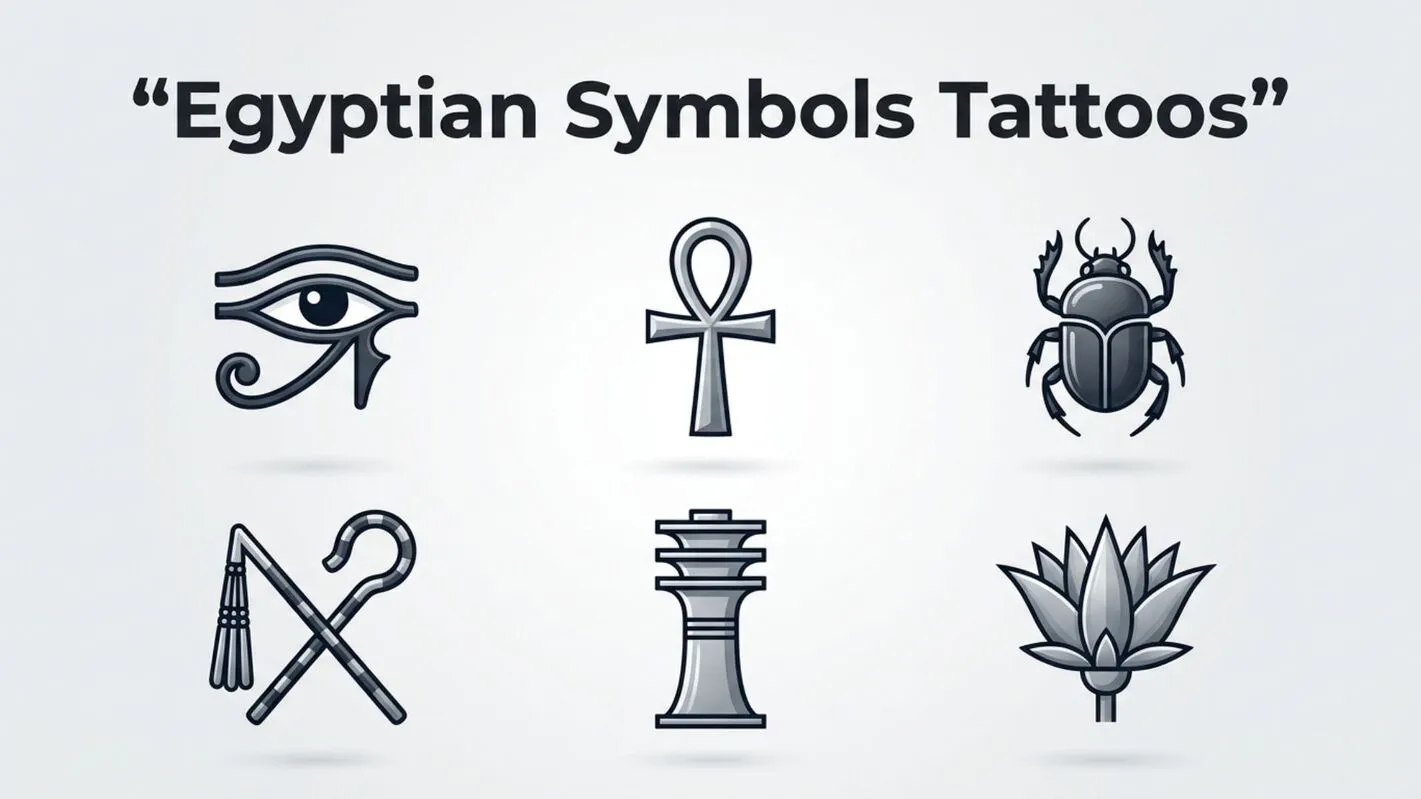
Egyptian symbols tattoos have remained among the most meaningful and visually striking tattoo styles for decades. Inspired by one of the world’s oldest civilizations, these ancient designs combine artistic beauty with deep symbolism rooted in mythology, religion, royalty, and everyday life in Ancient Egypt. Whether someone chooses the Eye of Horus for protection, the Ankh for eternal life, or the Scarab Beetle for transformation, each tattoo tells a unique story.
Unlike purely decorative body art, Egyptian symbol tattoos often carry personal significance. Many people select these timeless icons to represent strength, wisdom, protection, rebirth, spirituality, or a connection to history. Their geometric designs and recognizable shapes also make them suitable for minimalist tattoos as well as large, detailed pieces.
This guide explores the most popular Egyptian symbols tattoos, their meanings, origins, symbolism, placement ideas, and modern interpretations. You’ll also learn how to choose an authentic design while respecting the cultural heritage behind these ancient symbols.
Egyptian Symbols Tattoos (Meaning and Overview)
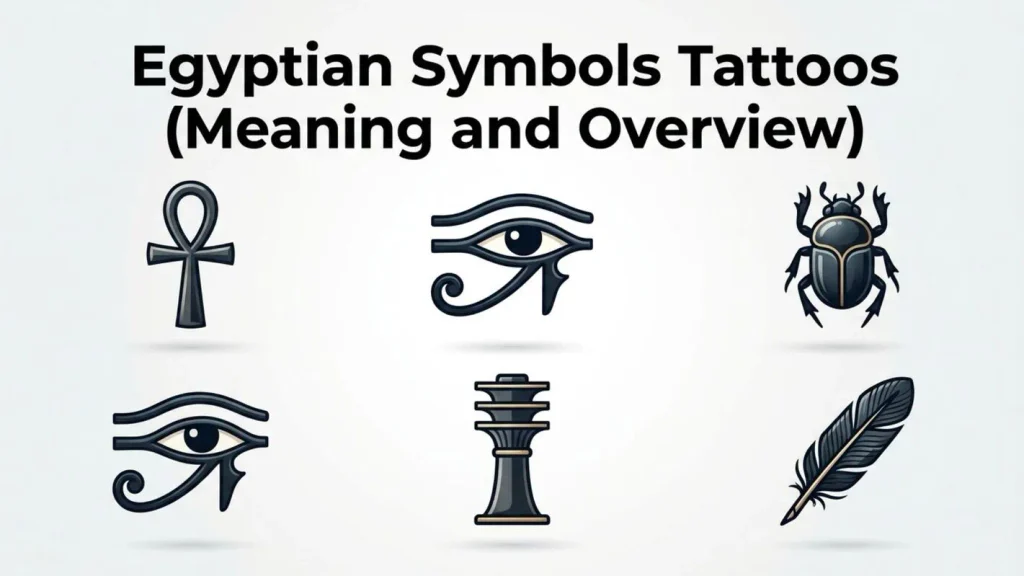
Egyptian symbols tattoos are body art designs inspired by the sacred signs, hieroglyphs, gods, and religious imagery of Ancient Egypt. These symbols originally appeared on temple walls, tombs, jewelry, monuments, papyrus scrolls, and royal artifacts.
In ancient Egyptian culture, symbols served as more than decorative elements. They acted as a communication system, a spiritual guide, and a symbolic representation of divine protection, authority, life, death, and the afterlife.
Today, Egyptian tattoos continue to symbolize:
- Protection
- Eternal life
- Wisdom
- Strength
- Rebirth
- Balance
- Spiritual growth
- Royal power
- Good fortune
- Inner resilience
Many designs combine multiple ancient icons into one tattoo to create a deeply personal meaning.
Egyptian Symbols Tattoos (History and Origin)
Ancient Egyptian civilization flourished for more than 3,000 years along the Nile River. During this period, symbols played a central role in religion, government, architecture, and daily life.
Hieroglyphs the famous picture-writing system—used hundreds of symbols as characters representing sounds, words, and ideas. Alongside these written signs, Egyptians created sacred icons associated with gods, pharaohs, and spiritual beliefs.
Many symbols decorated:
- Temples
- Tombs
- Statues
- Jewelry
- Weapons
- Royal seals
- Ceremonial objects
Although modern tattooing differs from ancient Egyptian artistic practices, archaeological evidence suggests that tattooing existed in Egypt, particularly among women during the Middle Kingdom. Some tattoos may have held religious, medicinal, or protective significance.
Today, Egyptian symbols tattoos reinterpret these ancient designs as meaningful personal artwork while honoring one of history’s most influential civilizations.
Types of Egyptian Symbols Tattoos
Egyptian tattoos can be grouped into several categories based on their symbolism and historical purpose.
Sacred Religious Symbols
These represent gods, divine protection, and spirituality.
Examples include:
- Ankh
- Eye of Horus
- Eye of Ra
- Djed Pillar
- Scarab Beetle
Hieroglyph Tattoos
Hieroglyphs are individual symbols or characters from Ancient Egypt’s writing system.
Popular choices include:
- Names
- Inspirational words
- Royal titles
- Individual hieroglyphic signs
These tattoos require careful translation because many online interpretations are inaccurate.
Animal Symbol Tattoos
Animals played important roles in Egyptian mythology.
Popular animal tattoos include:
- Falcon
- Cobra
- Cat
- Jackal
- Ibis
- Scarab
- Crocodile
Each animal represented particular gods or spiritual qualities.
Pharaoh and Deity Tattoos
Some tattoos combine symbolic elements with portraits of Egyptian rulers or gods such as:
- Anubis
- Horus
- Isis
- Osiris
- Bastet
- Thoth
- Cleopatra
- Tutankhamun
These larger designs often incorporate multiple sacred symbols.
Popular Egyptian Symbols Tattoos and Their Meanings
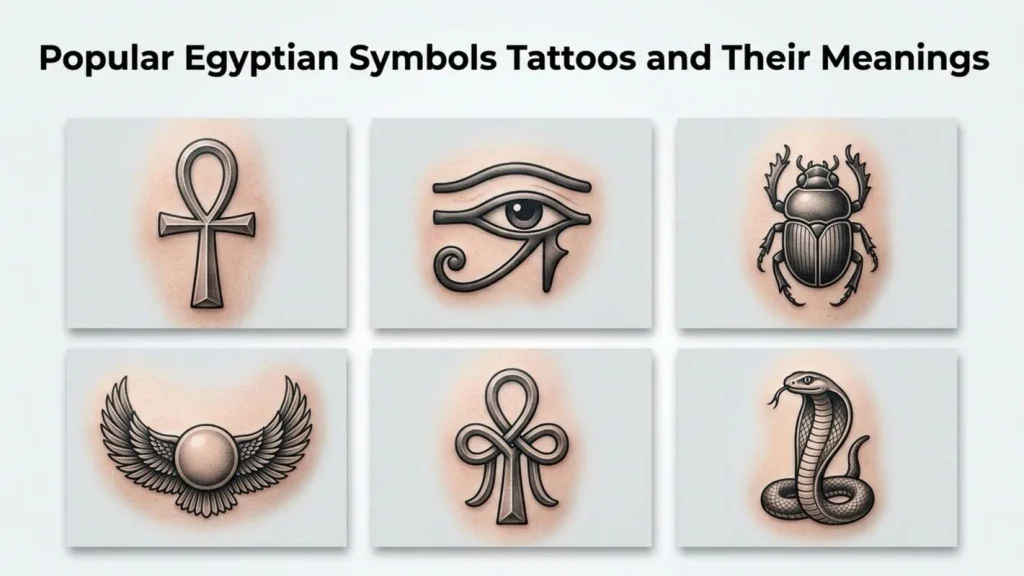
The Ankh
The Ankh is perhaps the most recognizable Egyptian symbol.
Its cross-like shape with a loop at the top represents:
- Eternal life
- Immortality
- Spiritual wisdom
- Divine power
The Ankh frequently appears in minimalist tattoos due to its elegant design.
Eye of Horus
Also known as the Wadjet Eye, the Eye of Horus symbolizes:
- Protection
- Healing
- Good health
- Restoration
- Wisdom
Ancient Egyptians believed this powerful symbol protected both the living and the dead.
Today, it remains one of the world’s most popular symbolic tattoos.
Eye of Ra
Although similar in appearance to the Eye of Horus, the Eye of Ra carries a different meaning.
It represents:
- Power
- Authority
- The sun
- Divine justice
- Royal strength
Many people choose this tattoo to symbolize confidence and leadership.
Scarab Beetle
The scarab was sacred to the sun god Khepri.
Its symbolism includes:
- Rebirth
- Transformation
- Renewal
- Personal growth
- Good fortune
This tattoo is especially popular among people celebrating major life changes.
Djed Pillar
The Djed Pillar symbolizes:
- Stability
- Endurance
- Strength
- Spiritual balance
It was closely associated with Osiris, the god of the afterlife.
Feather of Ma’at
The Feather of Ma’at represents:
- Truth
- Justice
- Balance
- Moral integrity
- Harmony
According to Egyptian belief, a person’s heart was weighed against this feather after death.
Ouroboros
Although found in several ancient cultures, the Ouroboros became part of later Egyptian symbolism.
The serpent eating its own tail symbolizes:
- Infinity
- Eternal cycles
- Renewal
- Continuity
Cartouche
A cartouche is an oval frame surrounding royal names written in hieroglyphs.
Modern tattoos often place a person’s name inside a cartouche using hieroglyphic characters, though professional translation is recommended.
Symbolism and Cultural Significance
Egyptian symbols tattoos remain popular because they combine artistic beauty with meaningful symbolism.
Protection
Symbols such as the Eye of Horus were believed to guard against illness, danger, and evil.
Eternal Life
The Ankh reminds many people of life’s enduring spiritual journey.
Wisdom
Many Egyptian gods represented intelligence, knowledge, and learning.
Personal Transformation
The Scarab Beetle reflects growth through life’s challenges.
Strength
Symbols connected with Horus, Ra, and the Djed Pillar represent resilience and determination.
Spiritual Connection
Many people appreciate these tattoos as reminders of balance, purpose, and self-discovery.
Common Tattoo Styles
Egyptian symbol tattoos work well in numerous artistic styles.
Minimalist
Simple black outlines highlight iconic shapes like the Ankh or Eye of Horus.
Realistic
Detailed shading creates lifelike depictions of gods, temples, and pharaohs.
Geometric
Ancient Egyptian symmetry blends naturally with modern geometric tattoo techniques.
Blackwork
Bold black ink emphasizes traditional Egyptian visual representation.
Sleeve Tattoos
Many enthusiasts combine:
- Pyramids
- Sphinx
- Hieroglyphs
- Gods
- Sacred animals
- Ancient architecture
into one cohesive sleeve design.
Common Uses and Applications
Although tattoos are their most popular modern application, Egyptian symbols also appear in many other forms.
They are commonly used in:
- Jewelry
- Clothing
- Wall art
- Home décor
- Logo design
- Digital illustrations
- Book covers
- Educational materials
These decorative symbols continue inspiring artists worldwide because of their timeless appearance.
How to Choose an Egyptian Symbols Tattoo
Selecting the right tattoo requires more than choosing an attractive design.
Learn the Original Meaning
Understanding each symbol’s historical significance creates a more meaningful tattoo.
Verify Hieroglyph Translations
Avoid using automatic online translators.
Professional Egyptologists or reputable hieroglyph references provide greater accuracy.
Consider Placement
Popular tattoo locations include:
- Forearm
- Shoulder
- Chest
- Upper arm
- Back
- Wrist
- Calf
Larger mythological scenes work well on the back or sleeve, while individual symbols suit smaller placements.
Work With an Experienced Artist
Choose a tattoo artist familiar with historical Egyptian artwork to ensure accurate proportions and details.
Interesting Facts
- The Ankh is often called the “Key of Life.”
- The Eye of Horus was used as a protective amulet thousands of years ago.
- Ancient Egyptian hieroglyphs contain more than 700 individual symbols and characters.
- Scarab amulets were commonly buried with the dead.
- The Djed Pillar frequently appeared in temple carvings dedicated to Osiris.
- Many Egyptian tattoos combine sacred geometry with religious symbolism.
- Some modern tattoo designs mix authentic ancient symbols with contemporary artistic styles.
- Egyptian iconography continues influencing fashion, architecture, jewelry, and graphic design worldwide.
Common Mistakes or Misconceptions
All Egyptian Symbols Mean the Same Thing
Each symbol has its own unique history and traditional meaning.
Every Hieroglyph Translation Online Is Accurate
Many internet translations contain mistakes.
Professional verification is recommended before permanent tattooing.
The Eye of Horus and Eye of Ra Are Identical
Although visually similar, they represent different gods and symbolic meanings.
Egyptian Tattoos Are Only Religious
Many symbols also represent nature, leadership, protection, justice, or personal transformation.
Combining Random Symbols Always Creates Meaning
Mixing unrelated icons without understanding their historical context may unintentionally change the intended symbolism.
Frequently Asked Questions
What is the most popular Egyptian symbols tattoo?
The Eye of Horus is one of the most popular Egyptian tattoos because it symbolizes protection, healing, and wisdom.
What does the Ankh tattoo mean?
The Ankh represents eternal life, spiritual wisdom, immortality, and divine energy.
Are Egyptian symbol tattoos historically accurate?
Many modern designs are inspired by authentic ancient artwork, but some combine historical elements with contemporary artistic interpretations.
Can I tattoo my name in Egyptian hieroglyphs?
Yes, but it’s best to use a qualified hieroglyph translator or Egyptologist to ensure accuracy.
What does the Scarab tattoo symbolize?
The Scarab Beetle represents rebirth, renewal, transformation, perseverance, and good fortune.
Are Egyptian tattoos suitable for both men and women?
Yes. Egyptian symbols are universal and can be adapted into designs for any personal style or artistic preference.
Which Egyptian symbol represents protection?
The Eye of Horus is the best-known protective symbol, although other ancient symbols also carried protective meanings.
Conclusion
Egyptian symbols tattoos offer a remarkable blend of ancient history, artistic beauty, and personal meaning. Whether you choose the Ankh for eternal life, the Eye of Horus for protection, the Scarab Beetle for transformation, or the Djed Pillar for strength and stability, each design connects you to thousands of years of cultural heritage.
Beyond their striking appearance, these tattoos remind us of the timeless values that Ancient Egyptians celebrated wisdom, balance, resilience, renewal, and spiritual growth. Taking the time to understand each symbol’s authentic history ensures your tattoo carries both aesthetic appeal and genuine significance.
With thoughtful research, accurate symbolism, and skilled artistry, an Egyptian symbols tattoo can become a lasting expression of identity, inspiration, and appreciation for one of the world’s greatest civilizations.

Daniel Carter is a writer and researcher focused on symbols, their meanings, origins, and practical uses. He enjoys turning complex symbolic concepts into simple, easy-to-understand explanations for everyday readers. Through his work, Daniel explores cultural, technical, historical, and commonly used symbols, helping readers understand what they mean and where they are used.
His work includes The Complete Guide to Symbols, Understanding Symbols and Their Meanings, and A Visual Guide to Common Symbols.