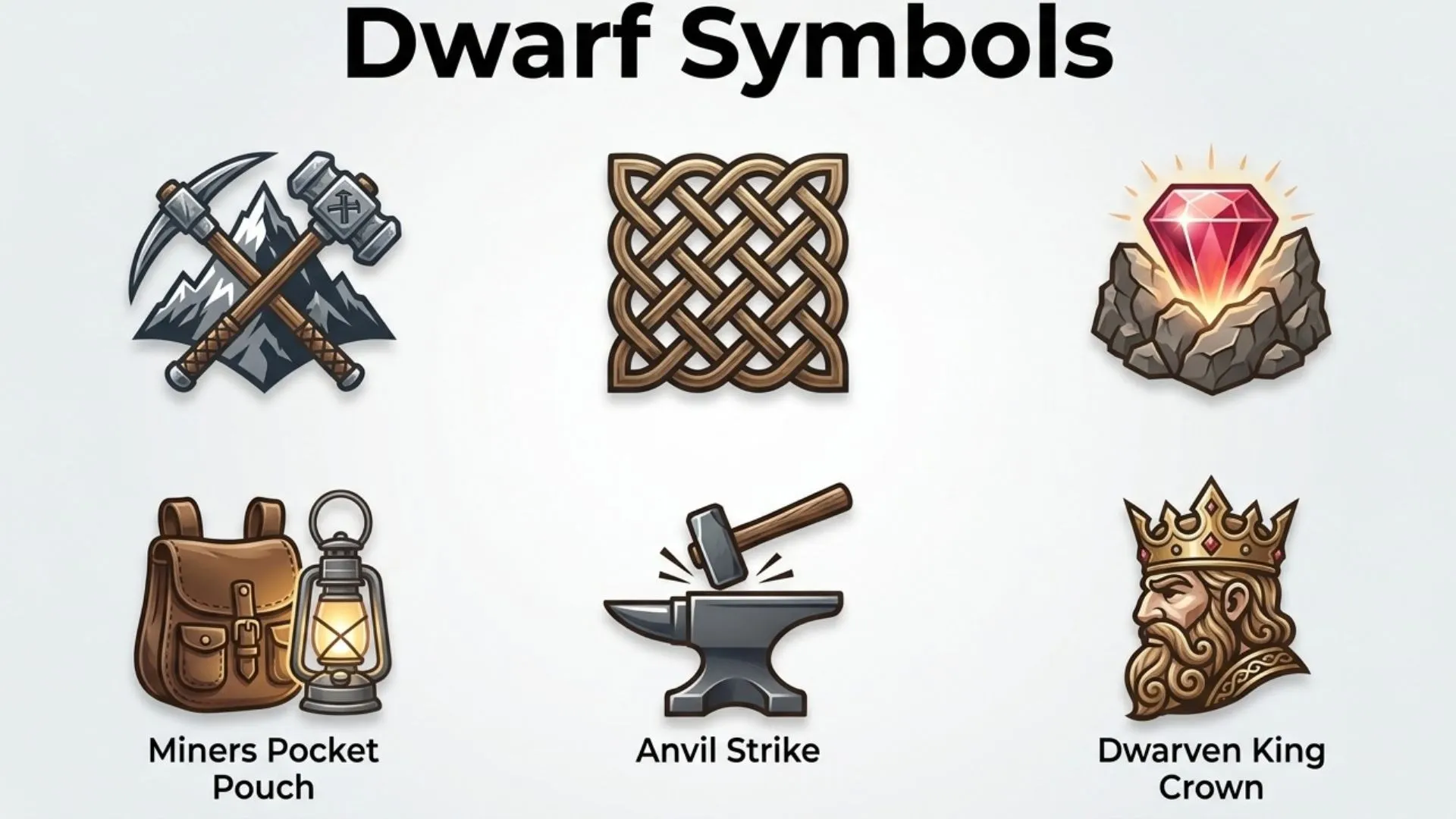
Dwarf symbols have fascinated people for centuries through mythology, folklore, fantasy literature, and cultural traditions. Although dwarfs are often portrayed as skilled craftsmen, fearless warriors, and guardians of hidden treasures, the symbols associated with them carry much deeper meanings than their physical appearance alone. These symbolic representations reflect wisdom, resilience, craftsmanship, protection, perseverance, and a profound connection to the earth.
From Norse mythology and Germanic legends to modern fantasy worlds, dwarf symbols appear in artwork, jewelry, runic inscriptions, architecture, literature, and digital media. Some are ancient signs with historical symbolism, while others have evolved into decorative symbols and icons recognized by contemporary audiences.
This comprehensive guide explores the meaning of dwarf symbols, their origins, cultural significance, common variations, and how they continue to influence modern art, storytelling, and design.
Dwarf Symbols (Meaning and Overview)
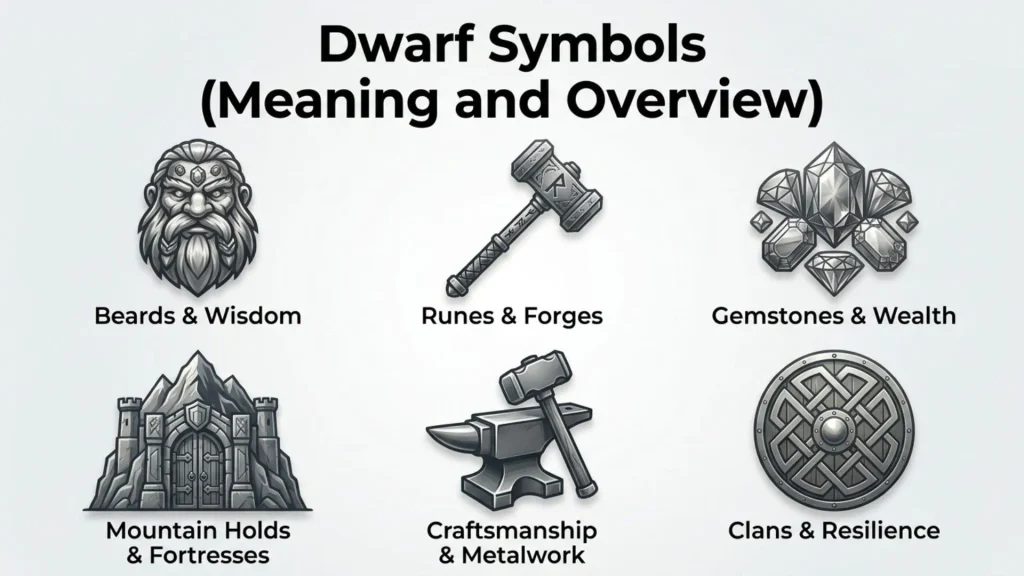
Dwarf symbols are visual representations, signs, icons, or symbolic characters associated with dwarfs in mythology, folklore, and fantasy traditions. Rather than representing a single image, the term encompasses numerous symbols linked to the characteristics traditionally attributed to dwarfs.
Common meanings include:
- Strength through determination
- Skilled craftsmanship
- Wisdom gained through experience
- Protection of valuable treasures
- Loyalty and honor
- Endurance during hardship
- Connection to mountains and the underground world
- Prosperity through hard work
These symbols often combine natural elements such as stone, metal, mountains, hammers, anvils, and ancient runes, emphasizing the close relationship between dwarfs and the earth.
History and Origin
The origins of dwarf symbols date back to ancient European mythology, particularly Norse and Germanic traditions.
Norse Mythology
In Norse mythology, dwarfs were master blacksmiths created from the earth. They crafted legendary objects for the gods, including magical weapons, enchanted jewelry, and powerful artifacts.
Because of these stories, symbols connected to forging, mining, and craftsmanship became closely associated with dwarfs.
Germanic Folklore
Germanic legends portrayed dwarfs as wise beings living inside mountains filled with precious metals and gemstones. Their symbols reflected wealth, hidden knowledge, and guardianship over natural resources.
Medieval Europe
During the Middle Ages, dwarfs appeared in fairy tales and folklore as magical beings possessing secret wisdom. Artistic depictions frequently included tools, lanterns, keys, and mining equipment as symbolic representations.
Modern Fantasy
Authors and game designers expanded dwarf symbolism by introducing clan emblems, runic alphabets, decorative shields, and unique typography symbols. Today, many fantasy franchises feature original dwarf icons inspired by ancient mythology.
Types of Dwarf Symbols
Hammer
The hammer is perhaps the best-known dwarf symbol.
It represents:
- Craftsmanship
- Hard work
- Strength
- Creation
- Determination
Master blacksmiths use hammers to transform raw materials into valuable objects, making this symbol a powerful representation of skill and perseverance.
Anvil
An anvil symbolizes:
- Precision
- Creativity
- Endurance
- Industrial mastery
It often appears alongside hammers in fantasy artwork.
Pickaxe
The pickaxe represents:
- Mining
- Discovery
- Resourcefulness
- Dedication
It reflects dwarfs’ legendary ability to uncover hidden treasures beneath mountains.
Mountain
Mountains symbolize:
- Stability
- Permanence
- Protection
- Ancient wisdom
Many dwarf kingdoms are traditionally located beneath towering mountain ranges.
Treasure Chest
Treasure chests symbolize:
- Wealth
- Hidden knowledge
- Prosperity
- Reward through effort
Unlike symbols of greed, dwarf treasures often represent earned success.
Runes and Dwarf Symbolism
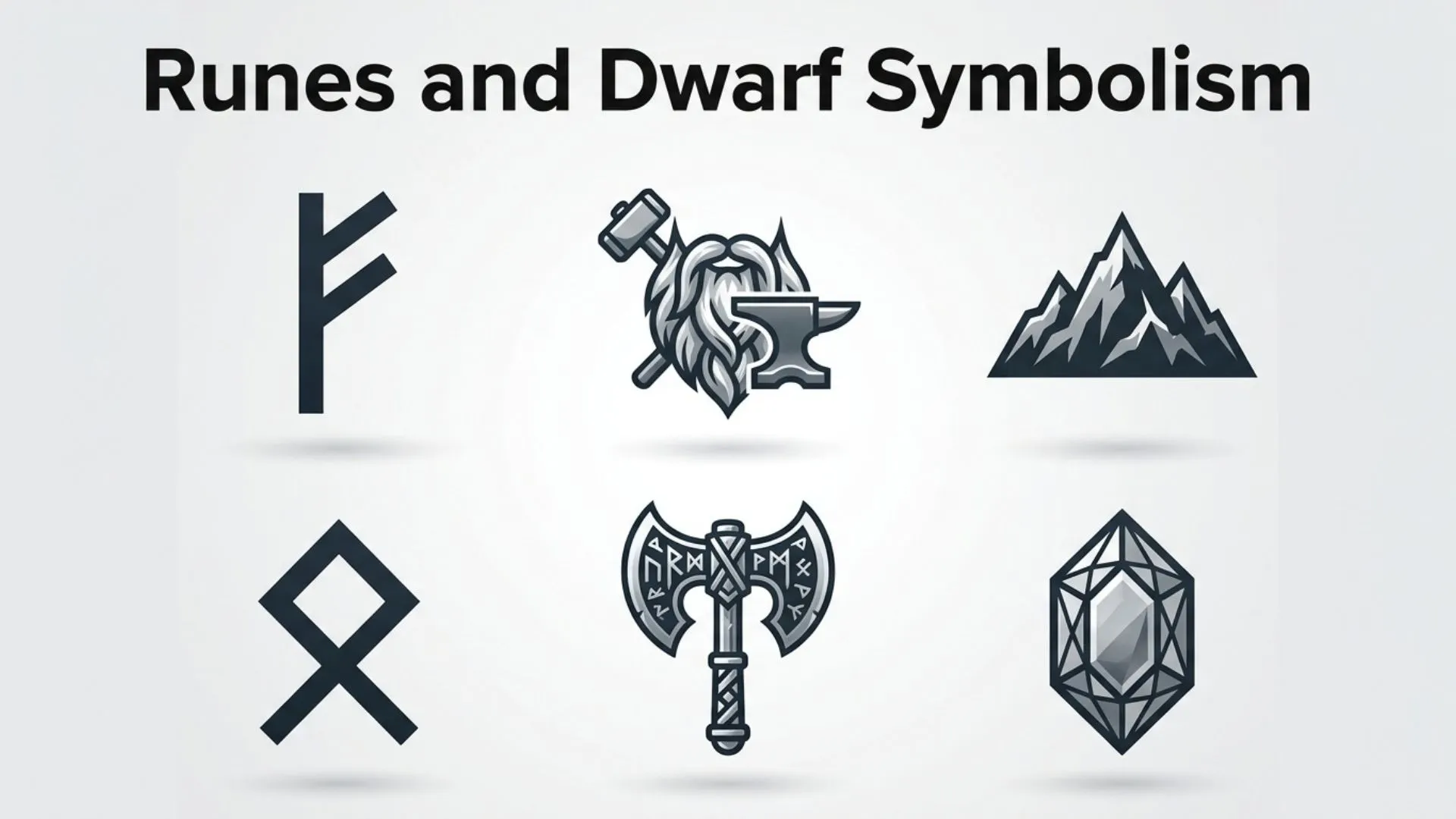
Runes are among the most recognizable dwarf-related symbols.
Elder Futhark Runes
Ancient runes served as both writing systems and symbolic characters. Several runes are associated with values admired in dwarf culture.
Examples include:
- Fehu – wealth and prosperity
- Uruz – strength
- Othala – heritage
- Eihwaz – endurance
- Tiwaz – honor and courage
Although runes historically belonged to Germanic peoples rather than dwarfs specifically, fantasy literature frequently portrays dwarfs as expert rune craftsmen.
Runic Engravings
Weapons, armor, and jewelry often feature engraved runes representing magical protection and ancestral heritage.
Clan Marks
Fantasy settings frequently use custom clan symbols inspired by geometric runic designs.
Symbols of Craftsmanship
Craftsmanship lies at the heart of dwarf identity.
Forge Fire
Fire symbolizes transformation, creativity, and innovation.
Metal Ingot
An ingot represents raw potential waiting to become something extraordinary.
Tongs
Blacksmith tongs symbolize precision and careful control.
Shield
A shield represents defense, loyalty, and responsibility toward one’s community.
Helmet
Traditional dwarf helmets symbolize courage, readiness, and resilience.
Nature-Inspired Dwarf Symbols
Nature plays an important role in dwarf symbolism.
Stone
Stone represents permanence, patience, and strength.
Crystal
Crystals symbolize hidden beauty beneath the surface.
Gems
Precious gemstones reflect wisdom earned through persistence.
Oak Tree
The oak symbolizes endurance and unwavering strength.
Cave
Caves represent mystery, protection, and hidden knowledge.
Dwarf Symbols in Fantasy Literature
Modern fantasy has expanded dwarf symbolism considerably.
Popular fictional dwarf symbols often include:
- Clan crests
- Royal crowns
- Crossed hammers
- Rune circles
- Stone gates
- Mountain emblems
- Battle axes
- Forge flames
These visual representations help distinguish families, kingdoms, and guilds while reinforcing themes of honor and tradition.
Common Uses and Applications
Dwarf symbols appear across many creative fields.
Common uses include:
- Fantasy novels
- Tabletop role-playing games
- Video games
- Board games
- Jewelry
- Tattoos
- Clothing designs
- Cosplay accessories
- Decorative carvings
- Fantasy maps
- Book illustrations
- Heraldry
- Digital artwork
- Game logos
- Clan banners
Artists often combine runes, mountains, and blacksmith tools to create distinctive dwarf-inspired designs.
Symbolism, Significance, and Importance
Dwarf symbols continue to resonate because they embody timeless values.
Hard Work
Nearly every dwarf symbol celebrates dedication and honest labor.
Wisdom
Dwarfs are traditionally portrayed as knowledgeable craftsmen whose expertise comes through experience rather than magic alone.
Loyalty
Clan symbols often emphasize commitment to family and community.
Protection
Weapons, shields, and mountain fortresses symbolize safeguarding people and treasured possessions.
Creativity
Forging represents transforming ordinary materials into extraordinary creations.
Heritage
Many dwarf symbols celebrate ancestry, tradition, and respect for previous generations.
How to Use Dwarf Symbols
Dwarf symbols are commonly used in artistic and creative projects.
Fantasy Artwork
Illustrators use runes, anvils, and mountain icons to establish dwarf-inspired settings.
Tattoos
Popular tattoo designs include crossed hammers, runes, mountain peaks, or forge symbols representing resilience and craftsmanship.
Jewelry
Pendant necklaces and rings often feature engraved runes or clan emblems.
Game Design
Role-playing games frequently use dwarf icons to identify races, professions, or kingdoms.
Home Décor
Decorative symbols inspired by blacksmithing and Norse mythology complement rustic or medieval-inspired interiors.
Interesting Facts
- Dwarfs in Norse mythology created many legendary magical treasures for the gods.
- The hammer remains the most widely recognized dwarf symbol worldwide.
- Many fantasy rune systems are inspired by the historical Elder Futhark alphabet.
- Modern video games have popularized dwarf clan symbols and mountain emblems.
- Ancient blacksmiths were often viewed with deep respect because metalworking was considered almost magical.
- Some fantasy languages include unique typography symbols to represent dwarf writing systems.
- Decorative dwarf icons frequently combine geometric shapes with natural stone motifs.
- The connection between dwarfs and underground kingdoms originates from ancient European folklore.
Common Mistakes or Misconceptions
Dwarf Symbols Are Historically Identical
Different myths, cultures, and fantasy settings use different symbolic representations.
Every Rune Is a Dwarf Symbol
Runes originated as historical writing systems used by Germanic peoples. Their association with dwarfs largely comes from mythology and fantasy literature.
Dwarf Symbols Always Represent Wealth
Although treasure is common in dwarf legends, many symbols focus on craftsmanship, honor, perseverance, and wisdom rather than riches.
All Fantasy Dwarfs Share the Same Symbols
Every fictional universe may introduce unique clan signs, decorative symbols, and visual representations.
Dwarf Symbols Are Religious
Most dwarf symbols originate from mythology, folklore, or fantasy traditions rather than organized religion.
Frequently Asked Questions
What is the most common dwarf symbol?
The hammer is the most recognizable dwarf symbol because it represents craftsmanship, strength, determination, and skilled metalworking.
Are dwarf symbols based on real history?
Many are inspired by Norse mythology, Germanic folklore, and historical blacksmith traditions, while others are modern fantasy creations.
Why are runes connected with dwarfs?
Fantasy stories often portray dwarfs as expert rune carvers, although historical runes belonged to ancient Germanic cultures.
What do mountains symbolize in dwarf culture?
Mountains represent protection, stability, wisdom, endurance, and the legendary underground homes of dwarfs.
Can dwarf symbols be used in tattoos?
Yes. Hammers, anvils, mountains, runes, and clan emblems are popular tattoo designs symbolizing resilience, creativity, and heritage.
Are dwarf symbols used in modern media?
Absolutely. They appear extensively in fantasy books, films, tabletop games, video games, artwork, and collectibles.
Do dwarf symbols have Unicode characters?
There is no official Unicode symbol dedicated specifically to dwarfs. Instead, related digital characters such as hammers, mountains, axes, and runic Unicode symbols are often used as symbolic representations in digital communication.
Conclusion
Dwarf symbols are far more than decorative icons from fantasy stories. They embody enduring values such as hard work, resilience, wisdom, craftsmanship, loyalty, and respect for tradition. Rooted in Norse mythology and European folklore, these symbolic representations have evolved into powerful visual motifs used throughout literature, gaming, jewelry, tattoos, and digital art.
Whether represented by a hammer, anvil, mountain, rune, or forge, each dwarf symbol tells a story about perseverance, creativity, and the rewards of dedication. Understanding their historical symbolism and cultural meaning offers a deeper appreciation of one of mythology’s most enduring traditions while inspiring modern artistic and creative expression.

Daniel Carter is a writer and researcher focused on symbols, their meanings, origins, and practical uses. He enjoys turning complex symbolic concepts into simple, easy-to-understand explanations for everyday readers. Through his work, Daniel explores cultural, technical, historical, and commonly used symbols, helping readers understand what they mean and where they are used.
His work includes The Complete Guide to Symbols, Understanding Symbols and Their Meanings, and A Visual Guide to Common Symbols.