
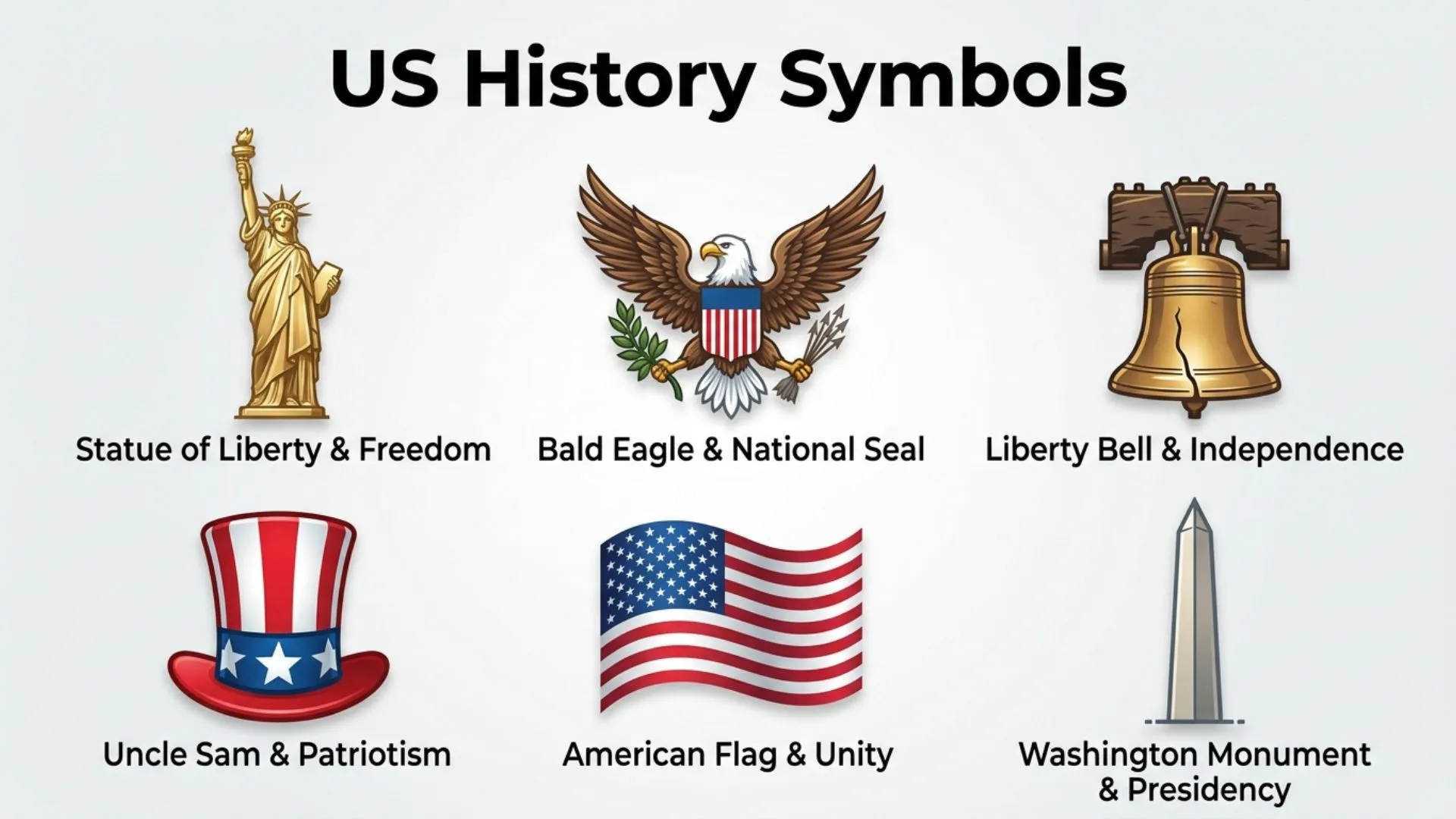
The United States has a rich history shaped by revolution, democracy, cultural diversity, innovation, and national resilience. Throughout that history, a wide range of US history symbols have emerged to represent the nation’s ideals, struggles, victories, and identity. These symbols appear in government buildings, schools, museums, currency, military ceremonies, monuments, and everyday life. More than simple images, they are powerful visual representations of American values and historical events.
From the Stars and Stripes to the Bald Eagle and the Liberty Bell, each symbol tells a story about the country’s past and the principles upon which it was built. Some symbols originated during the American Revolution, while others became iconic through legislation, historical events, or cultural tradition.
This comprehensive guide explores the most important US history symbols, their meanings, origins, symbolism, modern usage, and lasting significance. Whether you’re a student, educator, history enthusiast, or simply curious about American heritage, this article provides an in-depth look at the icons that have shaped the nation’s identity.
US History Symbols (Meaning and Overview)
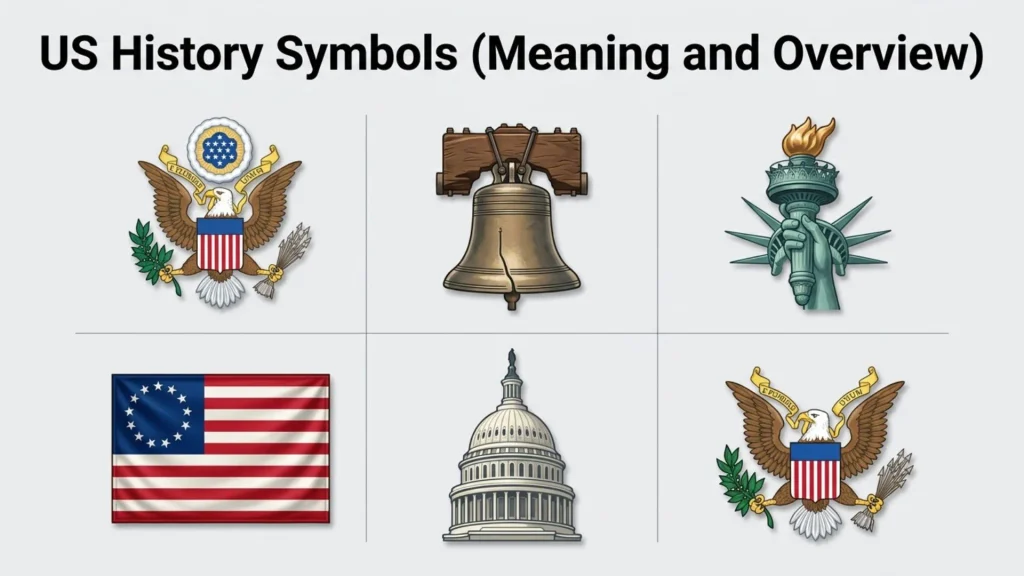
US history symbols are visual signs, emblems, monuments, objects, and national icons that represent important aspects of American history and culture. These symbols communicate ideas such as liberty, independence, democracy, justice, courage, equality, and national unity.
Many historical symbols serve as communication symbols that help people understand the country’s values without using words. They are found on official government documents, military insignia, educational materials, currency, monuments, and public spaces.
Some US history symbols are officially recognized by the federal government, while others have become widely accepted through tradition and cultural meaning.
Common examples include:
- The American flag
- The Bald Eagle
- The Liberty Bell
- The Great Seal of the United States
- The Statue of Liberty
- Uncle Sam
- The White House
- The U.S. Capitol
- Mount Rushmore
- The Washington Monument
Together, these icons create a powerful symbolic representation of America’s history and national identity.
History and Origin
Many US history symbols date back to the founding of the United States in the late eighteenth century. During the American Revolution, leaders needed symbols that represented independence from Great Britain and reflected the ideals of a new republic.
The Declaration of Independence in 1776 inspired the creation of several national symbols, including the American flag and the Great Seal. As the nation expanded, additional symbols emerged through major historical events such as the Civil War, westward expansion, immigration, industrialization, and the Civil Rights Movement.
Immigration also influenced American symbolism by introducing cultural traditions that blended with existing national icons. Over time, monuments, patriotic imagery, and government emblems became recognizable throughout the world.
Today, US history symbols continue to evolve while preserving their traditional meaning and historical symbolism.
Types of US History Symbols
National Symbols
These symbols officially represent the United States.
Examples include:
- American flag
- Bald Eagle
- Great Seal
- National Motto
- National Anthem
They appear on official documents, government buildings, passports, and military uniforms.
Historical Monuments
Certain landmarks symbolize major events and national achievements.
Examples include:
- Statue of Liberty
- Washington Monument
- Mount Rushmore
- Lincoln Memorial
- Independence Hall
These landmarks preserve American history while attracting millions of visitors annually.
Patriotic Symbols
Patriotic symbols encourage national pride and unity.
Examples include:
- Uncle Sam
- Liberty Torch
- Betsy Ross Flag
- Minute Man
- Liberty Tree
They frequently appear during national holidays and commemorative events.
Government Symbols
Government institutions themselves have become recognizable icons.
These include:
- White House
- U.S. Capitol
- Supreme Court Building
- Presidential Seal
They represent democracy, leadership, and constitutional government.
The American Flag
The American flag, often called the Stars and Stripes, is perhaps the most recognizable US history symbol.
Symbol Meaning
The flag consists of thirteen red and white stripes representing the original thirteen colonies.
Its fifty stars symbolize the fifty states.
The colors traditionally represent:
- Red – Valor and courage
- White – Purity and innocence
- Blue – Vigilance, perseverance, and justice
Historical Importance
Since its adoption in 1777, the flag has symbolized freedom, unity, sacrifice, and national identity.
It is displayed during holidays, military ceremonies, sporting events, schools, and government functions.
The Bald Eagle
The Bald Eagle became the national bird of the United States in 1782.
Why It Was Chosen
Founding leaders admired the eagle’s:
- Strength
- Independence
- Courage
- Freedom
- Majestic appearance
The bird appears prominently on the Great Seal of the United States.
Today, it remains one of America’s strongest visual representations of liberty.
The Great Seal of the United States
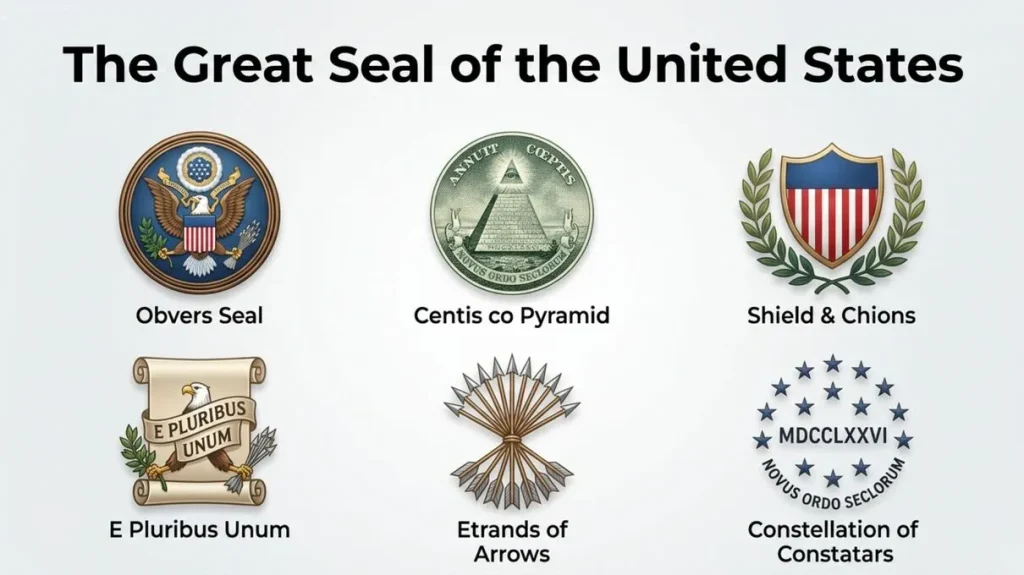
The Great Seal serves as the official emblem of the federal government.
Symbolic Elements
The seal contains several meaningful features:
- Bald Eagle
- Olive branch representing peace
- Arrows symbolizing defense
- Shield representing unity
- Thirteen stars
- Thirteen stripes
- Latin motto “E Pluribus Unum,” meaning “Out of Many, One”
Every element carries symbolic significance connected to the nation’s founding ideals.
The Statue of Liberty
Gifted by France in 1886, the Statue of Liberty stands in New York Harbor.
Symbol Meaning
Lady Liberty represents:
- Freedom
- Democracy
- Hope
- Opportunity
- Immigration
Millions of immigrants first saw the statue upon arriving in America, making it a lasting icon of new beginnings.
The torch symbolizes enlightenment, while the broken chains at her feet represent liberation from oppression.
The Liberty Bell
Located in Philadelphia, the Liberty Bell is closely associated with American independence.
Although historians debate whether it rang on July 4, 1776, it has become a lasting symbol of liberty and equal rights.
Its famous crack has not diminished its symbolic importance.
Throughout history, abolitionists, suffragists, and civil rights advocates embraced the Liberty Bell as a sign of freedom and justice.
Uncle Sam
Uncle Sam is the personification of the United States government.
Typically illustrated as an elderly man wearing patriotic clothing, he became famous through military recruitment posters during World War I.
Today, Uncle Sam represents:
- Patriotism
- National service
- Government authority
- American identity
The White House
The White House symbolizes the executive branch of the federal government.
Since 1800, it has served as the official residence of every U.S. president except George Washington.
Beyond being a building, it represents:
- Leadership
- Democracy
- Executive authority
- National decision-making
The U.S. Capitol
The Capitol Building houses Congress, where laws are debated and passed.
Its iconic dome has become one of the most recognizable architectural symbols in America.
It represents:
- Representative government
- Democracy
- Constitutional law
- Civic participation
Mount Rushmore
Mount Rushmore features sculptures of four influential presidents:
- George Washington
- Thomas Jefferson
- Theodore Roosevelt
- Abraham Lincoln
Together, they symbolize:
- Nation-building
- Expansion
- Preservation
- Leadership
The monument reflects different chapters of American history.
The Washington Monument
Completed in 1884, the Washington Monument honors the nation’s first president.
The towering obelisk symbolizes:
- Leadership
- Independence
- National unity
- Gratitude
It remains one of Washington, D.C.’s most recognizable landmarks.
The National Motto
“In God We Trust” became the official national motto in 1956.
Today, it appears on:
- Coins
- Paper currency
- Government buildings
It reflects historical traditions while remaining a familiar element of American public life.
Common Uses and Applications
US history symbols appear throughout American society.
Common applications include:
- Schools and classrooms
- Museums
- Government publications
- National holidays
- Memorial ceremonies
- Military uniforms
- Passports
- Coins and currency
- Postage stamps
- Educational textbooks
- Historical documentaries
- Civic celebrations
Many also appear as decorative symbols in artwork, souvenirs, educational posters, and historical exhibits.
Digital communication increasingly incorporates patriotic emoji and text symbols alongside these traditional icons during national celebrations.
Symbolism, Significance, and Importance
US history symbols preserve collective memory and help communicate the nation’s values across generations.
They represent:
- Liberty
- Democracy
- Equality
- Justice
- Courage
- National unity
- Sacrifice
- Freedom
- Hope
Their symbolic representation encourages civic education while reminding citizens of important historical events and constitutional principles.
These symbols also foster a shared national identity despite America’s cultural diversity.
How to Use US History Symbols
When using historical symbols, context and respect are essential.
Consider these best practices:
Use Accurate Historical Information
Understand each symbol’s origin before including it in educational or creative projects.
Follow Flag Etiquette
The American flag has established guidelines regarding display and handling.
Distinguish Official and Cultural Symbols
Not every patriotic image is an official national emblem.
Use Symbols Responsibly
Historical icons should be presented accurately to preserve their meaning and educational value.
Interesting Facts
The Bald Eagle Was Nearly Replaced
Benjamin Franklin famously preferred the wild turkey, although the Bald Eagle ultimately became the national bird.
The Flag Has Changed Multiple Times
The American flag has been redesigned 27 times as new states joined the Union.
The Statue of Liberty Was Originally Brown
It developed its green color naturally through copper oxidation.
The Liberty Bell Has Not Rung Publicly Since 1846
Its famous crack prevented further regular use.
Mount Rushmore Was Never Fully Completed
Original plans included carvings extending beyond the presidents’ faces.
The Great Seal Uses the Number Thirteen Repeatedly
Thirteen stars, arrows, leaves, olives, stripes, and letters represent the original colonies.
Common Mistakes and Misconceptions
Thinking Every Patriotic Symbol Is Official
Some symbols, such as Uncle Sam, became popular through tradition rather than official legislation.
Assuming the Liberty Bell Rang on Independence Day
Historical evidence remains inconclusive.
Believing the Bald Eagle Represents Only Military Strength
It primarily symbolizes freedom, independence, and national sovereignty.
Confusing the Great Seal with the Presidential Seal
They are different official emblems with distinct purposes.
Assuming Historical Symbols Never Change
Some national symbols evolve in meaning as society changes while retaining their historical roots.
Frequently Asked Questions
What is the most important US history symbol?
The American flag is generally considered the nation’s most recognizable historical symbol because it represents freedom, unity, and the country’s founding principles.
Why is the Bald Eagle America’s national symbol?
It was chosen in 1782 because it represents strength, courage, independence, and freedom.
What does the Liberty Bell symbolize?
The Liberty Bell symbolizes independence, liberty, justice, and equal rights.
Is the Statue of Liberty an official national symbol?
Although not designated as the official national symbol, it is one of America’s most recognizable icons of freedom and democracy.
Why are there thirteen stripes on the American flag?
The thirteen stripes honor the original thirteen colonies that declared independence from Great Britain.
What is the purpose of the Great Seal?
The Great Seal authenticates official federal documents and represents the authority and identity of the United States government.
Which monument best represents American democracy?
Many historians consider the U.S. Capitol to be the strongest architectural symbol of American democracy because it houses the legislative branch of government.
Conclusion
US history symbols are far more than patriotic images they are enduring reminders of the nation’s journey, ideals, and achievements. From the Stars and Stripes and the Bald Eagle to the Liberty Bell, Statue of Liberty, and Great Seal, each symbol reflects a chapter in America’s story and the values that continue to shape its identity.
Understanding the meaning, history, and symbolism behind these icons deepens appreciation for the country’s heritage while encouraging informed civic engagement. Whether studied in classrooms, displayed at public ceremonies, or admired at historic landmarks, US history symbols continue to connect past generations with the present and inspire future generations to preserve the principles they represent.

Daniel Carter is a writer and researcher focused on symbols, their meanings, origins, and practical uses. He enjoys turning complex symbolic concepts into simple, easy-to-understand explanations for everyday readers. Through his work, Daniel explores cultural, technical, historical, and commonly used symbols, helping readers understand what they mean and where they are used.
His work includes The Complete Guide to Symbols, Understanding Symbols and Their Meanings, and A Visual Guide to Common Symbols.