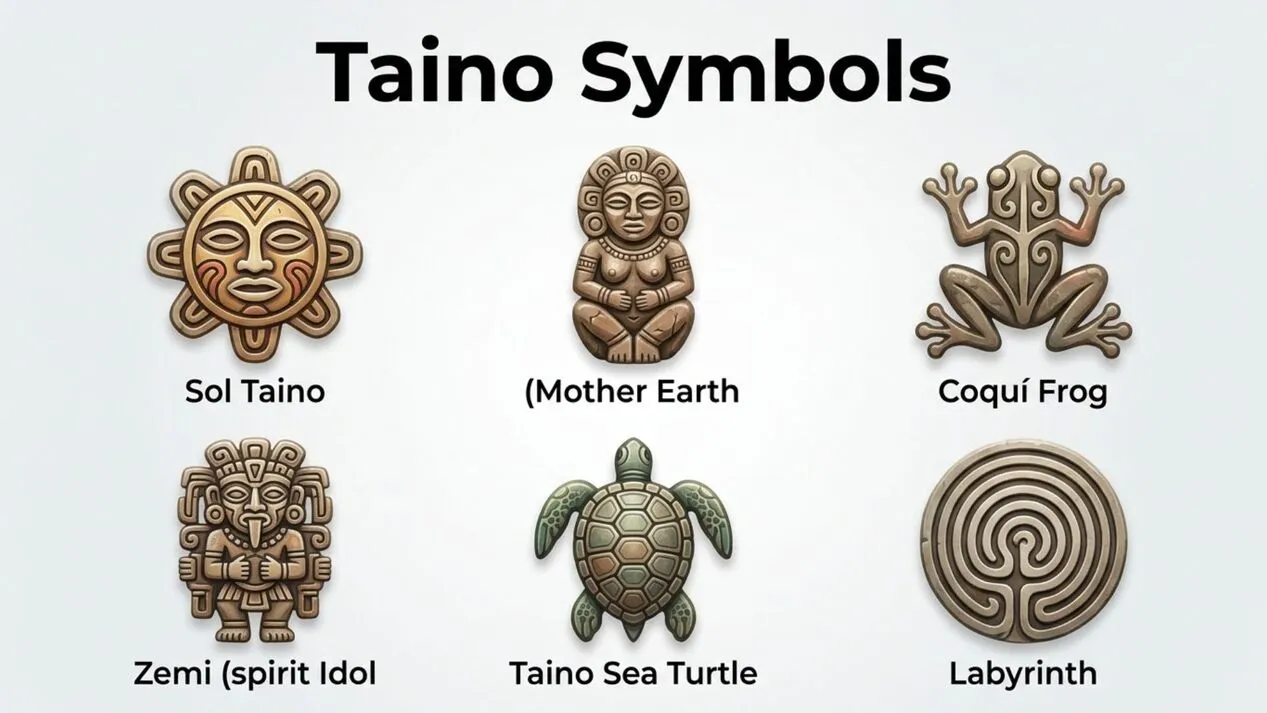
Taino symbols are among the most fascinating forms of Indigenous art and cultural expression in the Caribbean. These ancient designs served as more than decorative patterns; they reflected religious beliefs, natural forces, community values, and the spiritual worldview of the Taíno people. Today, these symbols continue to inspire artists, historians, tattoo enthusiasts, educators, and people seeking to reconnect with Caribbean heritage.
From the iconic coquí frog and the radiant sun to sacred cemí figures and spiral motifs, Taino symbols carry deep cultural meaning that has endured for centuries. They appear in cave art, pottery, stone carvings, jewelry, woodwork, and modern designs, preserving the legacy of one of the Caribbean’s earliest civilizations.
In this comprehensive guide, you’ll discover the origins of Taino symbols, their meanings, different categories, historical symbolism, modern applications, and the cultural importance they continue to hold today.
Taino Symbols (Meaning and Overview)
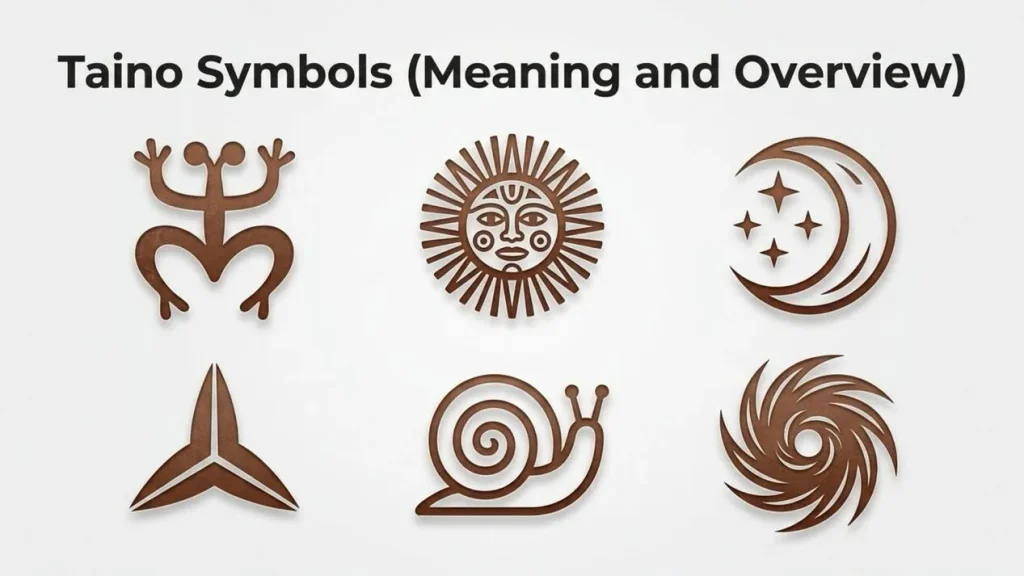
Taino symbols are visual representations used by the Taíno people, an Indigenous group that inhabited the Greater Antilles before European colonization. Their society flourished across present-day Puerto Rico, the Dominican Republic, Haiti, Cuba, Jamaica, and parts of the Bahamas.
Rather than functioning as a written language, these symbols communicated religious beliefs, social identity, tribal traditions, and observations of the natural world. Every icon, carving, or geometric design carried symbolic significance that reflected the Taíno understanding of life, nature, and the spiritual realm.
Many Taino symbols represented:
- The sun and moon
- Fertility and agriculture
- Animals and nature
- Ancestral spirits
- Protective deities
- Harmony and balance
- Leadership and authority
Today, these ancient designs remain recognizable as powerful communication symbols that celebrate Caribbean Indigenous heritage.
History and Origin
The Taíno people descended from Arawakan-speaking communities that migrated from South America into the Caribbean thousands of years ago. By the time Christopher Columbus arrived in 1492, the Taíno had established thriving communities throughout the islands.
Religion played a central role in daily life. The Taíno believed that spirits called cemís influenced weather, harvests, health, and human destiny. As a result, symbolic representation became an essential part of ceremonies, storytelling, and artistic expression.
Many symbols were carved into:
- Cave walls
- Stone sculptures
- Wooden idols
- Ceremonial seats
- Pottery
- Jewelry
- Shell ornaments
- Bone carvings
Although much of Taíno culture suffered after European colonization due to disease, forced labor, and cultural suppression, archaeological discoveries have preserved numerous examples of their artistic traditions.
Today, museums and researchers continue studying these symbols to better understand Taíno beliefs and daily life.
Types and Categories of Taino Symbols
Taino symbols generally fall into several categories based on their purpose and meaning.
Spiritual Symbols
These symbols represented supernatural beings, protective spirits, and sacred forces.
Examples include:
- Cemí figures
- Ancestor carvings
- Sacred faces
- Ritual masks
Nature Symbols
Nature inspired many Taino designs because the environment was viewed as sacred.
Common examples include:
- Sun
- Moon
- Frog
- Turtle
- Bird
- Fish
- Tree
- Mountains
Geometric Symbols
Geometric designs served both decorative and symbolic purposes.
Examples include:
- Spirals
- Circles
- Zigzags
- Concentric patterns
- Cross-like motifs
Ceremonial Symbols
Certain carvings appeared exclusively during rituals and religious ceremonies.
These included:
- Stone collars
- Ceremonial stools (duhos)
- Ritual staffs
- Sacred amulets
The Sun Symbol
Among all Taino symbols, the sun is perhaps the most recognized.
The sun represented:
- Life
- Creation
- Energy
- Growth
- Divine power
Many stone carvings feature circular faces with rays extending outward. These visual representations celebrated the sun’s importance in agriculture and daily survival.
Modern artists frequently incorporate the Taino sun symbol into logos, tattoos, jewelry, and decorative artwork as a tribute to Caribbean identity.
The Coquí Frog Symbol
Although the coquí frog is especially associated with Puerto Rico today, frog imagery also held symbolic importance for the Taíno.
The frog represented:
- Fertility
- Rain
- Renewal
- Prosperity
- New beginnings
Because frogs emerge during rainy seasons, they naturally became connected with successful harvests and agricultural abundance.
Today, the frog remains one of the most beloved Taino-inspired icons in Caribbean art.
The Cemí Symbol
A cemí was far more than a simple carving.
It represented a spiritual being or deity believed to possess supernatural power. Cemís could take human, animal, or hybrid forms and were crafted from:
- Stone
- Wood
- Shell
- Cotton
- Bone
Families and tribal leaders often kept cemí figures for protection, guidance, and communication with spiritual forces.
These sacred objects symbolized the close relationship between humans, ancestors, and nature.
The Spiral Symbol
The spiral is one of the oldest symbols found across many ancient cultures, including the Taíno.
Its symbolic meaning includes:
- The cycle of life
- Continuous growth
- Spiritual evolution
- Natural movement
- Eternal existence
The spiral appears frequently in cave art and carved stones, demonstrating its importance in Taíno philosophy.
The Turtle Symbol
The turtle symbol represented patience, endurance, stability, and longevity.
Because turtles move steadily and live long lives, they became symbols of resilience and wisdom.
Some researchers also associate turtle imagery with creation stories and connections between land and sea.
Modern Caribbean artists continue using turtle symbols to celebrate environmental conservation and Indigenous traditions.
The Bird Symbol
Birds occupied an important place in Taíno mythology.
Different bird species symbolized:
- Freedom
- Spiritual guidance
- Communication with the heavens
- Protection
- Vision
Bird imagery often appeared on ceremonial objects and personal ornaments worn during important events.
The Moon Symbol
The moon symbol complemented the sun in Taino cosmology.
It represented:
- Time
- Femininity
- Cycles
- Balance
- Night
- Renewal
Together, the sun and moon reflected harmony between opposing natural forces.
Petroglyphs and Cave Symbols
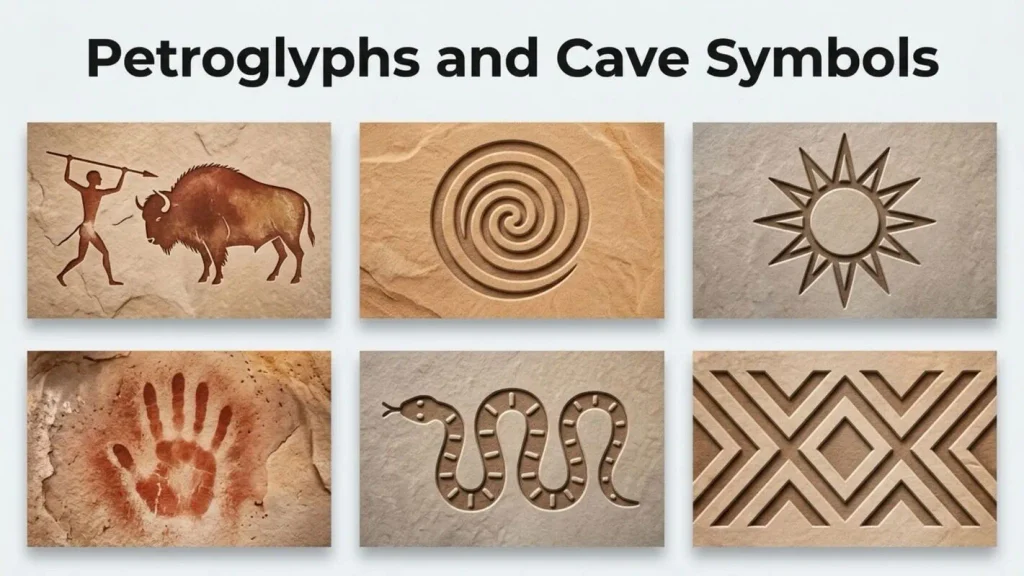
Some of the best-preserved Taino symbols survive as petroglyphs carved into cave walls and river stones.
These ancient carvings often include:
- Human faces
- Animal figures
- Spirals
- Circular patterns
- Sacred masks
- Abstract geometric signs
Many caves were considered sacred spaces where ceremonies, rituals, and spiritual gatherings occurred.
These petroglyphs provide valuable insight into Taíno religious beliefs and artistic traditions.
Common Uses and Applications
Although ancient Taíno civilization no longer exists as it once did, its symbols continue to influence modern culture.
Today, Taino symbols appear in:
Tattoos
Many people choose Taino-inspired tattoos to honor Caribbean ancestry and Indigenous heritage.
Jewelry
Necklaces, bracelets, earrings, and pendants often feature the sun, frog, turtle, or cemí designs.
Home Decoration
Decorative symbols appear on:
- Wall art
- Pottery
- Wood carvings
- Sculptures
- Textiles
Educational Materials
Schools, museums, and cultural centers use Taino symbols to teach Caribbean history.
Graphic Design
Modern designers incorporate these icons into:
- Logos
- Cultural festivals
- Tourism branding
- Educational publications
Unlike a Unicode symbol, text symbol, typography symbol, or digital character used in computing, Taino symbols are artistic and cultural designs rooted in history rather than standardized characters for keyboards or software.
Symbolism, Significance, and Importance
The lasting importance of Taino symbols extends far beyond their artistic beauty.
They represent:
- Indigenous resilience
- Caribbean identity
- Cultural preservation
- Respect for nature
- Spiritual connection
- Community values
- Historical continuity
For many descendants of Caribbean Indigenous peoples, these symbols provide a meaningful connection to ancestral traditions that survived despite centuries of colonization.
Their cultural meaning continues evolving while remaining rooted in traditional values.
How to Use Taino Symbols Respectfully
Because these symbols represent Indigenous heritage, they should be used thoughtfully.
Consider the following guidelines:
Learn Their Meaning
Understand the historical symbolism before displaying or wearing a symbol.
Respect Cultural Origins
Avoid treating sacred designs as merely fashionable decorations.
Support Indigenous Artists
Purchase authentic artwork from Caribbean artisans whenever possible.
Avoid Altering Sacred Designs
Some cemí figures and ceremonial symbols hold religious importance and should be reproduced respectfully.
Interesting Facts
- The Taíno had no alphabet similar to modern writing systems, so their symbols functioned primarily as artistic and spiritual communication symbols.
- Thousands of Taíno petroglyphs remain preserved throughout Puerto Rico, Cuba, Hispaniola, and other Caribbean islands.
- Many modern Puerto Rican cultural organizations incorporate Taino-inspired icons into their logos.
- Archaeologists continue discovering new carvings that improve our understanding of Taíno beliefs.
- The famous Taíno sun face has become one of the most recognizable Indigenous Caribbean symbols worldwide.
- Several symbols appear repeatedly across different islands, suggesting shared religious traditions among Taíno communities.
Common Mistakes or Misconceptions
Taino Symbols Are a Written Language
This is incorrect. While they communicate ideas, they do not function as a complete alphabet or writing system.
Every Symbol Has One Fixed Meaning
Many symbols carried multiple meanings depending on context, ceremony, and local traditions.
All Caribbean Indigenous Symbols Are Taino
The Caribbean was home to several Indigenous cultures, each with unique artistic traditions.
Every Modern Design Is Historically Authentic
Many contemporary designs are inspired by Taíno art but are not direct copies of archaeological artifacts.
Taino Culture Completely Disappeared
Although the original society changed dramatically after European contact, many descendants continue preserving Taíno traditions, history, and cultural identity today.
Frequently Asked Questions
What are Taino symbols?
Taino symbols are ancient artistic designs created by the Indigenous Taíno people to represent spiritual beliefs, nature, community values, and cultural traditions.
What is the most famous Taino symbol?
The sun symbol is widely considered the most recognizable Taino icon, representing life, creation, and divine energy.
What does the Taino frog symbol mean?
The frog symbolizes fertility, rain, prosperity, renewal, and successful harvests.
What is a cemí in Taíno culture?
A cemí is a sacred spiritual figure representing a deity or ancestral spirit believed to provide protection, guidance, and supernatural power.
Can anyone use Taino symbols?
Yes, but they should be used respectfully and with an understanding of their cultural and historical significance.
Are Taino symbols still used today?
Yes. They appear in tattoos, jewelry, artwork, educational materials, museums, cultural festivals, and heritage organizations throughout the Caribbean.
Are Taino symbols the same as Native American symbols?
No. While both belong to Indigenous cultures of the Americas, Taino symbols developed within the unique history, beliefs, and artistic traditions of the Caribbean.
Conclusion
Taino symbols offer a remarkable window into one of the Caribbean’s oldest Indigenous civilizations. More than decorative designs, they are meaningful visual representations of spirituality, nature, ancestry, leadership, and community. From the powerful sun icon and sacred cemí figures to spirals, turtles, frogs, and ancient petroglyphs, each symbol reflects a worldview rooted in harmony with the natural and spiritual worlds.
Today, these enduring symbols continue to inspire artists, educators, historians, and people reconnecting with their Caribbean heritage. By understanding their origins, traditional meaning, and symbolic significance, we help preserve the legacy of the Taíno people while appreciating the rich cultural history they left behind.

Daniel Carter is a writer and researcher focused on symbols, their meanings, origins, and practical uses. He enjoys turning complex symbolic concepts into simple, easy-to-understand explanations for everyday readers. Through his work, Daniel explores cultural, technical, historical, and commonly used symbols, helping readers understand what they mean and where they are used.
His work includes The Complete Guide to Symbols, Understanding Symbols and Their Meanings, and A Visual Guide to Common Symbols.