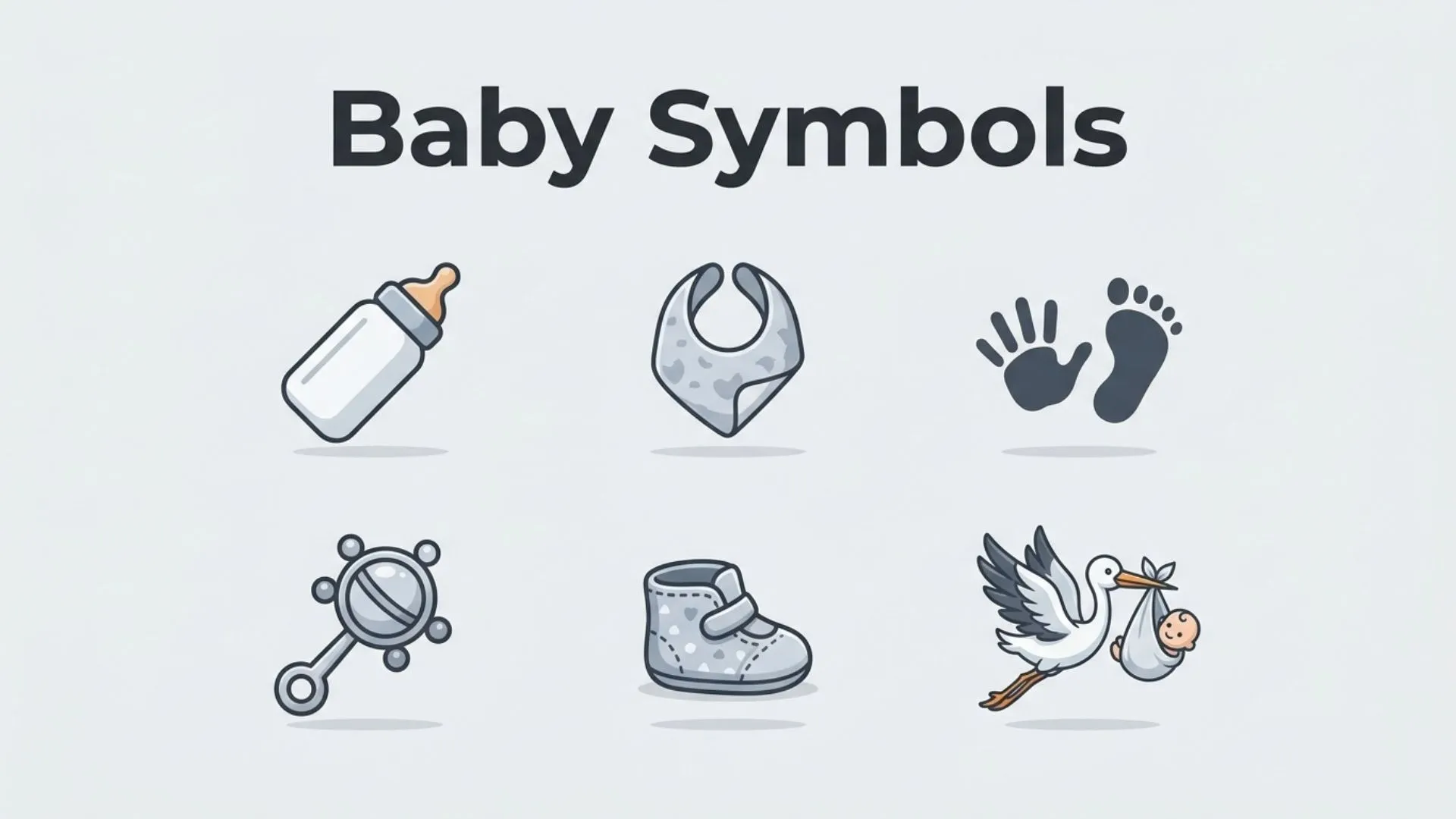
Baby symbols have been used across cultures, religions, and traditions for thousands of years to represent new life, innocence, hope, love, and fresh beginnings. Whether found in artwork, jewelry, literature, greeting cards, tattoos, or digital communication, these symbolic representations carry deep emotional and cultural meaning.
From the image of a stork carrying a baby to tiny footprints and baby angels, each symbol tells a story about birth, family, protection, and the promise of the future. Some baby symbols have ancient historical symbolism rooted in mythology, while others have become popular through modern usage and digital culture.
In this guide, you’ll discover the meaning of baby symbols, their history, popular types, cultural significance, practical uses, and fascinating facts. By the end, you’ll have a complete understanding of these meaningful icons and how they’re used around the world.
Baby Symbols (Meaning and Overview)
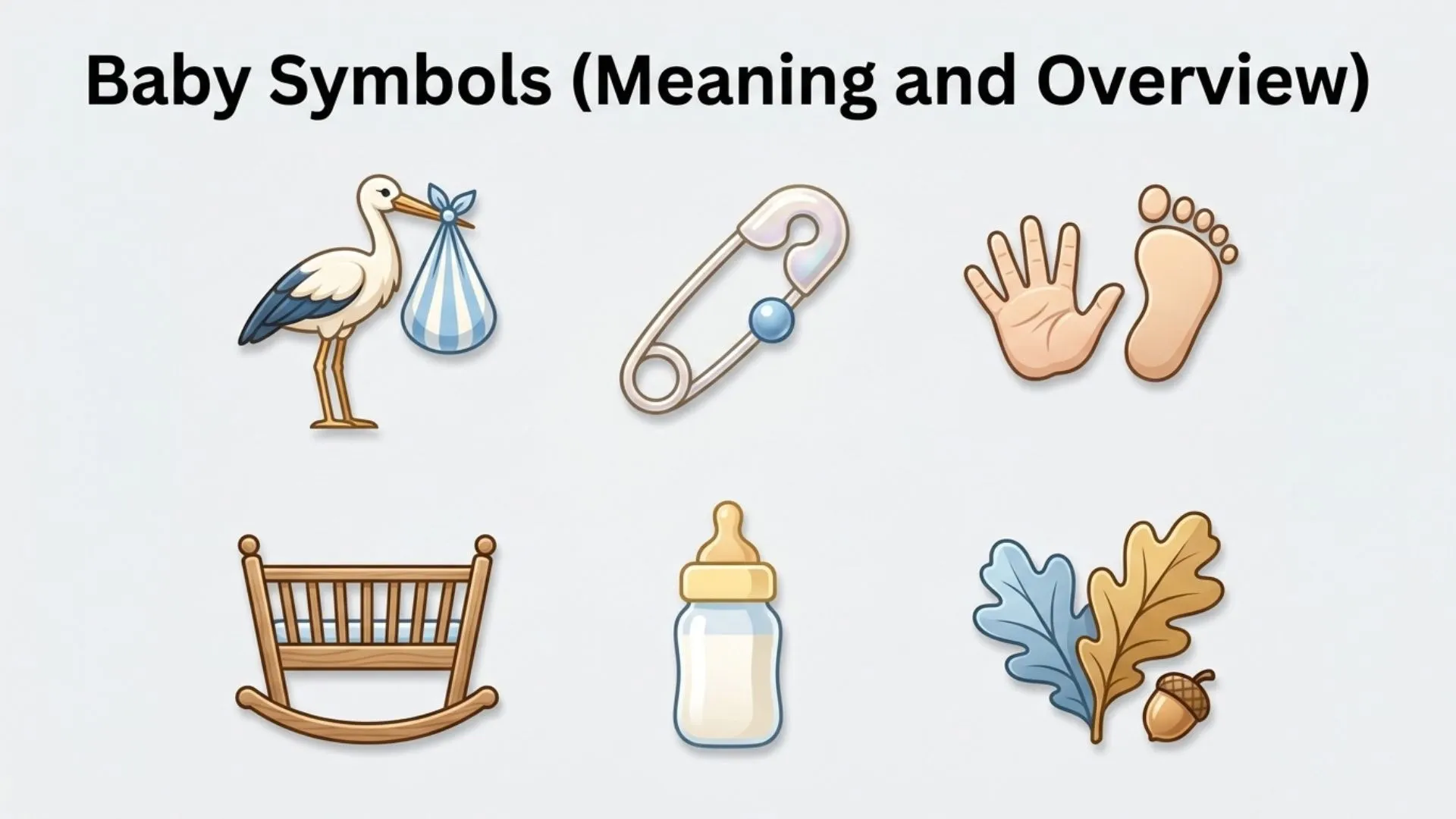
A baby symbol is any icon, sign, character, or visual representation associated with infancy, childbirth, childhood, fertility, nurturing, or the beginning of life. These symbols often communicate emotions that words cannot fully express.
The symbolic significance of baby symbols includes:
- New beginnings
- Innocence and purity
- Growth and development
- Family and love
- Hope for the future
- Protection and care
- Joy and celebration
Some baby symbols are universal, while others are unique to certain cultures or religions. Their meanings may vary depending on tradition, artistic style, or context.
Today, baby symbols appear in everything from nursery decorations and birth announcements to emojis, typography symbols, and decorative designs.
History and Origin
The history of baby symbols dates back to ancient civilizations where birth was considered sacred.
Ancient Egypt
Ancient Egyptians associated children with divine blessings. Images of mothers holding infants symbolized fertility, protection, and the continuation of family lineage. Gods connected with childbirth were often represented with symbolic characters and protective signs.
Ancient Greece and Rome
Greek and Roman mythology frequently depicted babies as representations of love, destiny, and divine intervention. Cupid, often shown as a winged baby, became one of history’s most recognizable baby icons.
Asian Traditions
Many Asian cultures use baby symbols to represent happiness, prosperity, and family continuity. Babies are often shown alongside lotus flowers, cranes, or peaches to symbolize longevity and blessings.
Medieval Europe
During the Middle Ages, baby imagery became closely connected with religious art. Paintings of infants often symbolized purity, divine grace, and spiritual renewal.
Modern Era
Today, baby symbols have expanded beyond religious and cultural settings into digital communication, branding, parenting resources, healthcare, and celebrations like baby showers and gender reveals.
Types of Baby Symbols
Baby Footprints
Baby footprints are among the most popular symbolic representations of new life.
They symbolize:
- Birth
- A child’s first journey
- Family love
- Precious memories
- Growth
Parents often preserve newborn footprints as lifelong keepsakes.
Baby Hands
Tiny baby hands represent:
- Trust
- Dependence
- Love
- Family bonds
- Human connection
This symbol is commonly seen in family photography and personalized gifts.
Baby Bottle
A baby bottle is a modern communication symbol representing:
- Infant care
- Feeding
- Parenting
- Newborn essentials
It is widely used in hospitals, childcare products, and digital icons.
Pacifier
Pacifiers symbolize:
- Comfort
- Childhood
- Soothing
- Infant care
They frequently appear in baby shower decorations and greeting cards.
Stork
The stork is perhaps the most famous baby symbol in Western culture.
According to folklore, storks deliver babies to families, making them a cheerful sign of childbirth and growing families.
Cradle
A cradle symbolizes:
- Safety
- Protection
- Family
- Peaceful childhood
Cradles are commonly featured in nursery themes and birth announcements.
Baby Angel
Baby angels symbolize:
- Divine protection
- Innocence
- Spiritual guidance
- Eternal love
They are often used in memorials, religious artwork, and decorative symbolism.
Baby Carriage
A baby carriage represents:
- Parenthood
- New family life
- Caregiving
- Child development
Its visual representation instantly communicates themes related to infants.
Animal Baby Symbols
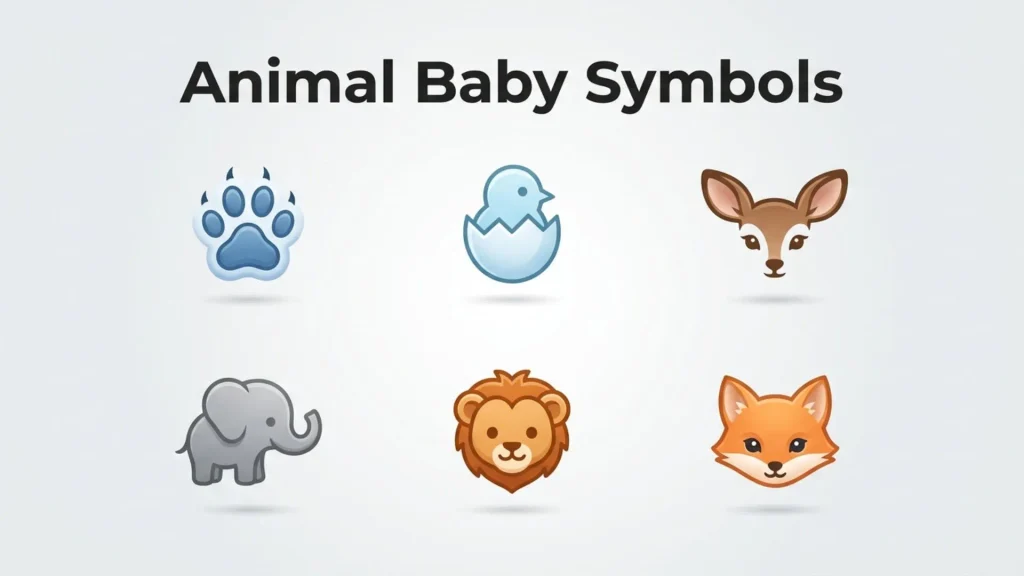
Animals are frequently associated with babies because they naturally represent nurturing and family care.
Stork
The legendary baby-delivering bird remains one of the strongest cultural symbols of childbirth.
Lamb
A lamb symbolizes:
- Purity
- Gentleness
- Innocence
- Peace
It is especially meaningful in religious symbolism.
Ducklings
Ducklings represent:
- Learning
- Family unity
- Protection
- Following guidance
Elephant Calf
Young elephants symbolize:
- Strong family relationships
- Loyalty
- Wisdom passed through generations
- Long-lasting bonds
Panda Cub
Panda cubs have become modern symbols of:
- Cuteness
- Protection
- Conservation
- Loving parenthood
Nature-Inspired Baby Symbols
Nature has always inspired symbolic meanings connected with birth and life.
Seeds
Seeds represent potential, future growth, and new beginnings.
Budding Flowers
Flower buds symbolize:
- Fresh life
- Youth
- Beauty
- Hope
Spring Season
Spring itself serves as a seasonal symbol of rebirth and renewal.
Butterflies
Although butterflies usually represent transformation, they can also symbolize the beautiful journey from infancy to maturity.
Rainbow
Rainbows often symbolize hope after difficult times and are especially meaningful for families welcoming a child after loss or infertility.
Religious and Spiritual Baby Symbols
Different faiths use baby symbols to express blessings, protection, and divine love.
Guardian Angels
Guardian angels symbolize heavenly protection over children.
Halo
A halo represents purity and innocence.
Dove
The dove symbolizes:
- Peace
- Spiritual blessing
- New beginnings
- Hope
Lotus Flower
In Eastern traditions, the lotus represents purity, spiritual growth, and life’s beautiful beginning.
Tree of Life
The Tree of Life symbolizes:
- Family heritage
- Growth
- Wisdom
- Future generations
Digital Baby Symbols and Unicode Characters
Modern communication increasingly relies on digital characters and emojis.
Popular baby-related Unicode symbols include:
- 👶 Baby
- 🍼 Baby Bottle
- 🚼 Baby Symbol
- 🧸 Teddy Bear
- 👣 Footprints
- 🩷 Pink Heart
- 💙 Blue Heart
- 🌸 Blossom
- 🌈 Rainbow
These text symbols appear in social media posts, parenting blogs, birth announcements, and messaging apps.
Although not every decorative symbol is technically a Unicode symbol designed specifically for babies, many have become widely accepted visual representations of infancy and celebration.
Baby Symbols in Different Cultures
Chinese Culture
Babies symbolize prosperity, happiness, and future success.
Japanese Culture
Children are viewed as blessings deserving protection, respect, and encouragement.
Native American Traditions
Many tribes connect babies with harmony, Mother Earth, and spiritual continuity.
African Traditions
Baby symbolism often emphasizes ancestry, community, and family unity.
Celtic Traditions
Babies are associated with sacred circles of life, protection, and nature’s endless cycle.
Common Uses and Applications
Baby symbols appear in countless everyday situations.
Common uses include:
- Birth announcements
- Baby shower invitations
- Nursery decorations
- Jewelry
- Family photo albums
- Personalized gifts
- Hospital maternity wards
- Greeting cards
- Children’s books
- Parenting websites
- Mobile apps
- Social media graphics
- Logos for childcare businesses
- Educational materials
Many companies also use baby icons as communication symbols to make products instantly recognizable.
Symbolism, Significance, and Importance
Baby symbols continue to hold emotional value because they communicate universal human experiences.
Their symbolic significance includes:
Hope
Every newborn represents the possibility of a better future.
Love
Baby symbols remind people of unconditional family love.
Growth
Children symbolize personal development and life’s ongoing journey.
Innocence
Babies are universally associated with purity and honesty.
Legacy
A child represents the continuation of family history and future generations.
These meanings make baby symbols timeless across cultures and generations.
How to Use Baby Symbols
Baby symbols can be used in meaningful and creative ways.
Birth Announcements
Add baby footprints, bottles, or baby emojis to announcements.
Nursery Design
Decorative symbols such as stars, moons, clouds, and cradles create comforting spaces.
Personalized Gifts
Engraving symbolic icons on jewelry or keepsakes adds sentimental value.
Scrapbooks
Use visual representations like footprints, hearts, and stars to highlight important milestones.
Digital Communication
Unicode symbols and emojis help celebrate births on social media and messaging platforms.
Tattoos
Some parents choose baby footprints, birth dates, or tiny handprints as permanent reminders of their children.
Interesting Facts
- The stork legend likely originated in Northern Europe centuries ago.
- Baby footprints have become one of the world’s most popular hospital keepsakes.
- The 👶 emoji is recognized across nearly every major smartphone platform.
- Teddy bears became associated with childhood during the early 1900s.
- Many cultures plant a tree to celebrate a baby’s birth.
- Ancient fertility symbols eventually evolved into modern baby icons used today.
- Baby-related decorative symbols are among the most common themes in greeting card design.
- Some hospitals digitally preserve newborn footprints instead of using ink.
Common Mistakes or Misconceptions
All Baby Symbols Mean the Same Thing
Different cultures assign different meanings to similar symbols.
The Stork Story Is Universal
Not every culture believes in the stork tradition. Many have unique birth legends of their own.
Emojis Replace Traditional Symbolism
Digital characters add convenience but rarely replace centuries of historical symbolism and cultural meaning.
Every Baby Icon Has Religious Meaning
Many baby symbols are entirely secular and simply celebrate childhood or family life.
Unicode Symbols Are the Same as Decorative Icons
Unicode symbols are standardized digital characters, while decorative icons may exist only as graphics or artwork.
Frequently Asked Questions
What is the most popular baby symbol?
Baby footprints are among the most recognized baby symbols because they represent birth, growth, and cherished memories.
What does the baby emoji symbolize?
The baby emoji usually represents newborns, infants, pregnancy, parenting, innocence, or discussions related to children.
Why is the stork associated with babies?
According to European folklore, storks were believed to deliver babies to families, making them enduring symbols of childbirth.
Are baby symbols the same in every culture?
No. While themes like love, hope, and new life are universal, specific symbols and their meanings vary across cultures and religions.
Can baby symbols be used in tattoos?
Yes. Parents often choose baby footprints, names, birth dates, hearts, stars, or handprints as meaningful tattoo designs.
Are baby emojis considered Unicode symbols?
Yes. Baby-related emojis are standardized Unicode symbols supported across most modern digital devices.
What colors are commonly associated with baby symbols?
Soft pastel shades such as pink, blue, yellow, green, and white are commonly associated with babies because they symbolize innocence, calmness, and joy.
Conclusion
Baby symbols are far more than simple images or decorative icons. They serve as powerful symbolic representations of life, family, hope, and unconditional love. Whether expressed through traditional signs like the stork and cradle, modern Unicode symbols and emojis, or timeless visual representations such as footprints and tiny hands, these symbols continue to connect people across cultures and generations.
Understanding their meanings, origins, and symbolic significance allows us to appreciate why they remain such meaningful parts of celebrations, memories, art, and everyday communication. As both traditional and digital culture evolve, baby symbols continue to express one of humanity’s most cherished experiences the arrival of new life.

Ryan Mitchell is an independent writer with a strong interest in symbols, visual communication, and the meanings behind different signs and icons. His writing focuses on providing clear, accurate, and useful information that helps readers quickly understand unfamiliar symbols. Ethan covers a wide range of topics, from everyday and cultural symbols to technical and professional symbol systems.
His books include The World of Symbols, Symbols Explained Simply, and The Essential Symbol Reference Guide.